Hydroxypropyl Starch Ether

01 Overview

Hydroxypropyl Starch Ether exhibit thickening and thixotropic properties, enhancing mortar Sag resistance for smoother application. They are widely used in cement-based mortars, plaster, and wall putty products.

SIDLEYCHEM Hydroxypropyl Starch Ether (HPS) is a modified, non-ionic starch-based additive specially developed to improve the rheological properties, anti-sagging performance, and workability of cement-based and gypsum-based dry-mix mortars.

Hydroxypropyl Starch Ether (HPS) has the similar chemical structure with Hydroxypropyl Methylcellulose(HPMC) that not only provide Hydroxypropyl Methylcellulose(HPMC)-like function, but also has good compatibility with other building additives. In combination with Hydroxypropyl Methylcellulose(HPMC), Hydroxypropyl Starch Ether can play a better thickening effect, with better crack resistance and improve workability. And by adding starch ether, the cost of the mortar formulation can be significantly reduced.

SIDLEYCHEM supplies specialized starch ether grades for tile adhesives, wall putty, cement plaster, gypsum plaster, and other construction materials.

Type Viscosity

(5% aqueous solution)

Application
SE-301 1000-3000mPa.s Tile Adhesive
SE-302 3000-6000mPa.s Tile Adhesive
SE-501 1000-3000mPa.s Wall Putty
SE-801 3000-6000mPa.s Gypsum Plaster

The properties of starch ether in dry mortar are as follows:

  1. Due to the special chemical structure of starch ether, Hydroxypropyl Starch Ether can effectively prevent the hanging phenomenon of thick layer of mortar, which has a good improvement effect on the sliding of the tile, the hanging of thick layer and other undesirable phenomenon;
  2. Adding appropriate amount of Hydroxypropyl Starch Ether in the mortar can delay the opening time of it. The water retention of starch ether can be kept stable with the increase of temperature. Therefore, the product can not only improve the water retention performance of the mortar, but also compensate the rapid retention of the water retention capacity of the ordinary water retention agent with the increase of the temperature;
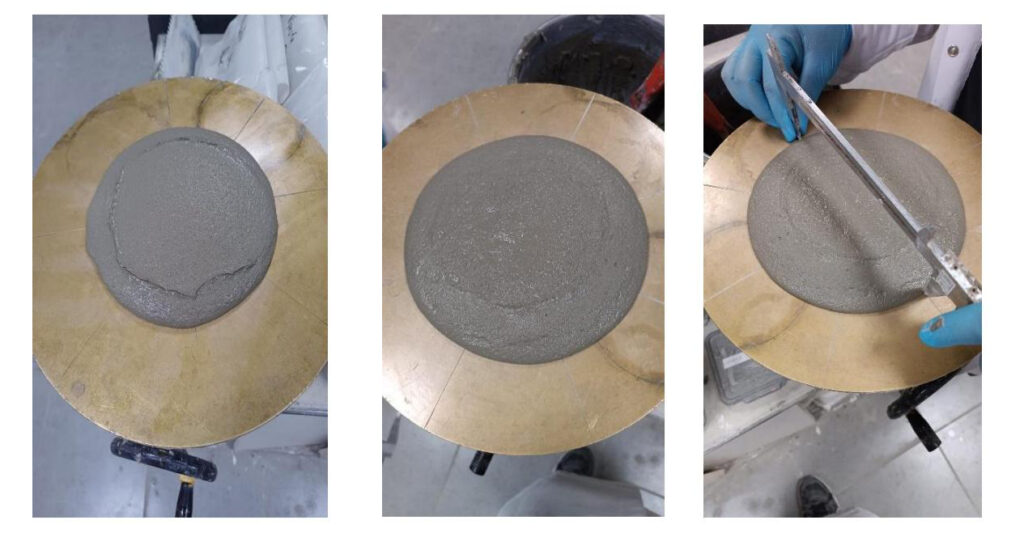
  3. Hydroxypropyl Starch Ether has a fast thickening function for mortar, which can improve the rheology of spray mortar and plaster mortar;
  4. Hydroxypropyl Starch Ether can effectively prevent the stratification/segregation of the mortar, which can be well used in self-leveling mortar;

The starch ether produced by Sidley Chemical can replace of international brand starch ether for Drymortar, it has excellent performance in mortar and can greatly reduce the cost.
02 Application Features

Depending on the production process, starch ethers exhibit different functional characteristics, Starch ethers are added in the following materials:

  1. For tile adhesives, SE-302 offers superior thickening properties and sag resistance.
  2. For wall putty and similar products, SE-501 provides enhanced smoothness, enabling effortless application with minimal labor.
  3. For plaster-based products, SE-801 adapts to the unique structure of natural gypsum, imparting special thixotropy, excellent sag resistance, and non-sticking properties during application.

03 Questions & Answers

  1. 1
    What raw materials are used to produce starch ethers?

    Starch ethers are typically produced by reacting potato starch or tapioca starch with various reactants such as propylene oxide and ethylene oxide.

  2. 2
    The Difference Between Starch Ethers and Thixotropic Agents?

    The Difference Between Starch Ethers and Thixotropic Agents

    They differ in function and characteristics.
    1. Different Functions: Thixotropic agents enhance anti-sagging properties, improve lubricity, reduce pumping resistance, enhance workability, prevent knife sticking, and extend open time. Starch ethers, however, provide excellent rapid thickening capabilities.
    2. Different Characteristics: Thickeners are substances that form colloidal networks within mortar, improving flowability and reducing viscosity. Starch ethers, however, function as water-retention thickeners that increase mortar viscosity and consistency while enhancing water retention.

  3. 3
    Hydroxypropyl Starch Ether for Tile Adhesive

    Starch ether is widely used as a rheology modifier in cementitious tile adhesive formulations.

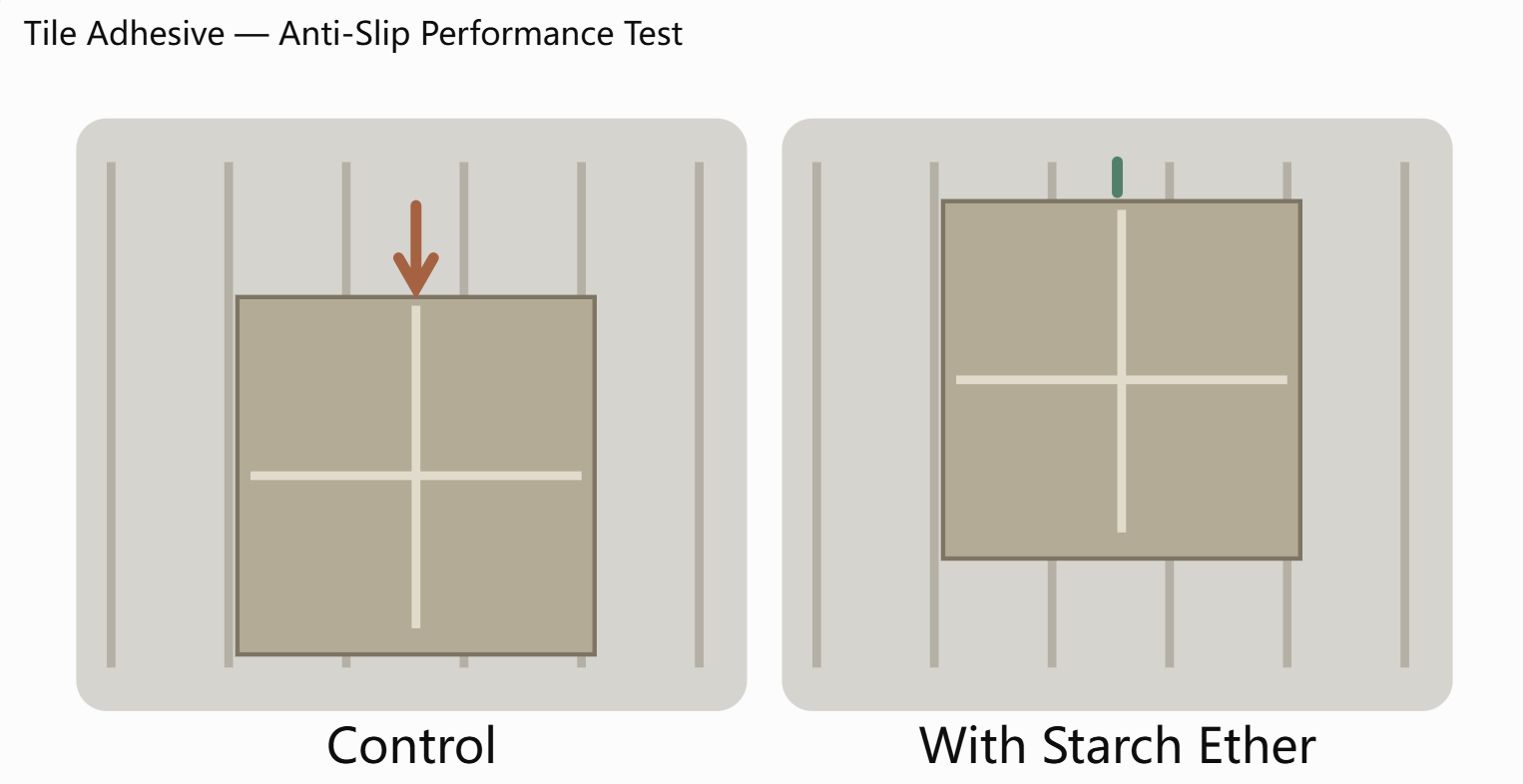
    It improves anti-slip performance and helps the adhesive maintain its shape during vertical application.

    In combination with suitable HPMC or MHEC grades, starch ether can provide improved troweling behavior and application stability.

    Key Benefits:

    • Improved anti-slip resistance
    • Enhanced anti-sagging properties
    • Better combing and troweling behavior
    • Controlled consistency during application
    • Improved formulation stability
  4. 4
    Starch Ether for Gypsum Plaster

    Starch ether plays an important role in controlling the consistency and workability of gypsum-based plaster.

    In suitable formulations, it provides rapid thickening after mixing with water, allowing the plaster to develop the required working consistency.

    It can also help improve anti-sagging performance and application smoothness.

    For gypsum plaster manufacturers, the interaction between starch ether, cellulose ether, gypsum retarder, and the gypsum binder is particularly important.

    Key Benefits:

    • Rapid development of working consistency
    • Improved anti-sagging performance
    • Smoother troweling and spreading
    • Reduced application stickiness in suitable formulations
    • Better control of fresh plaster rheology

    SE-801 is recommended for evaluation in gypsum plaster formulations.

  5. 5
    Why Combine Starch Ether with HPMC?

    he combination of starch ether and HPMC allows manufacturers to control different aspects of mortar performance.

    HPMC primarily provides water retention and viscosity development, while starch ether contributes to thixotropy, anti-sagging, and application consistency.

    By selecting suitable product grades and addition rates, manufacturers can improve workability while maintaining the required slip resistance and water retention.

    Starch ether should not be considered a universal replacement for HPMC, and any partial substitution must be verified through laboratory testing.

  6. 6
    Does starch ether improve tile adhesive slip resistance?

    Yes. Appropriate starch ether grades improve the rheological stability of fresh tile adhesive and can reduce downward movement during vertical tile installation.

    The degree of improvement depends on the full formulation and should be verified through slip resistance testing.

04 Starch Ether Video

06 Comments

Leave a Reply