Why Does Gypsum Plaster Set Too Fast on Site?
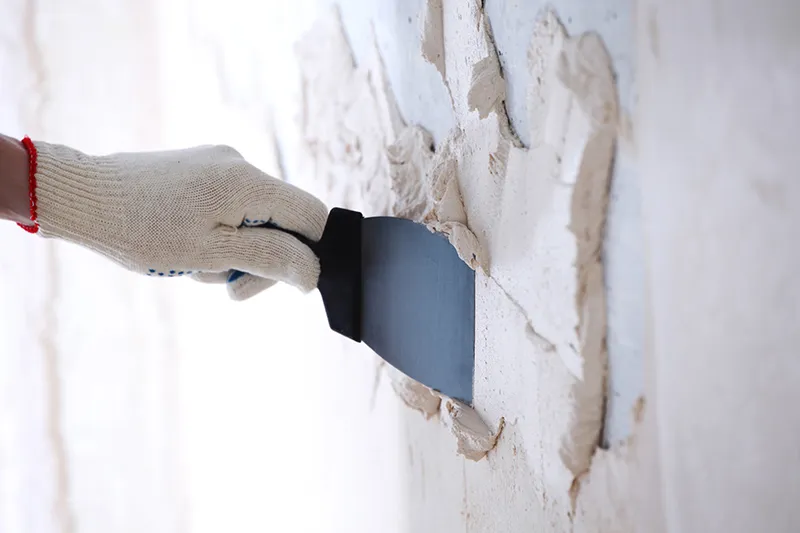
A gypsum plaster may show acceptable setting time in the lab but become difficult to apply on site.
Workers often describe the problem like this:
- the plaster becomes stiff too quickly;
- the working time is too short;
- smoothing becomes difficult;
- material loss increases.
When this happens, many people immediately assume that the gypsum retarder dosage is too low.
But fast setting is not always caused by insufficient retarder alone.
1. Check the Retarder Dosage First
The first step is still to verify dosage.
If the dosage is too low, the gypsum may hydrate too quickly and the plaster will lose workability before application is completed.
But simply adding more retarder is not always the best solution.
Too much retarder may create:
- unstable setting time;
- low early strength;
- delayed drying;
- inconsistent field performance.
The target is not the longest possible setting time, but a stable and practical working window.
2. Gypsum Raw Material Can Change the Result
Different gypsum sources can behave very differently. The same retarder dosage may not give the same result in:
- natural gypsum;
- desulfurized gypsum;
- phosphogypsum;
- gypsum with different fineness;
- gypsum from different calcination conditions.
If the plaster suddenly starts setting too fast after a raw-material change, the gypsum source should be checked before changing the full formulation.
3. Temperature Often Shortens Working Time
Jobsite temperature can strongly affect gypsum plaster performance.Even if the formulation is unchanged, higher temperature may accelerate hydration and reduce workable time.
- gypsum temperature;
- mixing-water temperature;
- room temperature;
- wall or substrate temperature.
4. Water Ratio Also Affects Workability
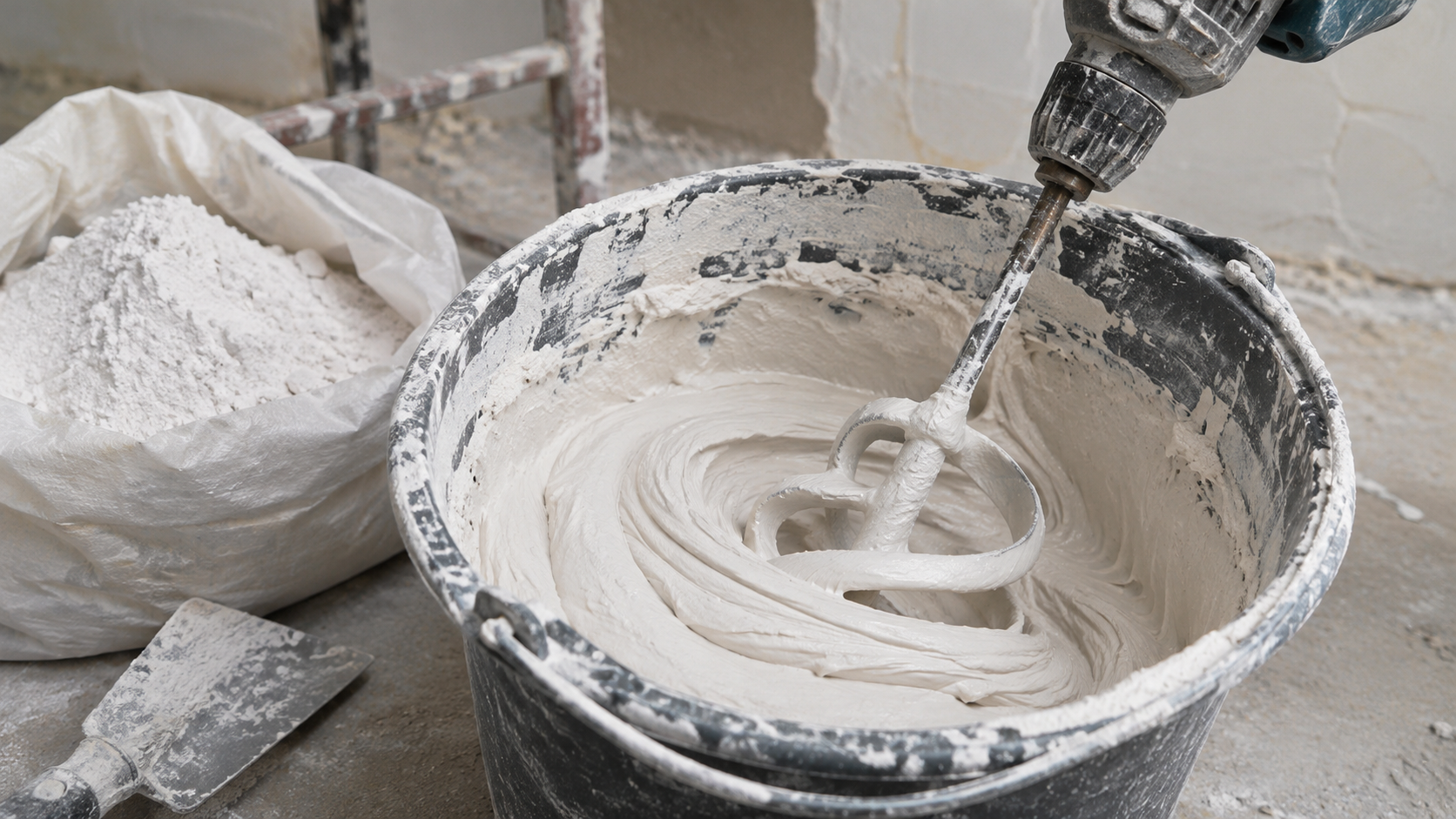
If the water ratio is too low, the plaster may feel heavy and lose workable time quickly.
If the water ratio is too high, application may become easier at first, but strength and dimensional stability may suffer.
This is why gypsum plaster should be evaluated by both:
- working consistency;
- actual setting time.
A suitable gypsum dispersant may help improve flowability and reduce water demand in some formulations.
5. Mixing Consistency Should Be Controlled
Sometimes the formula is correct, but the site mixing process is not consistent.
Fast-setting complaints may be related to:
- inaccurate water addition;
- different mixing time;
- incomplete dispersion;
- delayed application after mixing.
If the same product performs well in one jobsite but poorly in another, check the mixing procedure before changing the additive system.
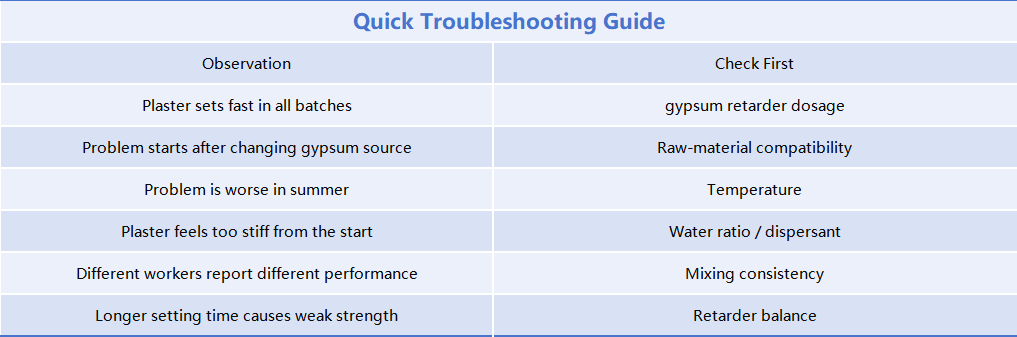
Conclusion
If gypsum plaster sets too fast on site, the cause is not always just “too little retarder.”
The real reason may involve:
- retarder dosage;
- gypsum raw material;
- temperature;
- water ratio;
- mixing consistency.
The best approach is to evaluate setting time, workability, and strength together.
For gypsum plaster, the goal is not maximum retardation, but stable and practical site performance.