Gypsum Defoamer

01 Overview

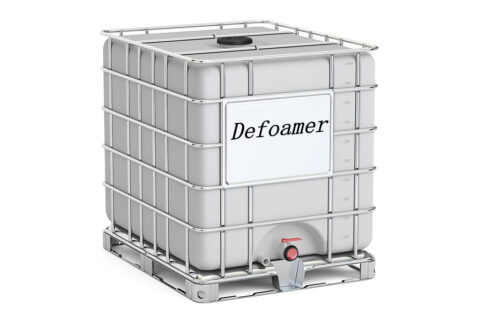
Defoamers help reduce unwanted air bubbles during gypsum block production, improving casting consistency and supporting mechanical performance. Highly concentrated defoamers require only a small dosage and act rapidly, which helps reduce the production costs of gypsum blocks.

Defoamer for Gypsum Blocks is a high-efficiency chemical additive designed to control unwanted foam and entrapped air during gypsum slurry mixing, casting, and block production.

During the manufacture of gypsum blocks, mechanical mixing, slurry transfer, and the interaction of gypsum with other additives can introduce air bubbles into the slurry. If excessive bubbles remain trapped during setting, they may form surface pinholes, internal voids, and non-uniform pores, potentially affecting block density, mechanical strength, and surface appearance.

SIDLEYCHEM gypsum defoamers help destabilize unwanted foam, promote air release, and improve the consistency of the gypsum slurry during production. By controlling excessive air entrainment, a properly selected defoamer can support the production of gypsum blocks with improved compactness, smoother surfaces, and more consistent mechanical properties.

Defoamer Agents DF330L Liquid / Quickly destroy the stability of bubbles in gypsum, eliminate bubbles and use them to improve compactness and reduce surface air pockets, For use with Gypsum blocks

Our defoaming solutions are suitable for evaluation in gypsum block manufacturing processes requiring controlled density, reliable casting performance, and efficient production.
02 Defoamer for Gypsum Blocks

Defoamers for gypsum blocks control unwanted air bubbles generated during mixing and casting. They promote bubble collapse and air release, helping reduce surface pinholes, air voids and unintended internal cavities for a smoother, more compact finish.

Proper use helps improve gypsum block appearance and density uniformity while limiting the adverse effects of excess air on mechanical performance. By reducing excessive entrapped air, a properly selected defoamer can improve the compactness and mechanical performance of gypsum blocks.

Key Benefits

  • Control unwanted air: Efficient Foam Control: Rapidly breaks down unwanted foam and reduces entrapped air during slurry mixing and casting.
  • Improve surface quality: Minimize pinholes and air voids for a smoother finish.
  • Improve casting consistency: Help achieve more uniform block density and appearance.
  • High solids content, low dosage, cost reduction

03 Questions & Answers

  1. 1
    When should the defoamer be added?

    Add the defoamer during mixing to ensure thorough dispersion. Depending on the product instructions, liquid grades can be added to the mixing water or slurry, Eliminating air bubbles within the gypsum paste results in higher-strength gypsum blocks.

  2. 2
    Does the defoamer need to be diluted?

    No dilution is required; it can be added directly to the slurry, providing defoaming and anti-foaming effects from the very start of the gypsum slurry production process. This makes the process of producing gypsum blocks simpler and more efficient.

  3. 3
    Can it be used with water reducers, retarders and water repellents?

    Defoamers can be used in combination with products such as water reducers, waterproofing agents, and accelerators; however, compatibility must be tested beforehand.

  4. 4
    How Does a Gypsum Defoamer Work?

    Defoamers are formulated to destabilize unwanted foam within the gypsum slurry.

    During mixing, air can become trapped in the aqueous phase. Surface-active materials may stabilize some of these bubbles and prevent them from collapsing naturally.

    A suitable defoamer acts at the gas–liquid interface, promoting foam-film destabilization and bubble rupture.

    This allows entrapped air to escape more readily before the gypsum slurry sets.

    Main Foam-Control Mechanisms

    • Foam-Film Destabilization, The defoamer interferes with the stability of foam films and promotes bubble collapse.
    • Reduction of Entrapped Air, By accelerating bubble breakdown and air release, the additive helps reduce unintended air remaining in the slurry.
    • Improved Slurry Uniformity, More consistent air content can improve the uniformity of casting and hardened block density.
    • Reduced Surface Defects, Lower unwanted air content can reduce pinholes and air voids near the mold surface.

    The actual mechanism and performance depend on the active defoaming chemistry and compatibility with the gypsum formulation.

  5. 5
    Applications in Gypsum Block Manufacturing

    Solid Gypsum Blocks

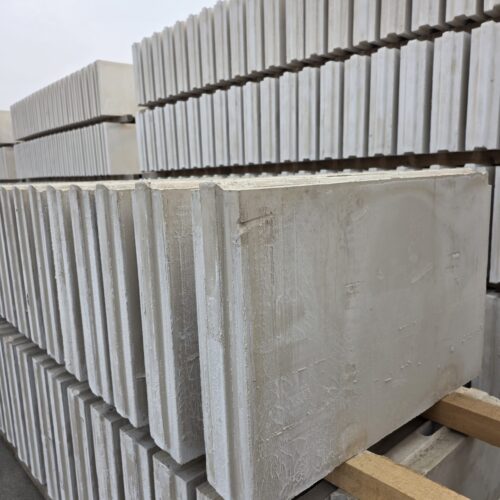
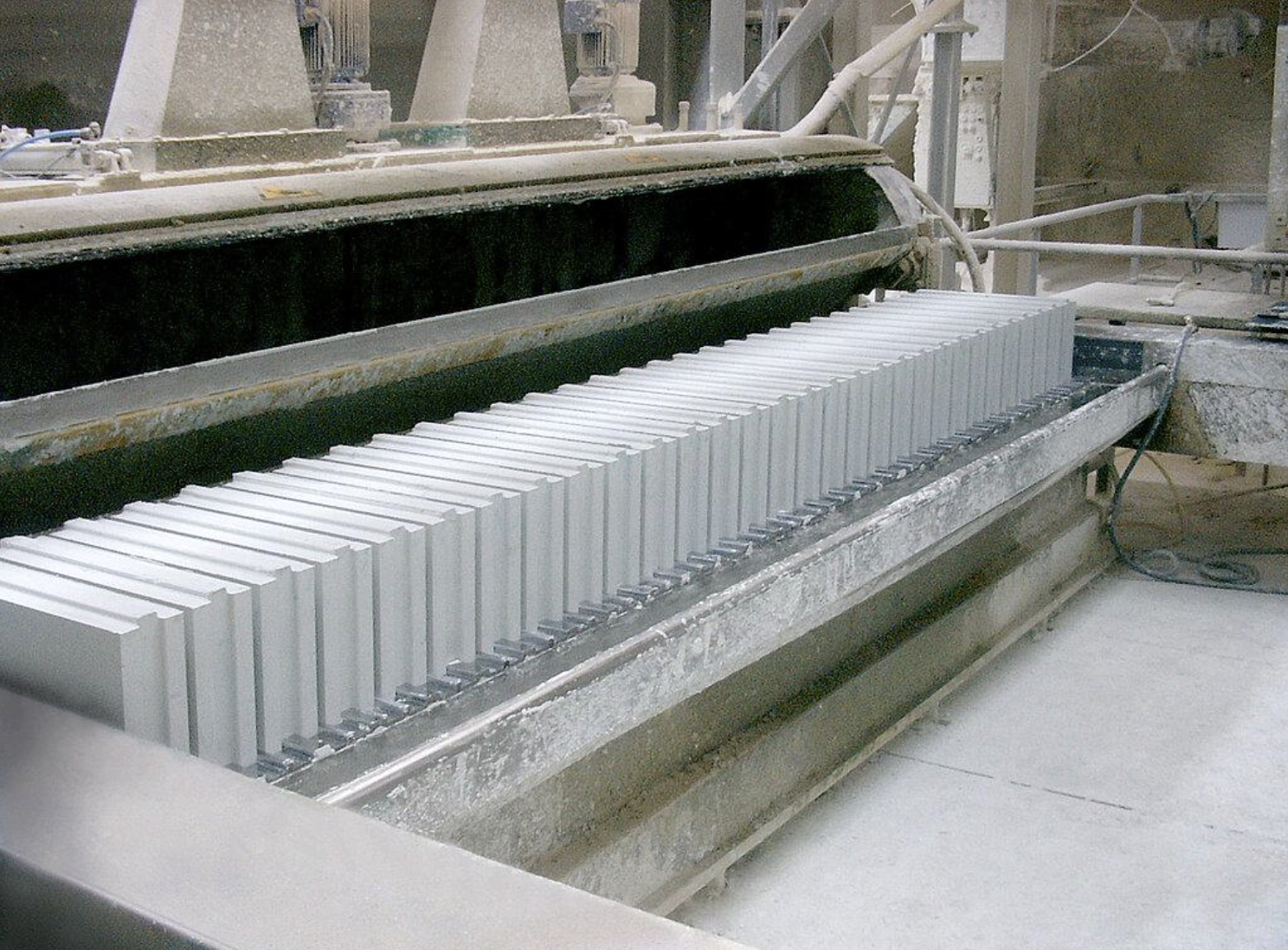
    Solid gypsum partition blocks are manufactured by mixing calcined gypsum with water and suitable additives, followed by casting, setting, demolding, and drying.

    During these processes, excess air entrainment may reduce compactness and cause surface defects.

    A suitable defoamer helps control unintended air bubbles and supports consistent block production.

    Main Benefits:

    • Improved block compactness
    • Reduced surface pinholes
    • Better density uniformity
    • Support for mechanical strength
    • More consistent product appearance

    High-Density Gypsum Blocks

    High-density gypsum blocks require careful control of the water-to-gypsum ratio, air content, and casting conditions.

    In these formulations, the reduction of unintended air voids may help achieve more compact structures and support the required mechanical performance.

    Defoamer selection should focus on efficient bubble control without negatively affecting slurry flow or setting.

    Lightweight Gypsum Blocks

    Lightweight gypsum blocks may use controlled air entrainment or engineered porosity to achieve a specified density.

    In these systems, complete foam elimination is not necessarily desirable.

    A carefully selected defoamer may be used to control excessive or unstable bubbles while maintaining the required density and pore structure.

    The interaction between defoamers and foaming agents must be evaluated before industrial use.

    Hollow Gypsum Blocks

    Hollow gypsum blocks contain deliberately formed cavities created by the molding system.

    These designed cavities are different from unwanted air bubbles trapped inside the gypsum material.

    Defoamers can help control unwanted porosity in the solid portions of hollow blocks and improve surface consistency during casting.

  6. 6
    How to Use Defoamer in Gypsum Block Production

    The most suitable addition method depends on whether the selected defoamer is supplied as a liquid or powder and on the design of the mixing system.

    Liquid Defoamer

    For suitable liquid grades, the defoamer may be incorporated into the mixing water or added directly to the gypsum slurry during mixing.

    Recommended Procedure:

    1. Prepare the required amount of mixing water.
    2. Add the liquid defoamer according to the product instructions.
    3. Introduce gypsum powder and other additives.
    4. Mix until a homogeneous slurry is obtained.
    5. Observe foam formation, air release, and slurry consistency.
    6. Cast the slurry into molds and assess the finished block quality.

    Powder Defoamer

    Powder defoamers can be incorporated into dry gypsum-based formulations where suitable dispersion can be achieved.

    Recommended Procedure:

    1. Weigh the gypsum powder and other dry ingredients.
    2. Add the powder defoamer at the selected dosage.
    3. Premix until the additive is distributed uniformly.
    4. Add the required mixing water.
    5. Mix to achieve the specified slurry consistency.
    6. Evaluate foam control, mold filling, setting, and block performance.

    Important Application Considerations

    • Avoid excessive defoamer dosage.
    • Maintain consistent mixing speed and mixing time during trials.
    • Check compatibility with gypsum retarders and dispersants.
    • Measure density and strength after appropriate curing and drying.
    • Confirm performance with the actual gypsum raw material.

    For liquid and powder products, the optimum dosage should be established using the grade-specific technical data sheet and comparative production testing.

  7. 7
    Compatibility with Other Gypsum Additives

    Gypsum block formulations commonly contain several functional additives to control slurry flow, setting time, water resistance, and final block properties.

    Defoamers must be compatible with these components.

    Additive Main Function Compatibility Consideration
    Gypsum Dispersant / PCE Improves slurry flow and reduces water demand Evaluate air entrainment, viscosity, and casting performance
    Gypsum Set Retarder Controls setting time Check setting behavior and defoamer performance
    Waterproofing Agent Reduces water absorption Check dispersion, surface behavior, and hydrophobic performance
    Foaming Agent Generates controlled air voids Balance defoaming and designed foam structure
    Gypsum Accelerator Adjusts setting and hardening Verify adequate time for air release before setting

    Defoamer and PCE Dispersant

    A polycarboxylate-based dispersant can improve gypsum slurry flow and may reduce water demand.

    However, its effect on air entrainment varies by formulation.

    Combining an appropriate dispersant with a compatible defoamer can help achieve suitable casting flow while controlling unwanted air bubbles.

    The two additives should be optimized together in the actual gypsum system.

    Defoamer and Waterproofing Agent

    Defoamers and waterproofing agents perform different functions.

    A defoamer primarily controls unwanted bubbles and air voids, while a waterproofing agent modifies the water resistance of the hardened gypsum product.

    In compatible formulations, the two additives can be used together to improve different aspects of block performance.

  8. 8
    Gypsum Block Defoamer vs. Foaming Agent

    Defoamers and foaming agents have opposite primary functions in gypsum systems.

    Property Defoamer Foaming Agent
    Primary Function Reduces unwanted foam Generates and stabilizes air bubbles
    Effect on Air Content Generally decreases Generally increases
    Typical Objective Improve compactness and control defects Reduce density and create engineered porosity
    Common Application Dense gypsum blocks and foam correction Lightweight gypsum products
    Effect on Strength May improve strength by reducing harmful voids May reduce strength as porosity increases
    Selection Requirement Avoid excessive air removal Maintain target foam stability

    The appropriate additive should be selected based on the required product density and manufacturing process.

04 Product Videos