
Why Does Gypsum Board Remain Heavy After Increasing Foaming Agent Dosage?
Reducing gypsum board weight is an important objective in plasterboard manufacturing. Lightweight boards can reduce material consumption, transportation costs, and handling difficulties.
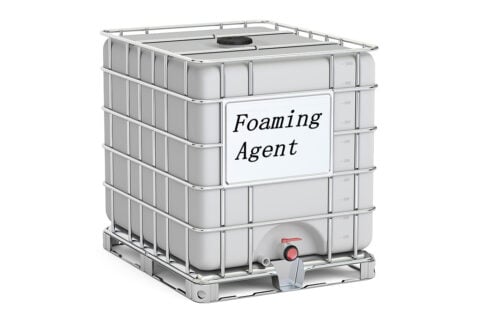
However, increasing the dosage of a gypsum board foaming agent does not always achieve the expected weight reduction.
The problem may not be insufficient foam generation, but the inability of the foam to survive until the gypsum slurry sets.
1. Check Foam Stability, Not Just Foam Volume
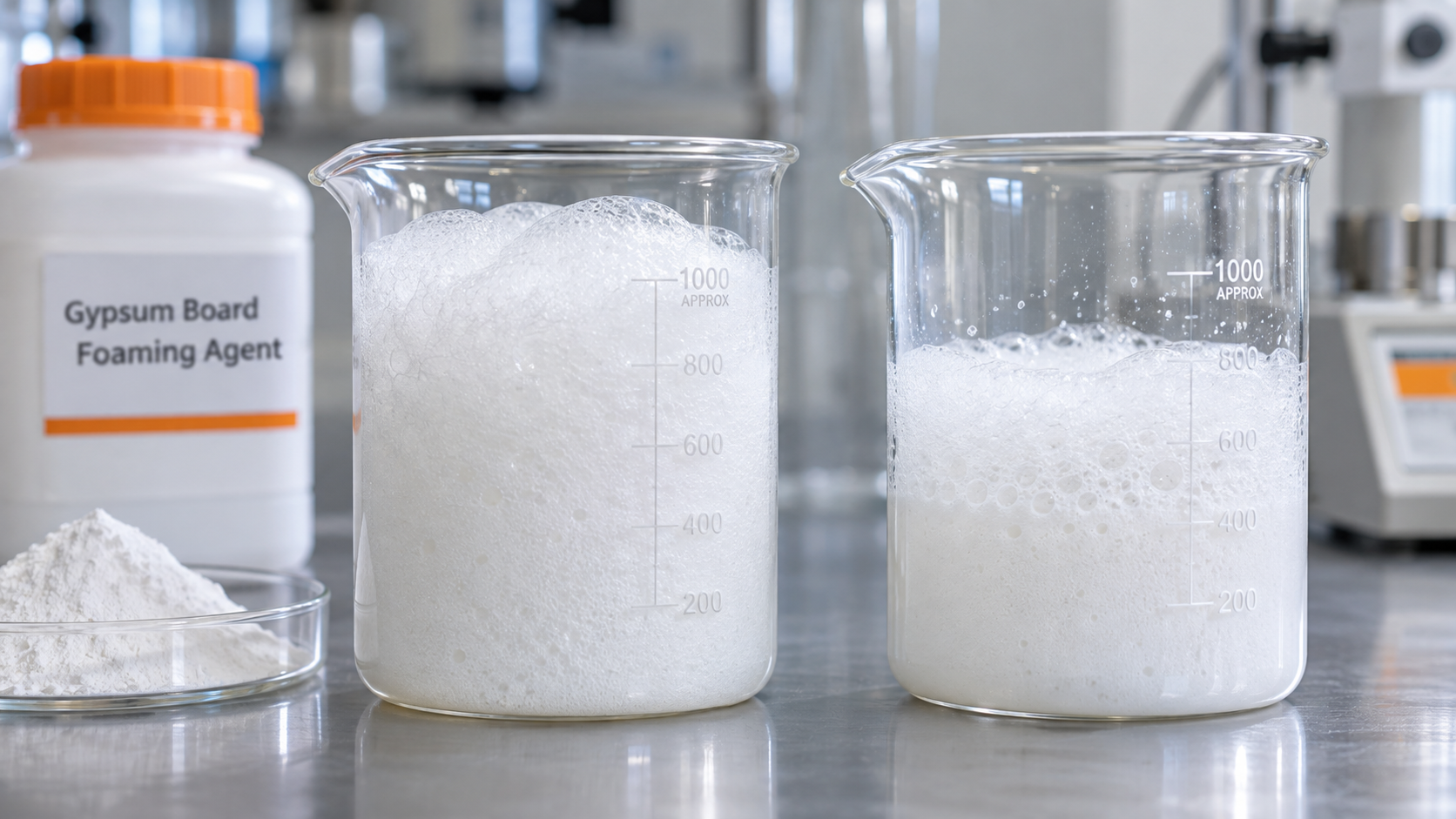
A large volume of freshly generated foam does not guarantee a lightweight board.
If the bubbles collapse during mixing, conveying, or board forming, the amount of air retained in the gypsum core decreases.
Common factors include:
- unsuitable foaming agent concentration;
- unstable foam;
- inconsistent foam generator settings;
- excessive mixing intensity;
- changes in process water quality.
The objective is to generate foam that remains sufficiently stable throughout the board-forming process.
2. Check the Bubble Size Distribution
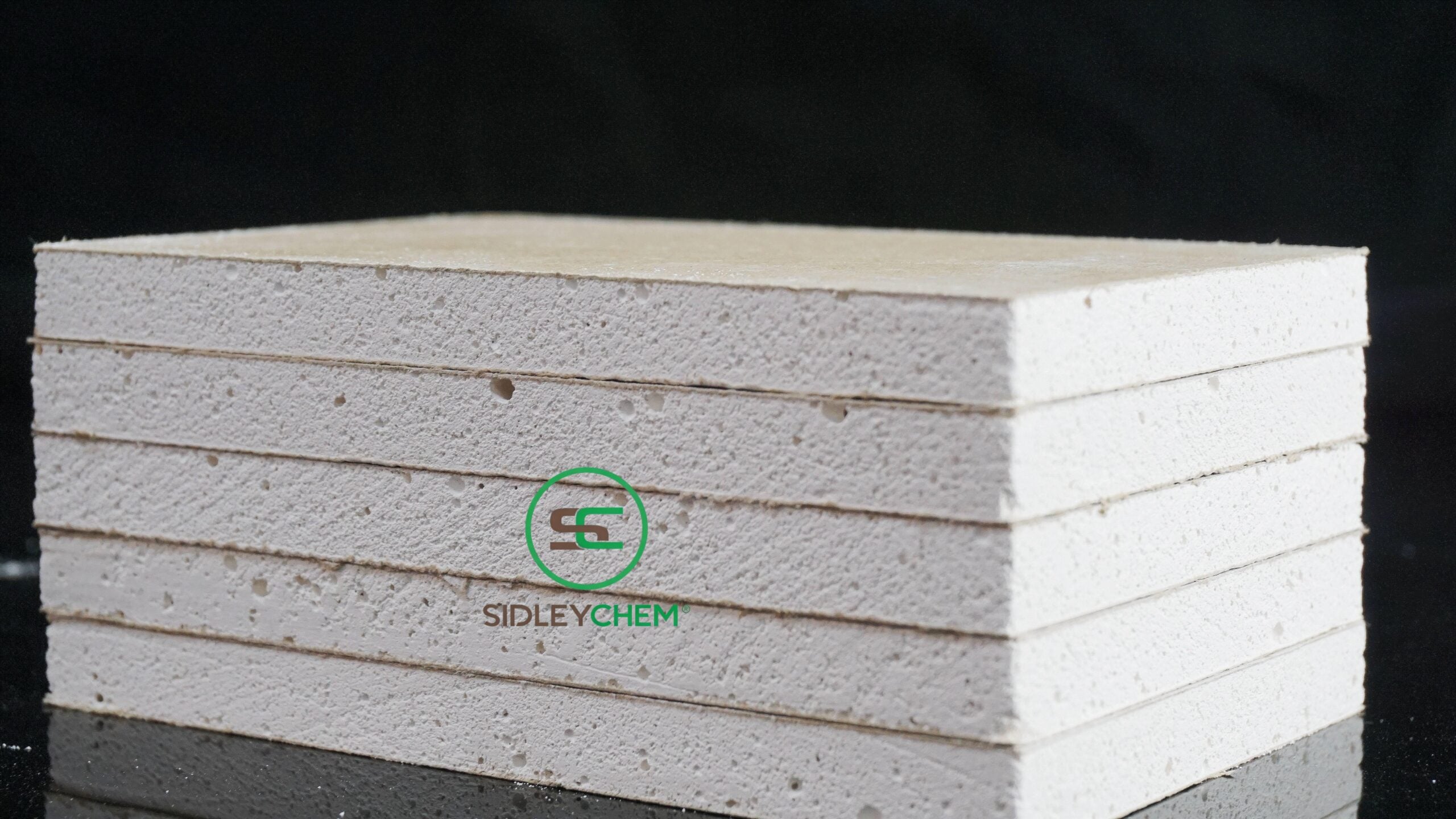
The internal pore structure affects both gypsum board density and mechanical performance.
When bubbles merge into excessively large or interconnected cavities, the board may become structurally weaker even if its weight decreases.
A controlled bubble size distribution is therefore important for achieving lightweight boards without unacceptable strength loss.
3. Check Dispersant Compatibility
A gypsum dispersant helps improve slurry flow and reduce mixing-water demand.
However, dispersant selection should also consider its compatibility with the foaming system.
If foam becomes unstable after changing the dispersant, compare the old and new products under identical conditions.
Measure slurry flow, wet density, setting time, and final board density together.
A suitable dispersant should provide the required water reduction without unnecessarily disturbing the foam structure.
4. Setting Time Must Match Foam Stability
If gypsum hydration is too slow, bubbles have more time to merge, drain, or collapse before the core becomes sufficiently rigid.
Conversely, excessively fast setting may interfere with mixing and board forming.
The setting system should therefore be adjusted according to the actual production speed and foam stability.
Foaming and setting control should not be treated as independent formulation decisions.
5. Reducing Weight Without Sacrificing Strength
Lower board weight should not come at the expense of required mechanical performance.
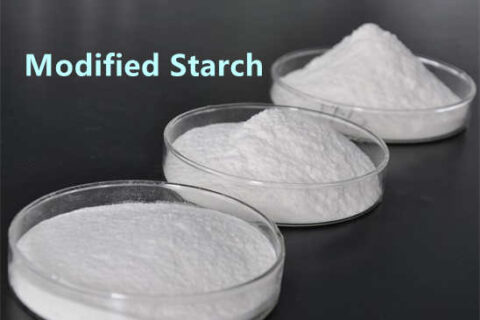
Suitable modified starch can help maintain paper-to-core bonding, while selected grades may also contribute to core strength.
After adjusting the foaming system, manufacturers should evaluate:
- dry board weight per unit area;
- core density;
- pore distribution;
- paper-to-core adhesion;
- flexural strength and nail pull resistance.
Compare boards of the same dimensions, thickness, and moisture condition to obtain meaningful results.
Conclusion
Increasing foaming agent dosage alone is not a reliable way to reduce gypsum board weight.
The key is to optimize foam generation, bubble stability, slurry compatibility, and setting behavior together.
For gypsum board manufacturers, the target is not simply maximum foam volume, but controlled core density, reliable mechanical strength, and consistent production performance.
Gypsum Tech+
Why Does Gypsum Plaster Set Too Fast on Site?
Gypsum plaster setting too fast? Learn how retarder dosage, gypsum type, water, and temperature affect working time… Continue reading
