
Waste-Based Geopolymer Mortar: A Greener, Fire-Resistant Alternative to Conventional Concrete
Contact Info
Contact Form
SidleyChem observes that researchers at Kaunas University of Technology (KTU) in Lithuania have developed a waste-based geopolymer mortar that maintains structural integrity at temperatures up to 800°C, offering a more sustainable and fire-resistant alternative to traditional cement-based materials.
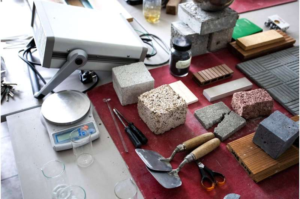 Research Background
Traditional Portland cement production requires heating limestone and clay to approximately 1400°C, a process accounting for 7-8% of global CO₂ emissions. Rapid urbanization and growing carbon pressures are driving the search for more sustainable construction materials.
Key Technical Findings
The research team used ceramic brick waste and metakaolin waste as precursors, testing five different fine aggregates: sand, granite, basalt, ceramic waste, and corundum. Results showed:
-
At 800°C, the best-performing mixes achieved compressive strengths of 34.7 MPa and 53.0 MPa with only limited microcracking
-
Conventional Portland cement concrete typically suffers severe strength loss and damage at similar temperatures
-
Corundum and ceramic waste aggregates demonstrated the best strength retention after high-temperature exposure
Unique Properties
Unlike Portland cement, geopolymer binders are activated by alkali without using excessive temperatures, resulting in lower energy consumption. The study also found that the material becomes stronger after repeated high-temperature exposure, demonstrating excellent thermal fatigue resistance.
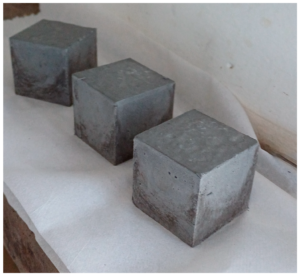 Application Scenarios
Fire-resistant construction materials are suitable for: tunnel linings, underground infrastructure, industrial floors, protective linings near furnaces and boilers, chimneys, incinerators, chemical reactor linings, and thermal shields in passive fire protection systems.
Adoption Challenges
Despite years of research, real-world adoption remains slow due to: lack of clear standards and regulations, established market inertia of the cement industry, contractor concerns about unfamiliar materials and associated risks, and insufficient policy incentives. The research team is aware of only one country (Ukraine) with actual building applications and plans to file a European patent application.
SidleyChem Perspective:
The development of new cementitious systems offers the construction industry more diverse sustainable options. Whether optimizing traditional cement-based materials or improving the workability of emerging systems like geopolymers, high-performance admixtures will play a key role. SidleyChem remains committed to tracking frontier material technologies and providing tailored additive solutions for various cementitious systems.
Other News

SidleyChem to Showcase Comprehensive Concrete Solutions at Concrete Show South East Asia 2026 in Jakarta
SidleyChem will exhibit at Concrete Show South East Asia 2026 in Jakarta (September 9-12, Booth 2029), showcasing concrete admixtures, superplasticizers, shrinkage reducers, and cellulose ethers for the Southeast Asian market. Visit us to explore tailored solutions… Continue reading
SidleyChem Connects with Coatings Industry Professionals at Asia Pacific Coatings Show 2026
SidleyChem successfully participated in Asia Pacific Coatings Show 2026 in Jakarta, showcasing coating additives, cellulose ethers, and functional solutions… Continue reading
SidleyChem Connects with Industry Professionals at Concrete Show South America 2026 in São Paulo
SidleyChem successfully participated in Concrete Show South America 2026 in São Paulo, presenting concrete admixtures, dry-mix mortar additives and technical solutions… Continue reading
