Polypropylene Monofilament Fiber

01 Overview

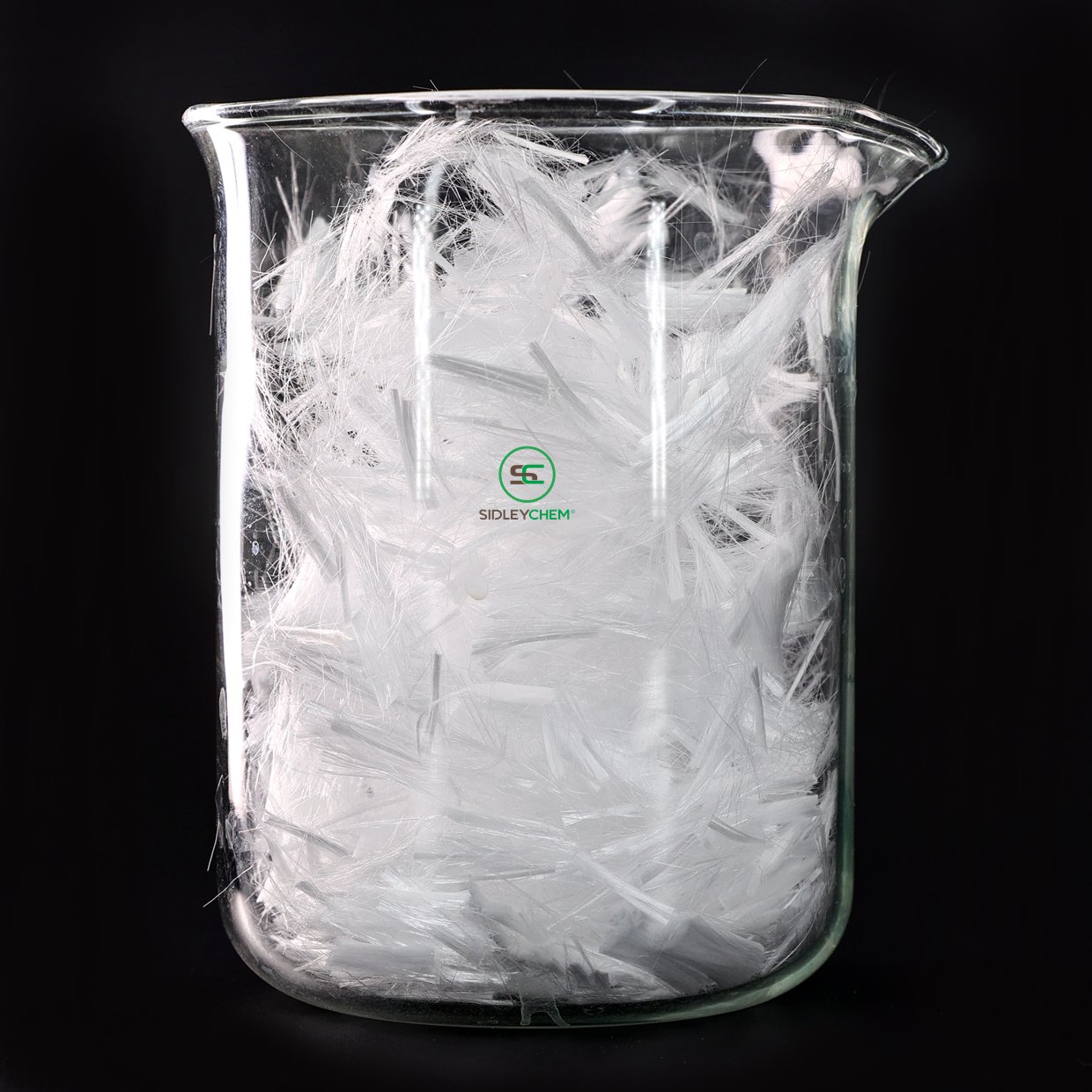
Polypropylene Monofilament fiber is a synthetic fiber. Polypropylene Monofilament fiber effectively enhances the crack resistance, water resistance, abrasion resistance, and freeze-thaw resistance of mortar/concrete while improving concrete workability.

Polypropylene fiber(synthetic fibre) is a high-strength fiber produced by special process using polypropylene as raw material. The product can be made into a mesh or a monofilament. When the fibers are added into concrete or mortar, the horizontal structure of the fibers may be destroyed during the agitation due to friction, and the fiber monofilament or the network structure will be completely stretched, thereby reinforcing the concrete and the mortar, effectively control the cracks caused by solid shrinkage, drying shrinkage, temperature change and other factors, prevent and inhibit the formation and development of cracks, and greatly improve the crack resistance, impermeability, seismic and impact resistance of mortar and concrete.

Specifications Standard Specifications Standard
Length (mm) 3、6、9、12  Tensile Strength MPa ≥400
Initial Modulus(GPa) ≥3.5 Crack Elongation % 15~35
Melting point ℃ About 165 Ignition point ℃ About 580
Resistance to Acid Strong Operational Safety Non-toix or irritant
Resistance to Alkali Strong Thermal Conductivity Very low
Cold resistance Good Magnetism None

Polypropylene fiber is suitable for dry powder mortar products like thermal insulation mortar, anti-cracking mortar, interior and exterior wall putty, waterproof mortar, plasterboard and lightweight concrete slab putty, cement-gypsum-based plastering mortar, etc. It is used in cement mortar or concrete applications, such as roads and bridges, dams, highways, culverts, subway projects, etc.
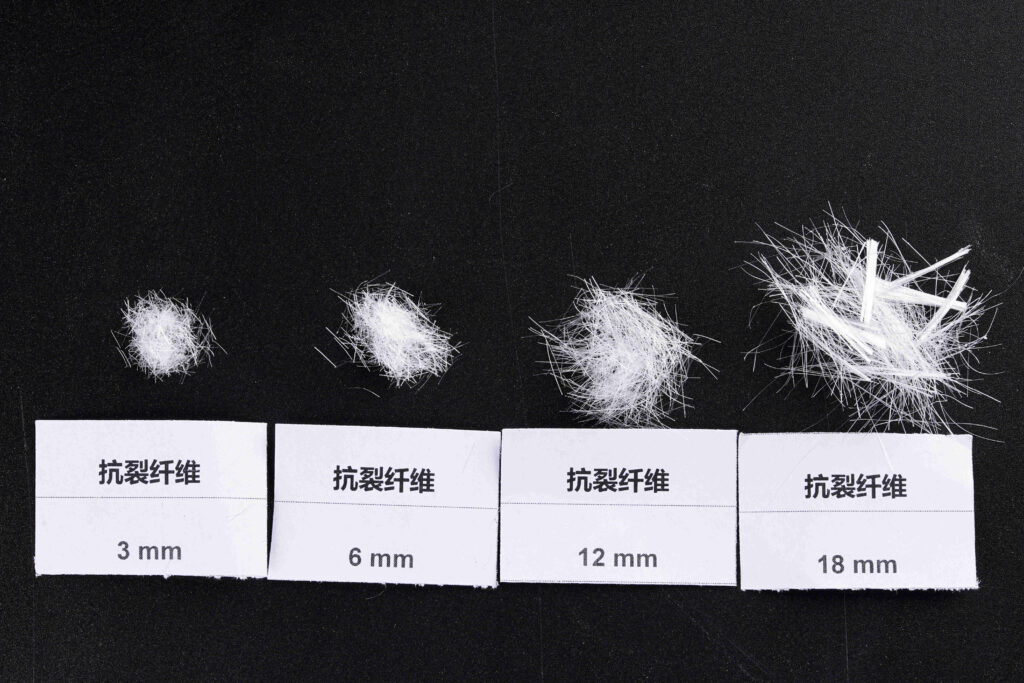
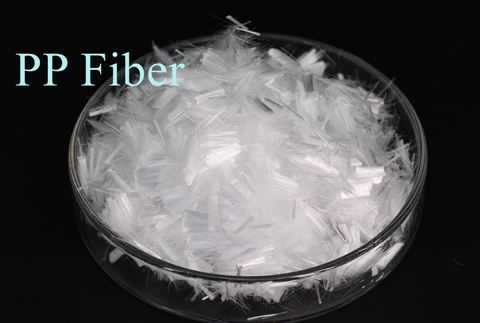
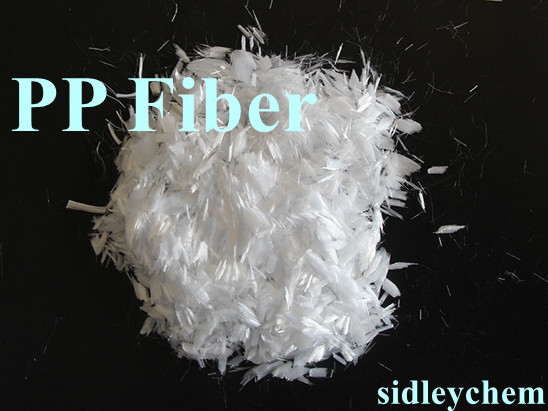
Polypropylene fiber lengths of 3 mm, 6 mm, 9 mm and 12 mm

02 Advantages of PP Fiber

  • Effective Crack Control, Polypropylene fibers help reduce the formation of early-age microcracks caused by plastic shrinkage, settlement and moisture loss. Their uniform distribution throughout the mortar matrix helps bridge developing microcracks and limit crack propagation under suitable conditions.
  • Improved Durability, By reducing the occurrence of shrinkage-related microcracks, polypropylene fibers can contribute to improved surface integrity and durability. The actual benefits depend on fiber dosage, dispersion quality, binder composition and curing conditions.
  • Excellent Alkali and Chemical Resistance,Polypropylene fibers provide good resistance to the alkaline environment typically found in cement-based construction materials.Unlike steel fibers, polypropylene fibers do not corrode in the presence of moisture.
  • Easy Dispersion in Dry Mix Mortar, Properly selected fibers can be incorporated during the dry blending process and distributed throughout the mortar. Suitable fiber length, mixing procedures and dosage are important for preventing fiber agglomeration.
  • Lightweight Reinforcement, Polypropylene has a relatively low density, allowing large numbers of fine fibers to be distributed throughout a mortar formulation at low addition rates.

03 Comparison with other fibers

In traditional mortar and concrete reinforcement materials, steel fiber and glass fiber are common choices, but each has certain limitations. While steel bars provide high tensile strength, they offer limited effectiveness in controlling micro-cracks and are prone to rust, compromising durability. Glass fiber, though possessing some crack-resistant properties, is susceptible to corrosion in high-temperature or strong acid environments, reducing its performance stability.

In contrast, polypropylene fibers offer distinct advantages. Their tensile strength rivals that of steel reinforcement while being rust- and corrosion-free, ensuring greater adaptability. Regarding dispersion, polypropylene fibers achieve more uniform distribution during mixing, avoiding the agglomeration or sedimentation common with glass fibers. This results in more stable and enduring crack-resistant performance.

Polypropylene fibers also offer relatively low cost and convenient incorporation during construction, requiring no special handling procedures. These advantages contribute to their high practical value in engineering applications.

04 Frequently Asked Questions

  1. 1
    Identifying the Quality of Polypropylene Fibers
    • High-quality polypropylene fibers exhibit consistent length, uniform thickness, and a bright, pure white color. Inferior fibers, however, often vary in length and thickness, appear dull in color, and contain higher levels of defects such as twisted strands, slimy strands, coarse strands, curled strands, oil-stained strands, tangled strands, and impurities. Visual inspection can provide an initial assessment of the quality of polypropylene fibers.
    • Pour 500ml of water into two separate cups. Add 0.4g of fiber of identical specifications to each cup. After stirring for 10 seconds, observe the state of the fiber in the water.High-quality polypropylene fibers disperse uniformly in water, remaining in suspension; inferior fibers fail to disperse evenly, potentially forming clumps or clusters that float or sink to the bottom. This method enables further comparison and differentiation of polypropylene fiber quality.
  2. 2
    How Does Polypropylene Fiber Work?

    Polypropylene fibers function primarily through the distribution of numerous fine fibers throughout the fresh mortar or concrete matrix. As the material undergoes shrinkage or develops localized tensile stresses, the fibers help restrain the initiation and widening of fine cracks. In fresh cementitious materials, distributed synthetic microfibers can reduce plastic shrinkage cracking by providing localized crack-bridging action.

    The performance of polypropylene fiber depends on several factors:

    • Fiber length and diameter
    • Fiber dosage
    • Dispersion uniformity
    • Cement and mineral binder composition
    • Water-to-binder ratio
    • Cellulose ether and polymer content
    • Mixing procedure and application conditions
    • Curing environment

    A suitable combination of fiber properties and formulation design is essential for achieving effective crack control without negatively affecting workability.

  3. 3
    Choosing the Right Polypropylene Fiber Length

    SIDLEYCHEM offers polypropylene fibers in different lengths for various mortar and concrete applications.

    Fiber Length Suggested Applications
    3 mm Fine skim coats, wall putty and thin-layer mortar
    6 mm Plastering mortar, thermal insulation mortar and anti-crack mortar
    9 mm General-purpose mortar and selected repair mortar
    12 mm Concrete and thicker cementitious mortar applications

    These are general selection guidelines rather than fixed application limits. The appropriate length depends on mortar thickness, aggregate grading, mixing equipment and required surface finish.

  4. 4
    Recommended Dosage and Mixing Instructions

    The appropriate addition level depends on the type of mortar, fiber grade and intended performance.

    SIDLEYCHEM’s published product guidance includes the following indicative dosage ranges:

    Application Indicative Dosage
    Thermal Insulation Mortar 1–3 kg per metric ton of dry mortar
    Ordinary Plastering Mortar 0.9–1.2 kg per m³ of mortar
    Concrete 0.6–1.8 kg per m³ of concrete

    Dosage values are expressed on different bases according to the application. They should not be directly interchanged.

    For other dry mix formulations, the recommended dosage should be established through laboratory testing and product-specific technical guidance.

  5. 5
    How to Add Polypropylene Fiber
    1. Select the appropriate fiber length and dosage for the intended formulation.
    2. Add the polypropylene fiber during the dry mixing stage.
    3. Blend thoroughly with cement, fillers and other dry materials to achieve uniform distribution.
    4. Add water according to the formulation requirements.
    5. Mix for the required duration and evaluate fiber dispersion, workability and surface finish.
    6. Adjust the formulation if fiber agglomeration or reduced workability occurs.

    For concrete production, the fibers may be added during batching using a verified mixing procedure.

    Technical Recommendation: Conduct comparative testing with and without polypropylene fiber to confirm crack-control performance and application compatibility.

  6. 6
    What is the difference between 3 mm, 6 mm and 12 mm PP fiber?

    Shorter polypropylene fibers are generally more suitable for thin-layer applications requiring smooth finishing. Longer fibers may be suitable for thicker mortars and concrete. The appropriate length should be selected according to formulation and application requirements.

  7. 7
    Can PP fiber replace steel reinforcement?

    Ordinary polypropylene microfibers are not a direct replacement for structural steel reinforcement. They are primarily used to control early-age shrinkage cracking. Structural applications require engineering design and appropriate reinforcement systems.

  8. 8
    Is polypropylene fiber resistant to cement alkalinity?

    Polypropylene has good resistance to alkaline environments and is widely used in cementitious materials. The suitability of a particular grade should be confirmed for the intended exposure conditions.

  9. 9
    Does polypropylene fiber improve waterproofing performance?

    Polypropylene fibers may help reduce the development of shrinkage-related microcracks, supporting the integrity of a cementitious mortar layer. However, waterproofing performance must be achieved and verified through the complete formulation and appropriate testing.

05 Product Video

07 Comments

Leave a Reply