
Sodium CMC Saline Alkali Land Remediation
As a crucial reserve of arable land resources, the remediation and efficient utilization of saline-alkali land are vital not only for expanding arable land and increasing productivity but also for ecological security, industrial upgrading, and rural revitalization. Sodium Carboxymethyl Cellulose (CMC), a green, efficient, and sustainable functional polymer material, is becoming a key technology for transforming saline-alkali land into productive farmland.
1. Core Functions:
Derived from natural biomass and produced through green processes, CMC is a non-toxic, harmless, residue-free high-performance polymer material suitable for agricultural ecosystems. Its role in saline-alkali land remediation involves systematic restructuring from soil microstructure to macroecology.
1.1 Super Water Retention: Building a Long-Term “Underground Reservoir”
The CMC molecular structure contains high-density carboxyl and hydroxyl groups—strong hydrophilic functional groups. When exposed to water, it rapidly swells to form a stable three-dimensional network hydrogel structure, absorbing up to hundreds of times its weight in water. Under the high evaporation and leakage conditions of saline-alkali land, CMC firmly retains irrigation water and rainfall in the crop root zone, providing a sustained water supply system, improving water use efficiency, and saving irrigation water by over 30%.
 1.2 Strong Aggregation: Reshaping the Soil “Physical Framework”
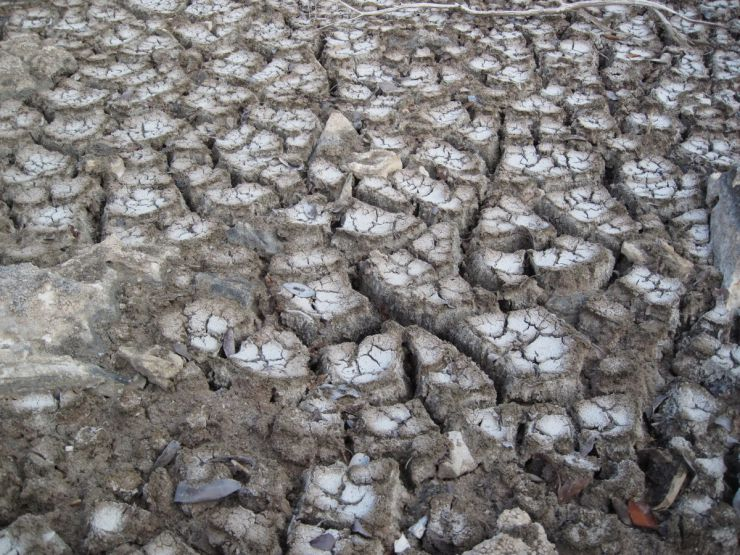
Saline-alkali land commonly suffers from soil compaction, poor permeability, salt accumulation on the surface, and difficulty for root penetration. With excellent bonding, flocculation, and thickening properties, CMC strongly binds dispersed soil particles, rapidly forming water-stable macro-aggregates that open channels for water, air, and heat transfer. After CMC application, soil porosity increases significantly, bulk density decreases, and compacted layers become loose, enabling “roots to penetrate deeper, salts to leach downward, and air to circulate upward.”
1.3 Chelation and Salt Control: Purifying the Root Zone “Growing Environment”
The CMC polymer chain possesses strong ion adsorption and chelation capabilities, selectively adsorbing excess harmful ions such as sodium and chloride, effectively reducing soil alkalinity and salinity. Additionally, CMC helps regulate soil pH, neutralizes alkaline substances, passivates heavy metals and harmful ions, and purifies the root zone micro-ecological environment, transforming saline-alkali land from “crop-inhibiting” to “crop-friendly.”
1.4 Slow-Release Nutrient Enhancement: Creating a Long-Term “Nutrient Reservoir”
The three-dimensional network structure of CMC strongly adsorbs and fixes nitrogen, phosphorus, potassium, and trace elements, enabling slow release and balanced supply of nutrients, addressing the issues of nutrient leaching and low fertilizer efficiency in saline-alkali land. After CMC application, fertilizer use efficiency increases by over 40%, significantly reducing chemical fertilizer usage and achieving the triple goals of “reduced fertilizer, enhanced efficiency, and environmental protection.”
2. Outstanding Benefits:
2.1 Significantly Increased Agricultural Productivity
CMC can increase crop emergence rates by over 50% and survival rates by over 60% in saline-alkali land, with per-mu yields of grain and cash crops increasing by 20%-50%, truly transforming “saline-alkali wasteland into granaries.”
2.2 Broad Adaptability and Diverse Applications
CMC is suitable not only for grain and cash crop cultivation but also for a wide range of applications including landscaping, ecological restoration, facility agriculture, forage planting, and desertification control on saline-alkali land—one material with multiple uses.

Cellulose Ether Tech+
Why Microcrystalline Cellulose Is Widely Used in Tablet Manufacturing?
Learn why Microcrystalline Cellulose (MCC) is widely used in tablet manufacturing and how its compressibility and binding properties support direct compression… Continue reading

How Does Cellulose Ether Improve Makeup Longevity?
Makeup not lasting long enough? Cellulose ether is a natural-derived film-forming solution. How to choose between EC, HEC, and HPMC? This article breaks down their applications in lip gloss, foundation, and setting spray… Continue reading

How CMC Makes Ice Cream Creamier with Fewer Ice Crystals?
This article explains four key roles of Sodium Carboxymethyl Cellulose (CMC) in ice cream: preventing ice crystal growth, increasing viscosity, improving mouthfeel, and preventing fat separation, with SIDLEYCHEM food grade CMC solutions… Continue reading
How Polyanionic Cellulose (PAC) Improves Water-Based Drilling Fluids
Learn how Polyanionic Cellulose (PAC) improves water-based drilling fluids by controlling fluid loss, enhancing borehole stability, and optimizing drilling performance in oil and gas operations… Continue reading

Sodium Carboxymethyl Cellulose in Toothpaste
Discover why Sodium Carboxymethyl Cellulose (CMC) is widely used in toothpaste. Learn how CMC improves consistency, stability, spreadability, and overall oral care product performance… Continue reading
HEC in hand soap
Hydroxyethyl Cellulose (HEC) improves foam stability in hand soap by increasing viscosity, stabilizing foam structure, and enhancing texture, delivering a richer and longer-lasting washing experience… Continue reading

HEC for liquid detergent
Hydroxyethyl Cellulose (HEC) is widely used in liquid detergents due to its excellent thickening performance, surfactant compatibility, and stable rheology, improving product stability and user experience… Continue reading

Choosing the Right Cellulose Ether for Detergent Manufacturing
This guide provides a complete framework for selecting cellulose ethers in detergent manufacturing: comparing HEC vs. CMC performance, selection factors, and combination strategies, with SIDLEYCHEM customized product solutions… Continue reading
Oilfield Grade CMC Application
This article details the multifunctional applications of oilfield grade CMC in drilling, cementing, and fracturing fluids, including fluid loss reduction, viscosity enhancement, proppant transport, and guar gum replacement, with LVT/HVT and ultra-high viscosity specifications… Continue reading
PAC Drilling Fluid Application
This article details oilfield grade PAC applications in drilling fluid solids control, performance regulation, and system stabilization, with PAC-LV/HV specifications… Continue reading
