
Why Does Liquid Detergent Become Thinner After Adding Salt?
Salt is commonly used to adjust the viscosity of liquid detergents.
At first, adding sodium chloride may make the product thicker. But after more salt is added, something unexpected can happen:
The detergent becomes thin again.
Why?
This does not necessarily mean that the thickener has failed. In many surfactant systems, viscosity does not increase continuously with salt concentration.
1. More Salt Does Not Always Mean Higher Viscosity

Many liquid detergents rely partly on surfactant micelles to build viscosity.
As salt is gradually added, the structure of these micelles can change. Viscosity may rise, reach a maximum, and then fall again when the salt concentration becomes too high.
This is often described as salt-thickening behavior.
Studies of surfactant-based household-cleaning systems have shown that viscosity can increase and then decrease as salt concentration changes because the micellar structure also changes.
Therefore, adding salt without measuring each step can easily move the formulation past its optimum point.
2. Check the Surfactant System
Different surfactant combinations respond differently to salt.
The final viscosity can depend on:
- anionic surfactant concentration;
- nonionic or amphoteric surfactants;
- surfactant ratio;
- active-matter content;
- salt concentration;
- water content.
This means the same amount of sodium chloride may work well in one detergent but perform poorly in another.
3. HEC Can Provide Additional Viscosity Control
Hydroxyethyl cellulose (HEC) is a nonionic cellulose ether commonly used in detergents and personal-care formulations as a thickener, stabilizer, and rheology modifier.
Unlike relying only on salt thickening, HEC can provide polymer-based viscosity and improve formulation consistency.
This can be useful when:
- salt thickening is too sensitive;
- viscosity changes significantly between batches;
- suspension stability is insufficient;
- the product needs a smoother flow profile;
- the surfactant system alone cannot reach the required viscosity.
However, HEC dosage should still be optimized. Too much polymer can make the detergent overly thick or difficult to pour.
4. Temperature Can Change the Result
Viscosity should always be measured at a controlled temperature.
A detergent that looks thick at 20°C may become noticeably thinner at a higher temperature.
Research on detergent surfactant systems also shows that the viscosity response to salt can change significantly with temperature.
Therefore, if viscosity problems appear mainly in summer or during warm storage, check temperature before changing the cellulose ether dosage.

5. Do Not Forget Mixing and Hydration
HEC must also be properly dispersed and hydrated.
If the polymer forms lumps or has not fully hydrated before viscosity is measured, the initial result may be misleading.
Keep these conditions consistent:
- addition sequence;
- mixing speed;
- hydration time;
- water temperature;
- final test temperature.
When comparing two HEC grades, do not judge them immediately after powder addition.
Conclusion
If liquid detergent becomes thinner after adding more salt, the problem may simply be that the formulation has passed its optimum salt concentration.
The final viscosity depends on:
- surfactant composition;
- salt level;
- HEC selection;
- water content;
- temperature;
- mixing and hydration.
The best approach is to determine the salt curve first and then use cellulose ether to fine-tune viscosity and stability.
For detergent formulators, the target is not the highest possible viscosity—it is stable, reproducible viscosity with good pouring and storage performance.
Cellulose Ether Tech+

PAC-LV vs PAC-HV for Drilling Fluids: How to Choose
PAC-LV and PAC-HV both control fluid loss, but they affect drilling fluid viscosity differently. Learn which grade better fits your water-based drilling fluid… Continue reading

Why Microcrystalline Cellulose Is Widely Used in Tablet Manufacturing?
Learn why Microcrystalline Cellulose (MCC) is widely used in tablet manufacturing and how its compressibility and binding properties support direct compression… Continue reading

How Does Cellulose Ether Improve Makeup Longevity?
Makeup not lasting long enough? Cellulose ether is a natural-derived film-forming solution. How to choose between EC, HEC, and HPMC? This article breaks down their applications in lip gloss, foundation, and setting spray… Continue reading

How CMC Makes Ice Cream Creamier with Fewer Ice Crystals?
This article explains four key roles of Sodium Carboxymethyl Cellulose (CMC) in ice cream: preventing ice crystal growth, increasing viscosity, improving mouthfeel, and preventing fat separation, with SIDLEYCHEM food grade CMC solutions… Continue reading

How Polyanionic Cellulose (PAC) Improves Water-Based Drilling Fluids
Learn how Polyanionic Cellulose (PAC) improves water-based drilling fluids by controlling fluid loss, enhancing borehole stability, and optimizing drilling performance in oil and gas operations… Continue reading

Sodium Carboxymethyl Cellulose in Toothpaste
Discover why Sodium Carboxymethyl Cellulose (CMC) is widely used in toothpaste. Learn how CMC improves consistency, stability, spreadability, and overall oral care product performance… Continue reading
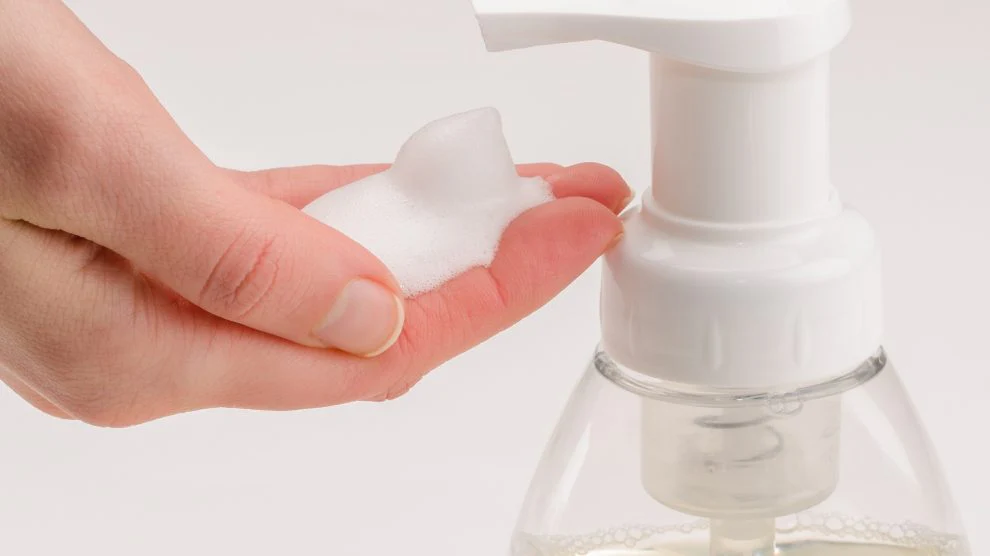
HEC in hand soap
Hydroxyethyl Cellulose (HEC) improves foam stability in hand soap by increasing viscosity, stabilizing foam structure, and enhancing texture, delivering a richer and longer-lasting washing experience… Continue reading

HEC for liquid detergent
Hydroxyethyl Cellulose (HEC) is widely used in liquid detergents due to its excellent thickening performance, surfactant compatibility, and stable rheology, improving product stability and user experience… Continue reading

Choosing the Right Cellulose Ether for Detergent Manufacturing
This guide provides a complete framework for selecting cellulose ethers in detergent manufacturing: comparing HEC vs. CMC performance, selection factors, and combination strategies, with SIDLEYCHEM customized product solutions… Continue reading

Oilfield Grade CMC Application
This article details the multifunctional applications of oilfield grade CMC in drilling, cementing, and fracturing fluids, including fluid loss reduction, viscosity enhancement, proppant transport, and guar gum replacement, with LVT/HVT and ultra-high viscosity specifications… Continue reading
