
How to Improve Gypsum Block Strength
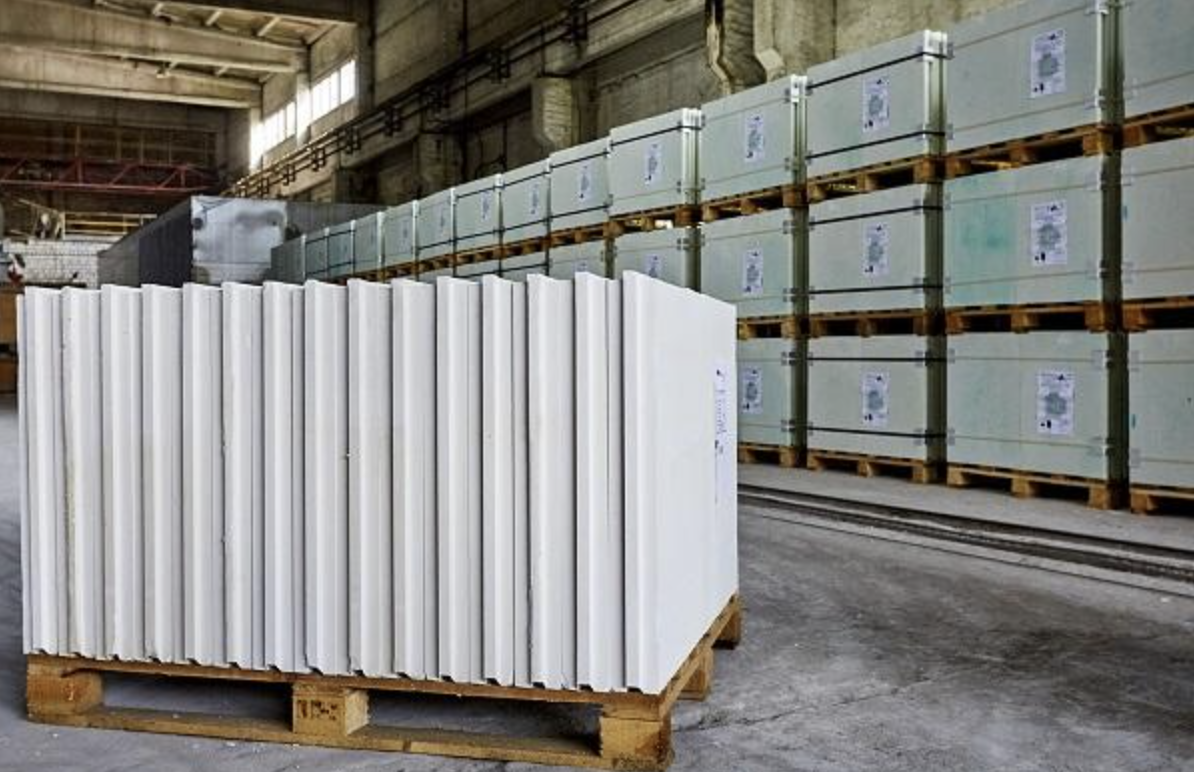
Gypsum blocks are widely used in interior partition walls because of their fire resistance, dimensional accuracy, ease of installation, and efficient construction process.
However, gypsum block manufacturers often face several production challenges, including insufficient compressive strength, excessive porosity, inconsistent density, surface pinholes, and high drying energy consumption.
How can manufacturers improve gypsum block strength without sacrificing slurry flowability, production efficiency, or dimensional quality?
The answer involves three interconnected factors:
- Water Reduction: Reduce excess mixing water while maintaining the flowability required for casting.
- Defoaming: Eliminate unwanted air bubbles that create internal voids and weaken the gypsum structure.
- Density Control: Optimize the hardened gypsum microstructure while maintaining the specified product density.
By combining suitable gypsum dispersants, defoamers, and controlled manufacturing conditions, producers can improve the consistency and mechanical performance of gypsum blocks.
This article explains the technical mechanisms behind these three factors and provides practical recommendations for gypsum block formulation optimization.
1. Why Is Gypsum Block Strength Closely Related to Porosity?
The mechanical strength of a gypsum block depends largely on the structure of the hardened gypsum matrix.
During hydration, calcium sulfate hemihydrate reacts with water to form calcium sulfate dihydrate. Interlocking gypsum crystals develop and create a rigid structure.
The hydration reaction can be expressed as:
CaSO₄·0.5H₂O + 1.5H₂O → CaSO₄·2H₂O
The formation and intergrowth of gypsum crystals provide the foundation of mechanical strength.
However, the hardened material also contains pores. Their quantity, size, distribution, and connectivity influence its mechanical properties.
Two important sources of unwanted porosity are:
- Excess mixing water, which can leave capillary pores as it evaporates.
- Entrapped air bubbles, which can remain as internal voids after the slurry sets.
These pores reduce the effective load-bearing area and may create local stress concentrations.
Consequently, reducing unnecessary porosity is one of the most effective formulation strategies for improving gypsum block strength.
Nevertheless, the objective is not to eliminate all pores. Lightweight gypsum blocks require controlled porosity to achieve their specified density.
The challenge is to distinguish undesirable porosity from intentionally designed porosity.
2. Water Reduction: A Key Strategy for Improving Gypsum Block Strength
2.1 Why Does Excess Water Reduce Gypsum Strength?
Gypsum block manufacturing requires sufficient mixing water to disperse gypsum particles and allow the slurry to fill the molds.
However, the amount of water needed for practical casting is generally higher than the amount chemically consumed during gypsum hydration.
For pure calcium sulfate hemihydrate, the theoretical chemically combined water requirement is approximately 0.186 kg of water per kilogram of hemihydrate.
This theoretical value is not a practical casting water ratio. Additional water is required to obtain suitable workability, depending on the gypsum raw material and production system.
After hardening, much of the excess water must be removed during drying.
As this water evaporates, pores remain in the gypsum matrix.
A higher amount of excess water can therefore lead to:
- Increased capillary porosity
- Lower dry density
- Reduced compressive strength
- Higher water absorption
- Greater drying energy demand
- Increased drying time
Reducing unnecessary water can improve the density and integrity of the hardened gypsum structure, provided that mixing, casting, and hydration remain satisfactory.
2.2 Why Can’t Manufacturers Simply Reduce the Water?
Reducing the water-to-gypsum ratio without changing the formulation generally increases slurry viscosity and reduces flowability.
This can create several production problems:
- Poor slurry mixing
- Incomplete mold filling
- Uneven gypsum distribution
- Increased air entrapment
- Surface defects
- Reduced production efficiency
Therefore, water reduction must be combined with effective particle dispersion.
2.3 Using PCE Dispersants to Reduce Water Demand
Polycarboxylate Ether (PCE) dispersants, also known as gypsum superplasticizers or water-reducing agents, are used to improve gypsum slurry flow and reduce the mixing water required to achieve a specified consistency.
PCE molecules adsorb onto suitable gypsum particle surfaces and can provide steric dispersion effects.
This helps reduce particle agglomeration and improve slurry mobility.
As a result, manufacturers may be able to maintain the required casting flow while reducing the water-to-gypsum ratio.
Benefits of PCE Water Reducers for Gypsum Blocks
Improved Slurry Flowability
A suitable gypsum dispersant helps the slurry flow more easily and fill molds uniformly.
Lower Water Demand
Improved particle dispersion can reduce the water required to achieve the target consistency.
Potential Strength Improvement
Reduced excess water can decrease capillary porosity and support a stronger hardened gypsum matrix.
Reduced Drying Load
Less initial mixing water can reduce the amount of excess moisture that must be removed during drying.
Better Production Consistency
Controlled flow properties support consistent casting and product quality.
SIDLEYCHEM Gypsum Dispersant Solutions
SIDLEYCHEM offers PCE-based dispersants for gypsum block production, including:
| Product | Form | Application |
|---|---|---|
| PCE-104L (50%) | Liquid | Gypsum block slurry dispersion and water reduction |
| PCE-803P | Powder | Gypsum block formulations requiring improved flowability and water reduction |
These products can be evaluated according to gypsum type, slurry requirements, setting time, and production conditions.
The achievable water reduction depends on the actual gypsum raw material and formulation.
Learn more: SIDLEYCHEM Gypsum Dispersants
3. Defoaming: Reducing Air Voids to Improve Gypsum Block Strength
3.1 Where Do Air Bubbles Come From?
Air bubbles can be introduced during several stages of gypsum block production:
- High-speed mechanical mixing
- Powder feeding and wetting
- Slurry pumping and transfer
- Interaction between gypsum and chemical additives
- Mold filling and casting
Certain surface-active components may stabilize these bubbles, preventing them from escaping before the gypsum sets.
After hardening, trapped air bubbles remain as internal pores or visible surface cavities.
These defects can reduce product uniformity and mechanical performance.
3.2 How Does a Gypsum Defoamer Work?
A gypsum defoamer is designed to destabilize unwanted foam during slurry preparation.
Depending on its chemistry, a defoamer can promote the thinning and rupture of foam films, allowing bubbles to collapse and air to escape.
When a suitable defoamer is incorporated into the gypsum formulation, it can provide several benefits.
Reduction of Entrapped Air
Unwanted air bubbles are reduced before the gypsum slurry hardens.
Improved Structural Compactness
Fewer large internal voids can contribute to a more uniform gypsum matrix.
Improved Strength Consistency
Reducing excessive air entrapment may improve the mechanical performance of the finished blocks.
Better Surface Appearance
The reduction of trapped bubbles near mold surfaces helps minimize pinholes and visible cavities.
Improved Density Uniformity
Controlled air content supports more consistent block density.
3.3 Does More Defoamer Always Mean Higher Strength?
No.
Excessive defoamer dosage does not necessarily produce better results.
A high dosage may cause compatibility problems or interfere with the desired pore structure, particularly in lightweight gypsum block formulations.
The optimum dosage depends on:
- Gypsum raw material
- Mixing method and mixing speed
- Dispersant and other additive types
- Target dry density
- Defoamer chemistry and concentration
- Required product strength
For high-density gypsum blocks, effective elimination of unintended air voids is often beneficial.
For lightweight gypsum blocks, controlled air entrainment may be an essential part of the product design.
The goal is to eliminate harmful air bubbles without disturbing the required density and pore structure.
Learn more: Defoamer for Gypsum Blocks
4. Density Control: Finding the Balance Between Strength and Weight
4.1 How Does Density Affect Gypsum Block Performance?
Dry density is an important quality parameter for gypsum blocks.
For comparable gypsum compositions and curing conditions, reducing porosity generally increases density and may improve mechanical strength.
However, increasing density also increases product weight and can influence other performance characteristics.
Different gypsum block applications therefore require different density targets.
European Standard EN 12859 classifies gypsum blocks into three density categories:
| Density Class | Dry Density |
|---|---|
| Low Density | 600–799 kg/m³ |
| Medium Density | 800–1,099 kg/m³ |
| High Density | Approximately 1,100–1,500 kg/m³ |
These classes are intended to accommodate different product characteristics and applications.
4.2 High-Density Gypsum Blocks
High-density gypsum blocks are designed for applications where increased compactness and specific mechanical properties are required.
Important formulation priorities include:
- Reducing excess mixing water
- Minimizing unwanted air entrainment
- Maintaining adequate casting flow
- Ensuring complete gypsum hydration
- Controlling drying conditions
- Achieving consistent dry density
A combination of a suitable PCE dispersant and compatible defoamer may help manufacturers optimize these properties.
4.3 Lightweight Gypsum Blocks
Lightweight gypsum blocks are designed to achieve lower mass while maintaining the required mechanical and dimensional performance.
Their lower density may be achieved through controlled porosity or suitable lightweight formulation techniques.
In such products, excessive foam elimination can increase density and compromise the intended product characteristics.
The formulation should therefore balance:
- Target block density
- Pore size and distribution
- Adequate mechanical strength
- Casting performance
- Foam stability
- Drying behavior
For lightweight gypsum blocks, the objective is not maximum density but optimum strength at the specified density.
4.4 Why Density Alone Cannot Determine Strength
Two gypsum blocks with the same dry density may have different mechanical properties.
The differences can result from:
- Gypsum crystal size and interlocking structure
- Pore size distribution
- Pore connectivity
- Raw material purity and particle characteristics
- Residual moisture
- Additive compatibility
- Drying and curing conditions
For this reason, density should always be evaluated together with mechanical strength and other relevant performance indicators.
5. Combining Water Reducers and Defoamers for Better Results
Water reduction and defoaming address different sources of porosity.
A dispersant primarily improves particle dispersion and can reduce excess mixing water.
A defoamer primarily reduces unwanted entrapped air.
When both additives are properly selected, they may work together to improve gypsum block performance.
| Performance Objective | PCE Dispersant | Gypsum Defoamer |
|---|---|---|
| Reduce mixing water | Primary function | Not primary function |
| Improve slurry flow | Primary function | Indirect or formulation-dependent |
| Reduce capillary porosity | Through water reduction | Limited direct effect |
| Reduce entrapped air | Grade-dependent | Primary function |
| Improve casting consistency | Yes | May contribute |
| Support higher dry density | Potentially | Potentially |
| Support mechanical strength | Potentially | Potentially |
| Reduce drying water load | Potentially | Not primary function |
Why Must the Two Additives Be Tested Together?
Some dispersants may affect air entrainment and foam stability.
Likewise, defoamers may influence slurry behavior or interact with other surface-active additives.
Selecting the best dispersant and defoamer independently does not guarantee that they will perform optimally when combined.
Manufacturers should therefore evaluate:
- Dispersant dosage and achievable water reduction.
- Defoamer dosage and air reduction.
- Slurry flowability and mold filling.
- Initial and final setting times.
- Dry block density.
- Compressive and flexural strength.
- Surface quality and drying behavior.
The final combination should provide the best overall performance rather than maximize any single parameter.
6. Practical Example: How Water Reduction Affects Production
Consider a gypsum block formulation using 100 kg of calcined gypsum.
The following example illustrates the water reduction concept. It is not a SIDLEYCHEM laboratory test result or a universal recommended formulation.
| Parameter | Reference Formulation | Optimized Formulation |
|---|---|---|
| Gypsum | 100 kg | 100 kg |
| Mixing Water | 70 kg | 63 kg |
| Water-to-Gypsum Ratio | 0.70 | 0.63 |
| Water Reduction | — | 10% |
| PCE Dispersant | None | Suitable grade, optimized by testing |
| Defoamer | None | Suitable grade, optimized by testing |
| Target Slurry Flow | Reference value | Equivalent to reference |
| Compressive Strength | To be tested | To be tested |
| Dry Density | To be tested | To be tested |
In this example, the optimized formulation uses 7 kg less water per 100 kg of gypsum.
If the same flowability and adequate hydration can be maintained, reducing excess water may decrease hardened porosity and the amount of moisture requiring removal during drying.
However, the actual strength improvement cannot be predicted from the water reduction percentage alone.
The result must be confirmed through laboratory testing and full-scale production evaluation.
7. Recommended Laboratory Testing Procedure
A structured testing program is essential for evaluating water reducers and defoamers in gypsum block production.
Step 1: Establish the Reference Formulation
Prepare a control formulation without the new dispersant or defoamer.
Record:
- Gypsum source and characteristics
- Water-to-gypsum ratio
- Slurry flowability
- Mixing time and speed
- Initial and final setting times
- Fresh slurry density
- Dry block density
- Compressive and flexural strength
- Surface quality
Step 2: Optimize the PCE Dispersant
Introduce the selected gypsum dispersant at several trial dosage levels.
Adjust mixing water to maintain the reference flowability.
Evaluate water reduction, setting behavior, mold filling, and hardened properties.
Select a dosage range that provides an effective balance between water reduction and production performance.
Step 3: Optimize the Gypsum Defoamer
Using the selected dispersant formulation, evaluate different defoamer dosages.
Measure the effect on entrapped air, fresh slurry density, block surface defects, and dry mechanical properties.
Avoid excessive defoamer use, particularly where controlled air entrainment is required.
Step 4: Evaluate the Combined Formulation
Compare the optimized formulation against the original control under identical raw material, mixing, casting, and drying conditions.
Step 5: Confirm Through Production Trials
Laboratory results should be verified on the actual gypsum block production line.
Important factors include:
- Industrial mixer performance
- Slurry transport and pumping
- Mold filling consistency
- Demolding time
- Drying temperature and humidity
- Final product density
- Mechanical strength variation between production batches
The final additive combination should be selected based on consistent production performance and total manufacturing cost.
8. Common Problems in Gypsum Block Production and Their Solutions
| Production Problem | Possible Causes | Recommended Action |
|---|---|---|
| Low compressive strength | Excess water, high porosity, poor hydration or excessive residual moisture | Optimize water ratio, drying and pore structure |
| Excessive surface pinholes | Air entrainment during mixing or casting | Evaluate a suitable gypsum defoamer |
| Poor mold filling | Low slurry flowability or rapid setting | Optimize dispersant, water ratio and setting control |
| Inconsistent block density | Uncontrolled water or air content | Control mixing, water dosing and foam stability |
| Excessive drying time | High initial moisture content | Evaluate water reduction and drying efficiency |
| Premature setting | Unsuitable setting control or process conditions | Review gypsum retarder selection and dosage |
| Unexpected strength reduction after adding PCE | Overdosage, altered setting, segregation or incompatibility | Recheck dosage and formulation compatibility |
Important Production Consideration
A stronger gypsum block is not necessarily the product with the lowest water content or highest density.
The optimum formulation must satisfy all relevant product requirements, including mechanical performance, density, dimensional tolerances, surface quality, and production efficiency.
Cellulose Ether Tech+
Why Does Liquid Detergent Become Thinner After Adding Salt?
Liquid detergent loses viscosity after adding salt? Learn how surfactants, salt level, HEC, and temperature affect final viscosity… Continue reading
PAC-LV vs PAC-HV for Drilling Fluids: How to Choose
PAC-LV and PAC-HV both control fluid loss, but they affect drilling fluid viscosity differently. Learn which grade better fits your water-based drilling fluid… Continue reading
Why Microcrystalline Cellulose Is Widely Used in Tablet Manufacturing?
Learn why Microcrystalline Cellulose (MCC) is widely used in tablet manufacturing and how its compressibility and binding properties support direct compression… Continue reading

How Does Cellulose Ether Improve Makeup Longevity?
Makeup not lasting long enough? Cellulose ether is a natural-derived film-forming solution. How to choose between EC, HEC, and HPMC? This article breaks down their applications in lip gloss, foundation, and setting spray… Continue reading
How CMC Makes Ice Cream Creamier with Fewer Ice Crystals?
This article explains four key roles of Sodium Carboxymethyl Cellulose (CMC) in ice cream: preventing ice crystal growth, increasing viscosity, improving mouthfeel, and preventing fat separation, with SIDLEYCHEM food grade CMC solutions… Continue reading
How Polyanionic Cellulose (PAC) Improves Water-Based Drilling Fluids
Learn how Polyanionic Cellulose (PAC) improves water-based drilling fluids by controlling fluid loss, enhancing borehole stability, and optimizing drilling performance in oil and gas operations… Continue reading

Sodium Carboxymethyl Cellulose in Toothpaste
Discover why Sodium Carboxymethyl Cellulose (CMC) is widely used in toothpaste. Learn how CMC improves consistency, stability, spreadability, and overall oral care product performance… Continue reading
HEC in hand soap
Hydroxyethyl Cellulose (HEC) improves foam stability in hand soap by increasing viscosity, stabilizing foam structure, and enhancing texture, delivering a richer and longer-lasting washing experience… Continue reading

HEC for liquid detergent
Hydroxyethyl Cellulose (HEC) is widely used in liquid detergents due to its excellent thickening performance, surfactant compatibility, and stable rheology, improving product stability and user experience… Continue reading
Choosing the Right Cellulose Ether for Detergent Manufacturing
This guide provides a complete framework for selecting cellulose ethers in detergent manufacturing: comparing HEC vs. CMC performance, selection factors, and combination strategies, with SIDLEYCHEM customized product solutions… Continue reading
