Coalescing Agent

01 Overview

A Coalescing Agent is a film-forming additive used in waterborne coatings, adhesives, and polymer emulsions. It temporarily softens polymer particles during drying, allowing them to fuse together and form a continuous, uniform film even at low temperatures.

02 TEX-12

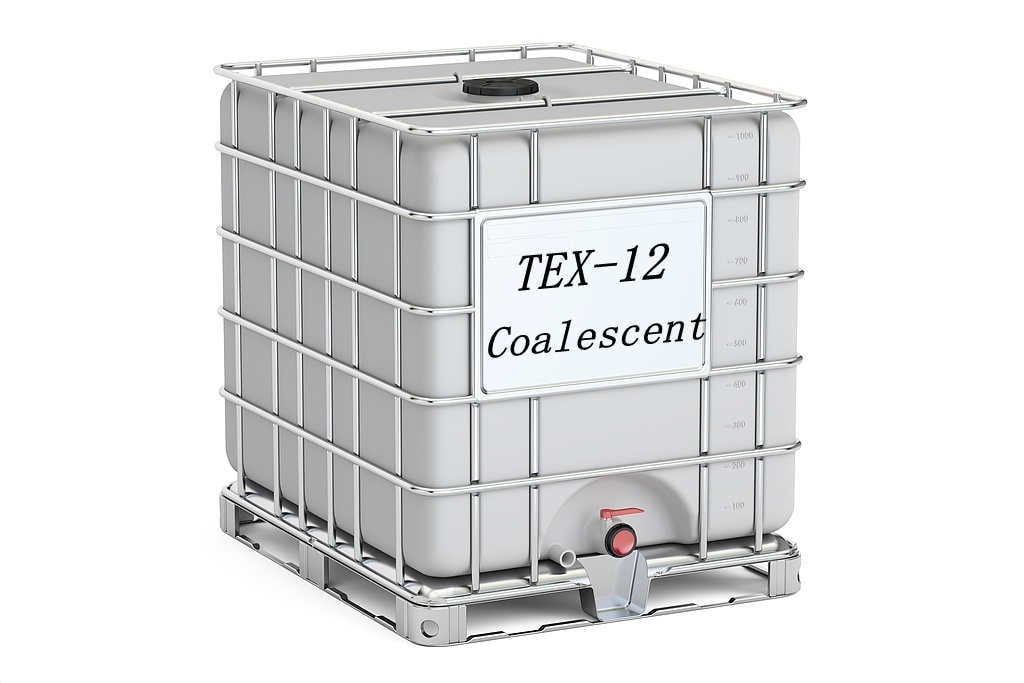
High-Performance Coalescing Agent

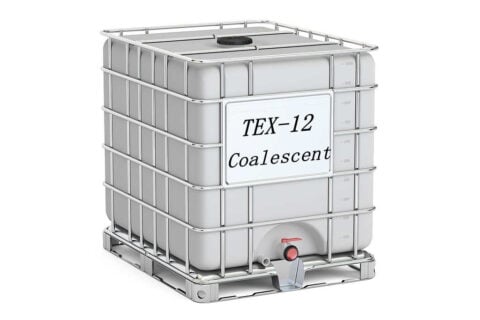
Dodecyl alcohol esters are highly effective film-forming aids (coalescents) widely used in water-based emulsion paints, water-based industrial coatings, architectural coatings, adhesives, and emulsion polymerization systems. TEX-12 reduces the minimum film-forming temperature (MFFT) of emulsions, promotes the coalescence of emulsion particles, and forms a continuous, dense paint film, thereby improving coating performance.

  • Low water solubility
  • Significantly reduced minimum film-forming temperature (MFFT)
  • Moderate evaporation rate
  • Excellent film continuity

03 SIP-05

High-Performance In-Can Preservative

SIP-05 is a specially developed high-performance in-can preservative, particularly suitable for formulations exposed to high temperatures, high pH conditions, or stringent environmental requirements.

SIP-05 is widely used in water-based products such as polymer emulsions, waterborne coatings, inks, pigment pastes, adhesives, mineral mortars, and sealants. It effectively inhibits the growth of bacteria and fungi during the manufacturing, storage, and transportation stages, helping to maintain product stability and extend shelf life.

SIP-05 contains a synergistic blend of highly effective biocidal active ingredients, including Benzisothiazolinone (BIT) and Methylisothiazolinone (MIT), providing broad-spectrum antimicrobial protection and excellent preservation performance.

04 SIP-20

High-Performance Long-Lasting Preservative

SIP-20 is a high-performance, long-lasting biocidal preservative designed to provide broad-spectrum protection against microbial contamination in water-based systems.

It is suitable for a wide range of applications, including oil-in-water emulsions, polymer emulsions, waterborne coatings, paints, inks, pigment pastes, adhesives, mineral mortars, and detergents. SIP-20 effectively inhibits the growth of bacteria, fungi, and other microorganisms during manufacturing, storage, and transportation, ensuring product stability and extending shelf life.

SIP-20 is free from heavy metal ions, formaldehyde, halogens, and phenolic compounds, making it an ideal choice for formulations that are sensitive to these substances. It fully meets the preservation requirements of medium- to high-end environmentally friendly formulations, providing reliable protection while supporting modern sustainability and regulatory compliance standards.

05 Questions & Answers

  1. 1
    What is a Coalescing Agent?

    A Coalescing Agent is a film-forming additive used in waterborne coatings, adhesives, and polymer emulsions. It temporarily softens polymer particles during drying, allowing them to fuse together and form a continuous, uniform film even at low temperatures.

    Coalescing agents help improve film formation, appearance, durability, and application performance.

  2. 2
    Why are Coalescing Agents used in waterborne coatings?

    Waterborne latex particles require sufficient mobility during drying to form a continuous film. Coalescing agents reduce the Minimum Film Formation Temperature (MFFT), enabling coatings to form smooth, defect-free films under various environmental conditions.

    Key Benefits

    • Lower MFFT and improve film formation
    • Enhance gloss and surface smoothness
    • Improve scrub resistance and durability
    • Increase adhesion to substrates
    • Reduce cracking and mud-cracking
    • Improve flexibility and toughness
    • Provide better low-temperature application properties
  3. 3
    How does a Coalescing Agent work?

    During the drying process, water evaporates and latex particles approach each other. Coalescing agents temporarily penetrate and soften the polymer particles, allowing them to deform and fuse into a continuous film.

    As the coating cures, most coalescing agents gradually evaporate or become incorporated into the polymer matrix, resulting in a durable coating film.

  4. 4
    Which applications use Coalescing Agents?

    Architectural Coatings

    • Interior wall paints
    • Exterior wall paints
    • Primer coatings
    • Textured coatings
    • Elastomeric paints

    Industrial Coatings

    • Metal coatings
    • Wood coatings
    • Protective coatings

    Waterproofing Materials

    • Acrylic waterproof coatings
    • Cementitious waterproof coatings

    Adhesives and Sealants

    • Water-based adhesives
    • Pressure-sensitive adhesives

    Construction Chemicals

    • Polymer-modified mortars
    • Flexible cement systems
  5. 5
    What benefits do Coalescing Agents provide?

    Excellent Film Formation

    Promotes continuous and defect-free films.

    Improved Gloss and Appearance

    Produces smoother surfaces with enhanced color development and gloss retention.

    Better Adhesion

    Improves bonding strength on various substrates.

    Enhanced Mechanical Properties

    Provides greater flexibility, toughness, and crack resistance.

    Superior Durability

    Improves scrub resistance, weatherability, and water resistance.

    Low-Temperature Performance

    Allows coatings to form films effectively under low ambient temperatures.

  6. 6
    What types of Coalescing Agents are available?

    Standard Coalescing Agents

    Suitable for conventional architectural coatings and adhesives.

    Low-VOC Coalescing Agents

    Designed to comply with increasingly stringent environmental regulations.

    VOC-Free Coalescing Agents

    Developed for environmentally friendly and sustainable formulations.

    High-Efficiency Coalescing Agents

    Offer excellent film formation at lower dosage levels.

  7. 7
    Which latex systems are compatible with Coalescing Agents?

    Coalescing Agents are compatible with:

    • Pure Acrylic Emulsions
    • Styrene Acrylic Emulsions
    • Vinyl Acrylic Emulsions
    • Vinyl Acetate Copolymers
    • Ethylene Vinyl Acetate (EVA)
    • Polyurethane Dispersions (PUD)
    • Waterborne Epoxy Systems
  8. 8
    What is the recommended dosage?
    Application Recommended Dosage
    Architectural Paints 1–5% on binder solids
    Industrial Coatings 1–4%
    Waterproof Coatings 2–6%
    Adhesives 1–5%
    High MFFT Emulsions 3–8%
  9. 9
    Can Coalescing Agents improve scrub resistance?

    Yes. Proper film formation leads to:

    • Higher film integrity
    • Improved cohesion
    • Enhanced abrasion resistance
    • Better washability and scrub resistance
    • Increased long-term durability
  10. 10
    Are Coalescing Agents important for low-temperature applications?

    Yes. Under low temperatures, latex particles may not fuse completely, causing:

    • Powdering
    • Poor adhesion
    • Cracking
    • Low scrub resistance

    Coalescing agents lower the film formation temperature and ensure excellent performance even under challenging conditions.

  11. 11
    Can Coalescing Agents reduce formulation costs?

    Yes. Efficient coalescing agents can:

    • Reduce minimum film formation temperature (MFFT)
    • Improve coating performance
    • Enable the use of harder emulsions
    • Optimize binder efficiency
    • Lower overall formulation costs
  12. 12
    How do Coalescing Agents compare with traditional plasticizers?
    Property Coalescing Agent Plasticizer
    Film Formation Assistance Excellent Moderate
    Temporary Softening Effect Yes No
    Gloss Improvement Excellent Good
    Low Temperature Performance Excellent Limited
    Durability Enhancement Excellent Moderate
    Volatility Controlled Low
    Waterborne Coating Applications Excellent Limited

06 Product Videos