Defoamer

01 Overview

Coating defoamers are functional additives used to eliminate or suppress foam generated during the production, mixing, and application of coatings. The function of defoamers is to break bubbles + suppress foam.

02 DF-007L

Mineral Oil Fatty Acid Soap Defoamer

DF 007L Defoamer is a mineral oil-based defoamer. It is composed of mineral oil, fatty acid metal soaps, silica, polyether, and dispersants. It is highly recommended for use in water-based architectural coatings, waterproof coatings, waterproof mortar, paper coating, water-based adhesives, and emulsion polymerization.
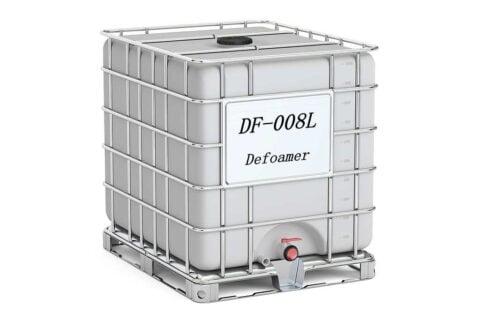
03 DF-008L

Silicone Modified Polyether Defoamer

DF-008L is a new type of polyether-modified silicone defoamer that offers excellent dynamic defoaming and anti-foaming performance, as well as long-lasting defoaming capabilities. It exhibits exceptional compatibility, combining the performance of silicone defoamers with the compatibility of non-silicone defoamers.

04 Questions & Answers

  1. 1
    In which systems is Mineral Oil Fatty Acid Soap Defoamer primarily used?

    It is primarily used in cost-effective water-based systems:

    • Cement-based mortar (standard dry-mix mortar)
    • Putty powder
    • Low- to mid-range water-based coatings
    • Industrial cleaning and adhesives
  2. 2
    What is Mineral Oil Fatty Acid Soap Defoamer defoaming mechanism?

    It penetrates the foam film via low-surface-tension mineral oil ± fatty acid soap:
    Disrupts the stability of the foam liquid film
    Causes bubbles to coalesce, rise to the surface, and burst
    Functioning more as a “mechanical defoamer” rather than a foam inhibitor

  3. 3
    What are Mineral Oil Fatty Acid Soap Defoamer advantages?

    Low cost
    Rapid initial defoaming rate
    Stable performance in heavily agitated systems
    Insensitive to system viscosity

  4. 4
    What are Mineral Oil Fatty Acid Soap Defoamer disadvantages?

    Weak foam inhibition capability (Prone to foam reformation later on)
    May cause:
    Surface oil stains
    Compatibility issues (especially in emulsion systems)
    Moderate long-term storage stability

  5. 5
    Is Mineral Oil Fatty Acid Soap Defoamer suitable as a substitute for silicones?

    Generally cannot be a complete substitute:
    Not stable enough in high-performance coatings/self-leveling systems
    Often used as a “base defoamer + silicone supplement”

  6. 6
    What are Silicone Modified Polyether Defoamer main application areas?

    High-performance water-based systems:

    • Architectural coatings (interior and exterior emulsion paints)
    • Stone-effect paint / Multicolor coatings
    • Self-leveling mortar
    • High-end adhesives
    • Water-based industrial coatings
  7. 7
    What is Silicone Modified Polyether Defoamer mechanism of action?

    It operates on a “dual mechanism of bubble breaking and foam suppression”:

    • Polyether segment: Good compatibility (integrates into the system)
    • Silicone segment: Extremely low surface tension (rapid bubble rupture)
    • Simultaneously forms an anti-foaming film in the liquid phase
  8. 8
    What are Silicone Modified Polyether Defoamer main advantages?
    • Strong anti-foaming ability (long-lasting)
    • Effective control of micropores
    • Fewer surface defects (reduced pinholes and craters)
    • Suitable for high-PVC systems

    What are the potential drawbacks?

    • Prone to overuse:
      • Craters
      • Coating defects caused by excessively low surface tension
    • Sensitive to formulation design (requires optimization of addition points)
    • Higher cost than mineral oil-based defoamers
  9. 9
    What is the best way to add Silicone Modified Polyether Defoamer for optimal results?

    Generally recommended:

    • Add a portion during the grinding stage (for basic defoaming)
    • Top up during the paint adjustment stage (to control micropores)
    • Keep the total amount within 0.1%–0.5% (depending on the system)
  10. 10
    Why are mineral oil-based defoamers recommended for mortar?

    Because mortar systems:

    • High alkali + high shear
    • Are cost-sensitive
    • Do not require long-term defoaming
    • Mineral oil-based systems are more cost-effective
  11. 11
    Why do pinholes often occur in coatings?

    Common causes:

    • Excessive use of silicone defoamers
    • Incorrect addition timing (added too late)
    • Poor system compatibility
  12. 12
    Why do pinholes often occur in coatings?

    Common causes:

    • Excessive use of silicone defoamers
    • Incorrect addition timing (added too late)
    • Poor system compatibility

05 Product Videos