
Carboxymethyl Cellulose (CMC) in Toothpaste Industry
In the toothpaste industry, CMC acts as a binder, preventing separation of solid and liquid components, imparting appropriate viscoelasticity and shape to the paste, enabling it to form ribbons with good structure that adhere to toothbrushes without collapsing or thinning. Toothpaste-grade CMC must maintain uniformity and flowability while providing water retention and thickening properties, and meeting filling speed requirements—low viscosity during filling and higher viscosity after storage. These performance requirements are closely related to CMC’s viscosity, degree of substitution (DS), and salt resistance.

1. Effect of Viscosity on Toothpaste Thickening
CMC viscosity significantly influences thickening performance:
-
Too low thickening: Poor ribbon formation, paste collapses easily after extrusion.
-
Too high thickening: Difficult to extrude, paste becomes rough.
Important note: There is no strict linear relationship between CMC viscosity and toothpaste consistency. The same or similar viscosity CMC may yield different toothpaste consistencies; sometimes higher viscosity CMC produces lower consistency. This is because toothpaste consistency reflects comprehensive CMC properties, including rheological characteristics and substitution uniformity. Selection must consider both paste characteristics and manufacturing requirements.
2. Effect of Degree of Substitution (DS)
Toothpaste-grade CMC typically has DS in the range of 0.65–1.25:
-
DS directly affects CMC thixotropy. Higher DS leads to lower thixotropy (due to reduced insoluble crystalline regions).
-
Thixotropy affects thickening: Lower DS provides better thickening; higher DS results in poorer thickening.
Substitution uniformity is equally critical:
-
Non-uniform substitution: Poor water retention, short thickening duration, easy hydrolysis, reduced stability.
-
Uniform substitution: Less free fiber, higher solution clarity, smooth and glossy paste.
-
However, excessively uniform substitution: Low thixotropy, insufficient post-storage swelling, low consistency, poor ribbon formation.
3. Salt Resistance (SVR Value)
Salt resistance of CMC is measured by Salt Viscosity Ratio (SVR) :
-
Higher SVR indicates better stability (typically achieved with uniformly etherified CMC).
-
Toothpaste often contains various salt-type electrolyte drugs, which can affect paste stability. When producing such toothpastes, CMC with good salt resistance is required.
4. Comprehensive Selection Recommendations
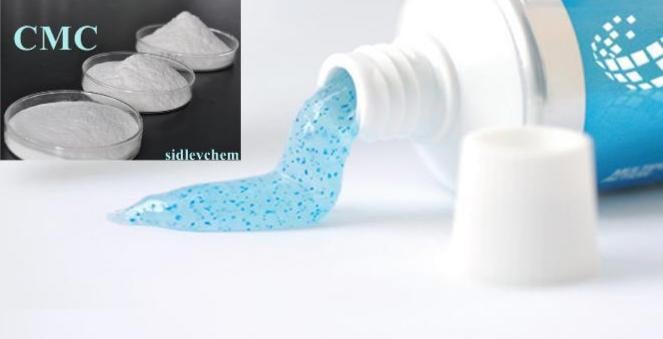
The application performance of CMC in toothpaste reflects the synergy of multiple properties, which interact and influence each other. Selection should:
-
Prioritize based on paste characteristics (salt content, target consistency, ribbon formation requirements).
-
Balance viscosity, DS, substitution uniformity, salt resistance, and other indicators.
-
Validate through actual toothpaste manufacturing trials to select the CMC grade that best matches overall performance needs.
5. SIDLEYCHEM Product Support
SIDLEYCHEM offers a full range of toothpaste-grade Sodium Carboxymethyl Cellulose (CMC) products, with customizable viscosity, DS, and salt resistance specifications to ensure smooth, glossy paste, good ribbon formation, and storage stability. Our technical team can assist with formulation testing and selection optimization to help produce high-quality toothpaste.
Cellulose Ether Tech+

Why Microcrystalline Cellulose Is Widely Used in Tablet Manufacturing?
Learn why Microcrystalline Cellulose (MCC) is widely used in tablet manufacturing and how its compressibility and binding properties support direct compression… Continue reading

How Does Cellulose Ether Improve Makeup Longevity?
Makeup not lasting long enough? Cellulose ether is a natural-derived film-forming solution. How to choose between EC, HEC, and HPMC? This article breaks down their applications in lip gloss, foundation, and setting spray… Continue reading

How CMC Makes Ice Cream Creamier with Fewer Ice Crystals?
This article explains four key roles of Sodium Carboxymethyl Cellulose (CMC) in ice cream: preventing ice crystal growth, increasing viscosity, improving mouthfeel, and preventing fat separation, with SIDLEYCHEM food grade CMC solutions… Continue reading

How Polyanionic Cellulose (PAC) Improves Water-Based Drilling Fluids
Learn how Polyanionic Cellulose (PAC) improves water-based drilling fluids by controlling fluid loss, enhancing borehole stability, and optimizing drilling performance in oil and gas operations… Continue reading

Sodium Carboxymethyl Cellulose in Toothpaste
Discover why Sodium Carboxymethyl Cellulose (CMC) is widely used in toothpaste. Learn how CMC improves consistency, stability, spreadability, and overall oral care product performance… Continue reading
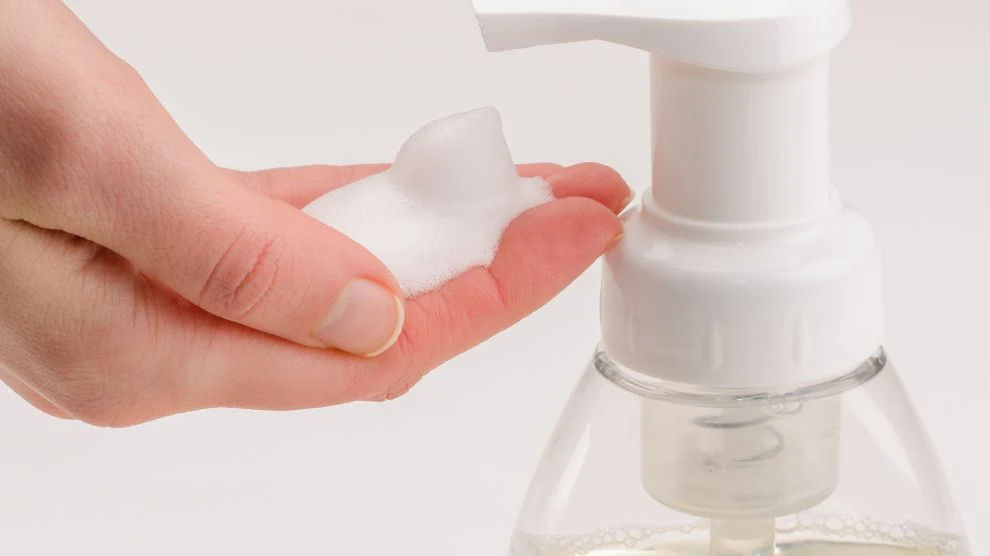
HEC in hand soap
Hydroxyethyl Cellulose (HEC) improves foam stability in hand soap by increasing viscosity, stabilizing foam structure, and enhancing texture, delivering a richer and longer-lasting washing experience… Continue reading

HEC for liquid detergent
Hydroxyethyl Cellulose (HEC) is widely used in liquid detergents due to its excellent thickening performance, surfactant compatibility, and stable rheology, improving product stability and user experience… Continue reading

Choosing the Right Cellulose Ether for Detergent Manufacturing
This guide provides a complete framework for selecting cellulose ethers in detergent manufacturing: comparing HEC vs. CMC performance, selection factors, and combination strategies, with SIDLEYCHEM customized product solutions… Continue reading

Oilfield Grade CMC Application
This article details the multifunctional applications of oilfield grade CMC in drilling, cementing, and fracturing fluids, including fluid loss reduction, viscosity enhancement, proppant transport, and guar gum replacement, with LVT/HVT and ultra-high viscosity specifications… Continue reading

PAC Drilling Fluid Application
This article details oilfield grade PAC applications in drilling fluid solids control, performance regulation, and system stabilization, with PAC-LV/HV specifications… Continue reading
