How to Improve Storage Stability of Water-Based Coatings?
Storage stability is one of the most important quality indicators for water-based coatings. A well-formulated coating should remain uniform, stable, and easy to apply after weeks or even months of storage.
However, many manufacturers encounter problems such as sedimentation, viscosity changes, phase separation, or microbial contamination during storage. These issues not only affect product appearance but also reduce application performance and customer satisfaction.
This article explains the key factors affecting storage stability and practical methods for improving the long-term performance of water-based coating formulations.
What Is Storage Stability?
 Storage stability refers to a coating’s ability to maintain its original physical and chemical properties during transportation and storage.
A coating with good storage stability should remain homogeneous without excessive settling, hard sediment, phase separation, or significant viscosity changes. After gentle stirring, the product should recover its original consistency and application properties.
Poor storage stability often results in additional production costs, product returns, and inconsistent coating quality.

Common Causes of Poor Storage Stability
Several factors can reduce the storage stability of water-based coatings.
Pigments and fillers may gradually settle if the dispersion system is not sufficiently stable. Incompatible raw materials can cause phase separation or flocculation over time.
Improper rheology control may lead to viscosity loss or excessive thickening during storage. Water-based systems are also vulnerable to bacterial and fungal growth if preservative protection is inadequate.
In addition, temperature fluctuations during transportation and warehouse storage may accelerate formulation instability.
How to Improve Storage Stability
Improving storage stability requires balancing the entire coating formulation rather than relying on a single additive.
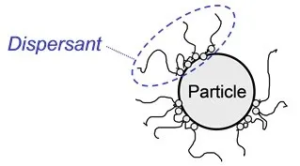
A well-designed dispersion system helps keep pigments and fillers evenly distributed throughout storage. Selecting compatible dispersants can reduce particle agglomeration and minimize sedimentation.
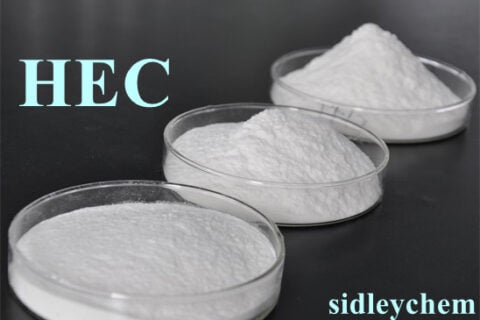
Rheology modifiers such as Hydroxyethyl Cellulose (HEC) help maintain an appropriate viscosity profile, reducing particle settling while ensuring good application properties.
Proper preservative selection is equally important. Effective in-can preservatives inhibit microbial growth and extend product shelf life without affecting coating performance.
Raw material compatibility should also be carefully evaluated. Stable emulsions, suitable coalescing agents, and optimized additive combinations all contribute to long-term formulation stability.
The Importance of Production Process Control
Even an excellent formulation can experience storage problems if manufacturing conditions are not properly controlled.
High-speed dispersion should achieve complete pigment wetting without introducing excessive air. Mixing order should follow the formulation design to ensure each additive functions effectively.
After production, proper filtration and deaeration help eliminate contaminants and trapped air that may affect long-term stability.
Storage conditions are also important. Water-based coatings should be protected from freezing temperatures, excessive heat, and prolonged exposure to direct sunlight.

Benefits of Good Storage Stability
Improving storage stability offers advantages throughout the supply chain.
Stable coatings reduce quality complaints and minimize waste caused by separated or unusable products. Contractors and end users also benefit from consistent viscosity, easier application, and predictable coating performance.
For coating manufacturers, excellent storage stability enhances product reliability, strengthens customer confidence, and reduces after-sales service costs.
Conclusion
Storage stability is the result of careful formulation design, compatible raw materials, appropriate additive selection, and controlled manufacturing processes.
By optimizing dispersants, rheology modifiers, preservatives, and production conditions, manufacturers can significantly improve the shelf life and performance consistency of water-based coatings.
Developing a stable coating system not only improves product quality but also provides long-term value for both manufacturers and end users.