
Mortar Setting Too Fast in Summer Heat?
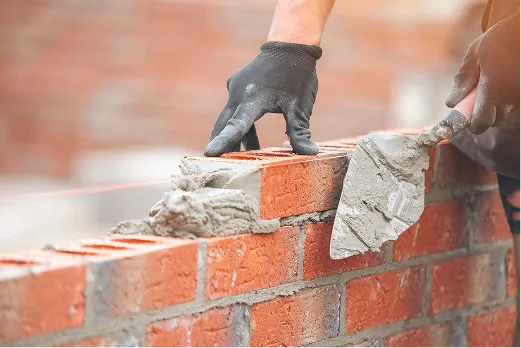
In summer construction, mortar mixed on site can stiffen and harden in less than half an hour — too dry to spread, too hard to level. This is one of the most frustrating problems on summer job sites. High ambient temperatures accelerate cement hydration, drastically shortening setting time. Studies show that when temperature rises from 20°C to 40°C, cement paste setting time drops significantly.
Instead of scrambling on site, solve the problem at the formulation stage — retarders are specifically designed for this.
Why Does Mortar Set So Fast in High Temperatures?
Cement hydration is an exothermic reaction — the higher the temperature, the faster it proceeds. Summer temperatures often exceed 35°C, and in some production processes (e.g., mortar made immediately after drying natural sand), the mortar temperature can reach around 70°C. High temperatures accelerate hydration while also speeding up evaporation of free water — a double whammy that drastically compresses setting time.
The result: open time is too short, workers rush under the scorching sun, and quality suffers.
How Do Retarders Work?
The core function of a retarder is to slow down the cement hydration rate. It works by adsorbing onto cement particle surfaces or forming complexes with hydration products, temporarily “holding back” the hydration reaction so the mortar stays plastic longer after mixing.
Simply put: a retarder doesn’t stop mortar from setting — it makes it set “slower” , giving you enough working time on site.
Common Retarders — Which One to Choose?
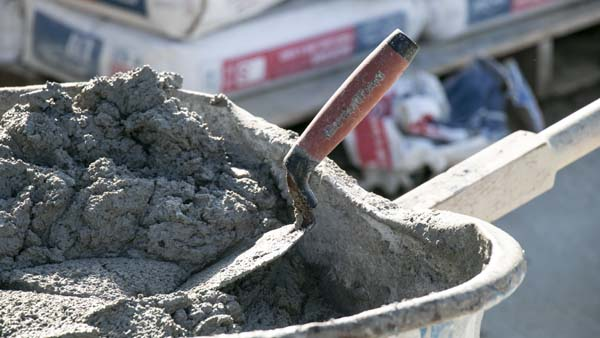
Different retarders perform very differently. Choose the right one and you get twice the result with half the effort; choose wrong and you may make things worse.
-
Sodium Gluconate — One of the most commonly used retarders. At dosages below 0.15%, retarding effect is proportional to dosage. Under high-temperature, high-dosage conditions, sodium gluconate significantly outperforms sucrose and sodium tripolyphosphate. Suitable for most ordinary mortar systems.
-
Citric Acid — Stronger retarding effect, suitable for applications requiring longer setting time. But dosage must be carefully controlled — overdosing can slow early strength development too much.
-
Tartaric Acid — Combines retarding and early-strength properties. Ideal when you need extended open time without sacrificing early strength.
-
Sucrose (Table Sugar) — Low cost and readily available; can also be used as a retarder. However, its retarding effect drops significantly at high temperatures — best used in combination with other retarders.
-
Sodium Tripolyphosphate — Less sensitive to temperature changes, but its retarding effect is relatively weak.
-
Boric Acid — High-temperature retarder. At dosages of 0.02%-0.05% , it can extend initial setting time to over 6 hours at 35°C.
How to Use Retarders Effectively? — Three Practical Tips
-
Adjust dosage by temperature — For every 5°C temperature increase, increase retarder dosage by approximately 0.1%. Summer and winter formulations should not be the same.
-
Blends outperform single retarders — No single retarder can cover all performance requirements. Studies show that blends of sodium gluconate, citric acid, and sucrose deliver more stable results. One patented solution uses a sugar + sodium gluconate combination specifically for summer high-temperature construction.
-
Coordinate with other admixtures — In summer formulations, increase cellulose ether dosage by 0.05%-0.1% to compensate for high-temperature water evaporation. The combination of retarder + water retention agent + superplasticizer works better than retarder alone.
Summary
Fast-setting mortar in summer heat is not an unsolvable problem. Remember three points:
-
High temperature accelerates hydration — that’s the root cause. Use retarders to “slow it down.”
-
Different retarders have different strengths — sodium gluconate for general use, citric acid for stronger retardation, boric acid for high-temperature resistance.
-
Formulations must adapt to the season — add retarders and cellulose ether in summer. Don’t use the same formula all year round.




Drymix Mortar Tech+
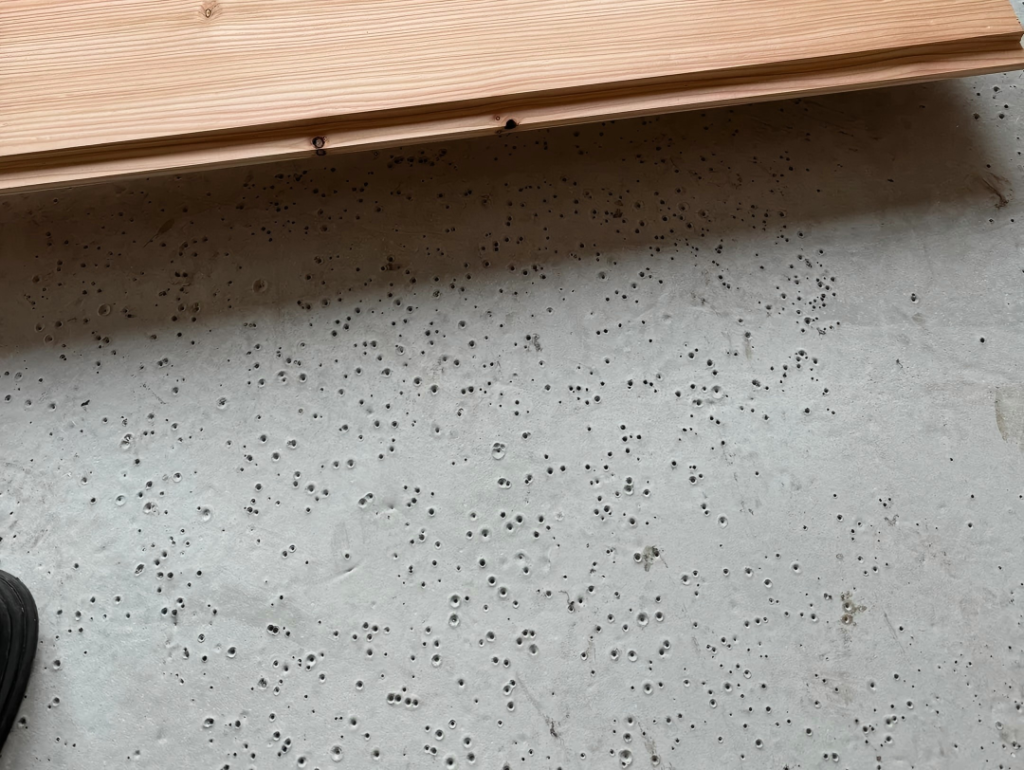
Pinholes in Self-Leveling Mortar: Defoamer, Mixing, or Substrate?
Pinholes in self-leveling mortar are not always caused by insufficient defoamer. This guide explains how to distinguish formulation foam, mixing-induced air, substrate outgassing, and insufficient healing time through a simple three-surface comparison test and practical corrective actions… Continue reading
Why Does Dry Mortar Have Poor Water Retention?
Learn why dry mortar has poor water retention and how HPMC and MHEC can improve water retention, workability, and cement hydration in dry-mix mortar… Continue reading
Dry-Mix Mortar Summer Formulation Adjustment
Why does the same formulation fail in summer? The key is cellulose ether. High temperatures cause ordinary HPMC water retention to drop sharply — increase dosage by 0.1%-0.2%, switch to high gel temperature grades, and combine with retarders. This article gives three practical adjustment directions to tackle summer construction challenges… Continue reading
Why Does Dry Mix Mortar Cake During Storage?
Discover why dry mix mortar cakes during storage and transportation. Learn how moisture, packaging, raw materials, and formulation affect storage stability, and explore practical solutions to maintain product quality… Continue reading

Why Does Tile Grout Change Color After Curing?
Discover the most common causes of tile grout color inconsistency after curing and learn practical solutions through proper formulation, pigment selection, moisture control, and construction practices… Continue reading
Tile adhesive bond strength
Learn the most common reasons why tile adhesive loses bond strength and discover practical solutions through proper formulation, additive selection, substrate preparation, and construction practices… Continue reading
Gypsum Mortar Shrinkage: Causes and How to Prevent Cracks
Understand the main causes of gypsum mortar shrinkage and learn how to prevent cracks using HPMC, gypsum retarder, and proper formulation and construction practices… Continue reading
gypsum mortar water retention
Learn practical ways to enhance the water retention of gypsum mortar using HPMC, starch ether, and proper mixing techniques to improve workability and reduce cracks… Continue reading
Extend gypsum setting time
Learn why gypsum mortar loses workability too quickly and discover practical solutions using gypsum retarders, HPMC, and formulation optimization to extend working time without compromising strength… Continue reading
Tile Adhesive Crack Resistance Solutions
This article analyzes 5 main causes of tile adhesive cracking: insufficient flexibility, poor water retention, excessive shrinkage, poor substrate preparation, and incorrect additive selection, with solutions including HPMC, RDP, and other crack-resistant additives… Continue reading
