
Tile adhesive open time
Tile adhesive is a material composed of cementitious materials, admixtures, aggregates, fillers, and additives, mixed by professional equipment. It is packaged as single-component or dual-component.
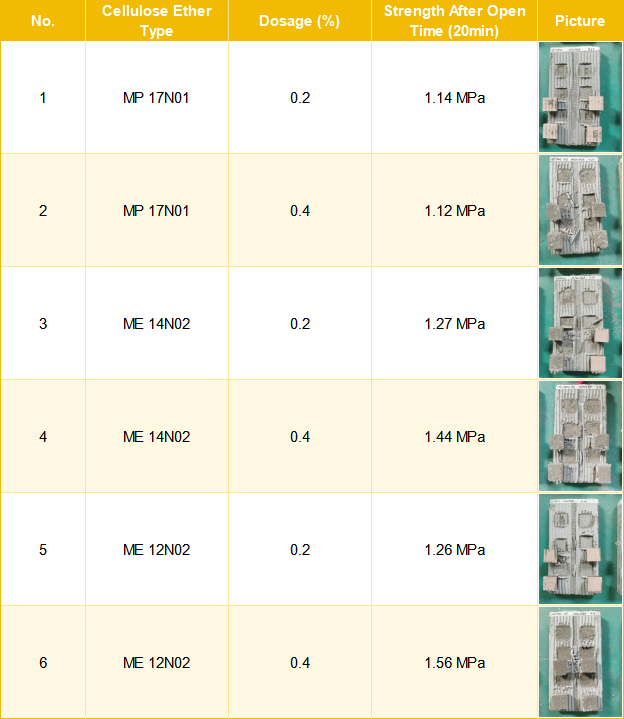
This article verifies the influence of cellulose ether, specifically its viscosity and dosage, on the open time of C1 class tile adhesive through testing.
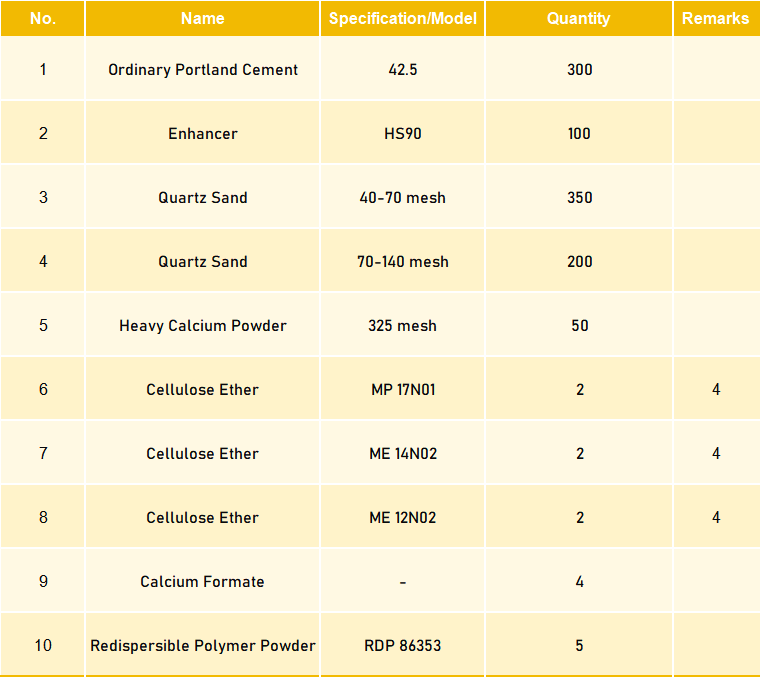
1. Experimental Base Formulation
2. Experimental Results
3. Conclusion
 The experiment shows that lower viscosity cellulose ethers perform better; and a relatively higher dosage of cellulose ether leads to higher open time values.
SIDLEYCHEM Products for Selection:
MP H17N01, MP H17N02
ME 14N02, ME 12N02
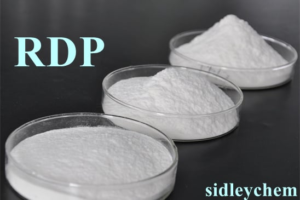
RDP 86353, RDP 86253, RDP 66143, RDP 66153
We welcome exchange and discussion with friends from all sectors.





Drymix Mortar Tech+
Why Does Cement-Based Wall Putty Become Powdery After Drying?
Wall putty powdering after drying? Learn how HPMC, RDP, water retention, binder content, and curing affect surface strength… Continue reading
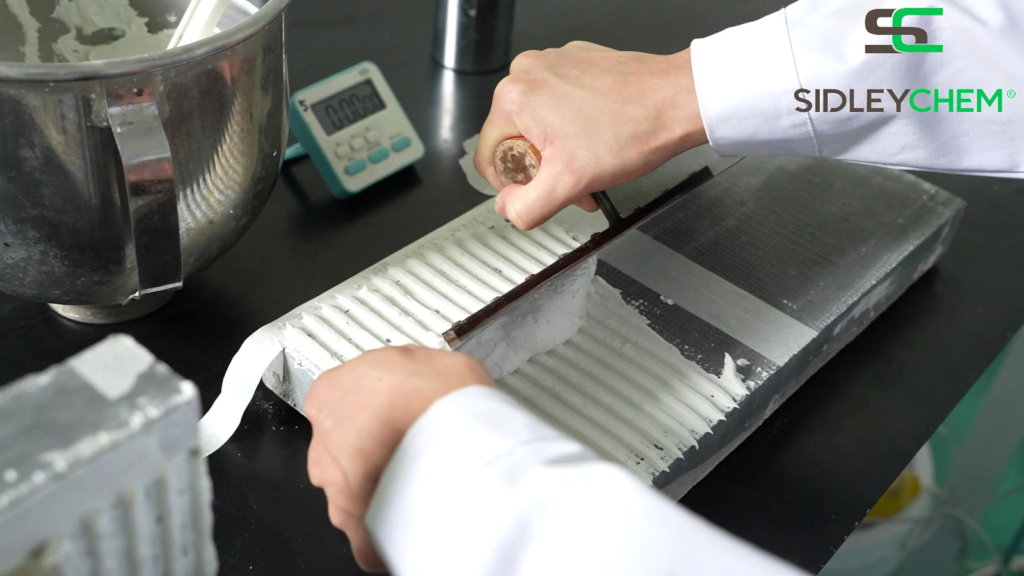
How does C2TES1 maintain an excellent open time even with a high dosage of polymer additives?
See SidleyChem’s ME H14N30 lab comparison for C2TES2-targeted tile adhesives, featuring troweling, vertical placement and tile-back mortar transfer… Continue reading
Why Does Tile Adhesive Lose Bond Strength After Water Immersion?
Tile adhesive loses bond strength after water immersion? Learn how RDP, water ratio, curing, and polymer balance affect wet adhesion… Continue reading
Waterproof Mortar Still Absorbs Water: Causes & Fixes
Waterproof mortar still absorbs water? Learn how hydrophobic powder, porosity, water ratio, and curing affect water resistance… Continue reading
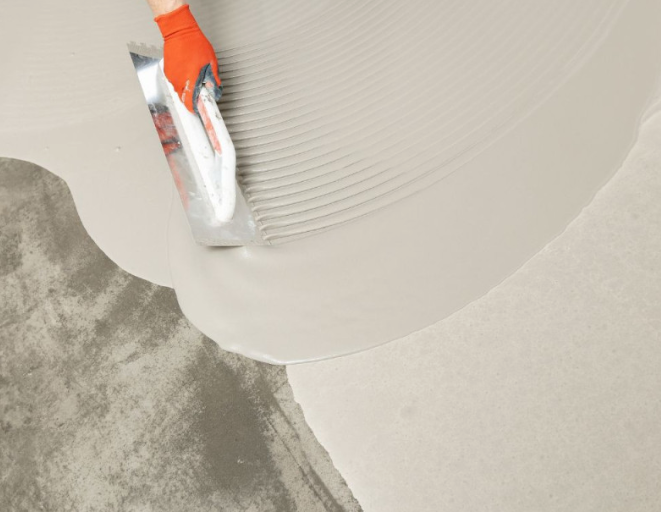
Self-Leveling Mortar Flow Loss: Causes & Solutions
Self-leveling mortar may have good initial flow but lose workability within minutes. Learn how PCE, cellulose ether, setting time, and temperature affect flow retention… Continue reading
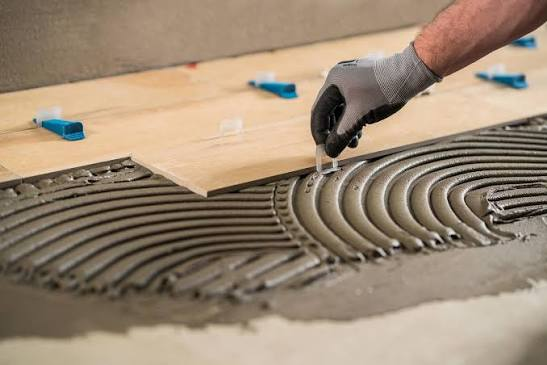
Tile Adhesive Slipping After Adding HPMC: Causes & Fixes
Tile adhesive can still slip even after increasing HPMC. Learn how HPMC grade, water demand, starch ether, thixotropy, and formulation balance affect slip resistance… Continue reading
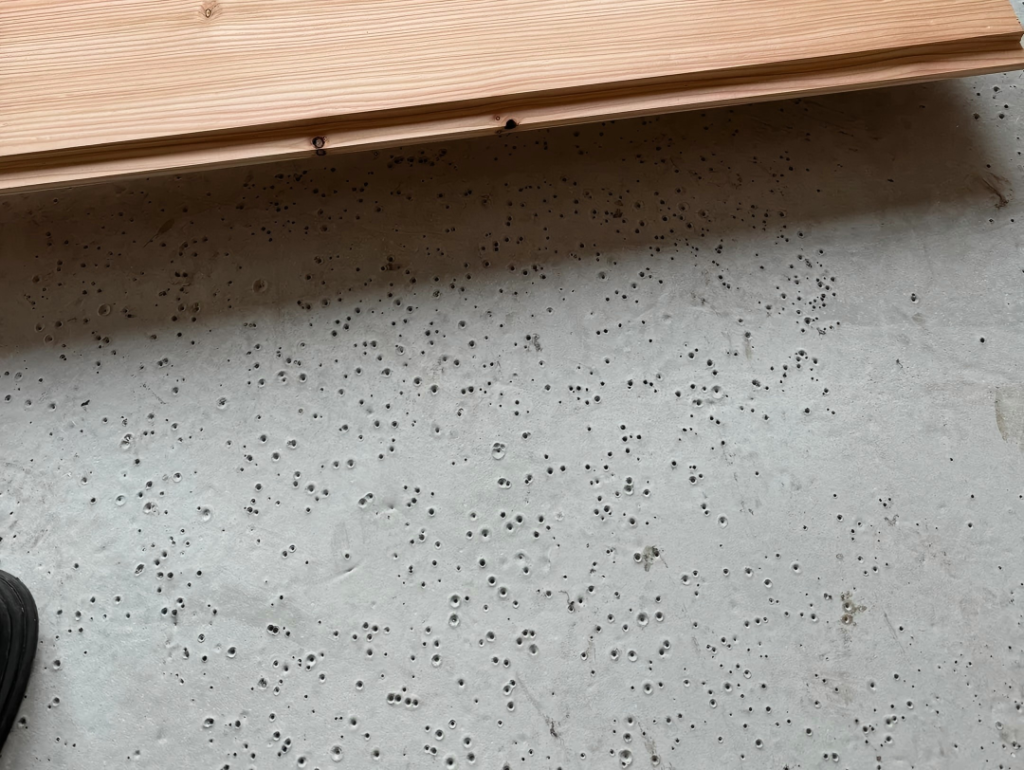
Pinholes in Self-Leveling Mortar: Defoamer, Mixing, or Substrate?
Pinholes in self-leveling mortar are not always caused by insufficient defoamer. This guide explains how to distinguish formulation foam, mixing-induced air, substrate outgassing, and insufficient healing time through a simple three-surface comparison test and practical corrective actions… Continue reading
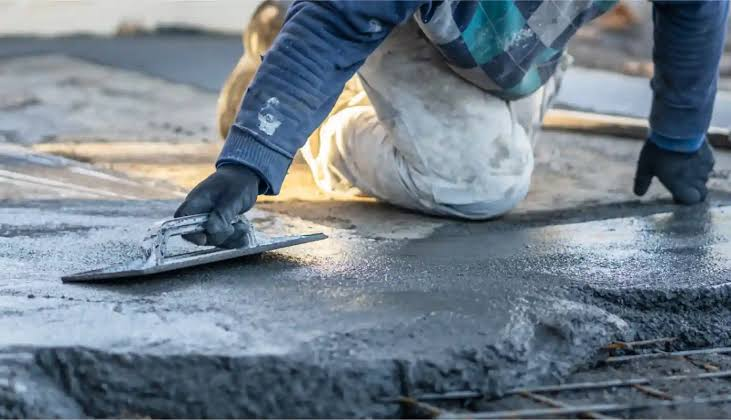
Why Does Dry Mortar Have Poor Water Retention?
Learn why dry mortar has poor water retention and how HPMC and MHEC can improve water retention, workability, and cement hydration in dry-mix mortar… Continue reading
Dry-Mix Mortar Summer Formulation Adjustment
Why does the same formulation fail in summer? The key is cellulose ether. High temperatures cause ordinary HPMC water retention to drop sharply — increase dosage by 0.1%-0.2%, switch to high gel temperature grades, and combine with retarders. This article gives three practical adjustment directions to tackle summer construction challenges… Continue reading
Mortar Setting Too Fast in Summer Heat?
Mortar drying out in half an hour on summer job sites? High-temperature accelerated hydration is the culprit. This article breaks down the features and selection of sodium gluconate, citric acid, tartaric acid, and boric acid retarders, with dosage adjustment and blending strategies to tackle summer construction challenges… Continue reading
