Refractory Castables

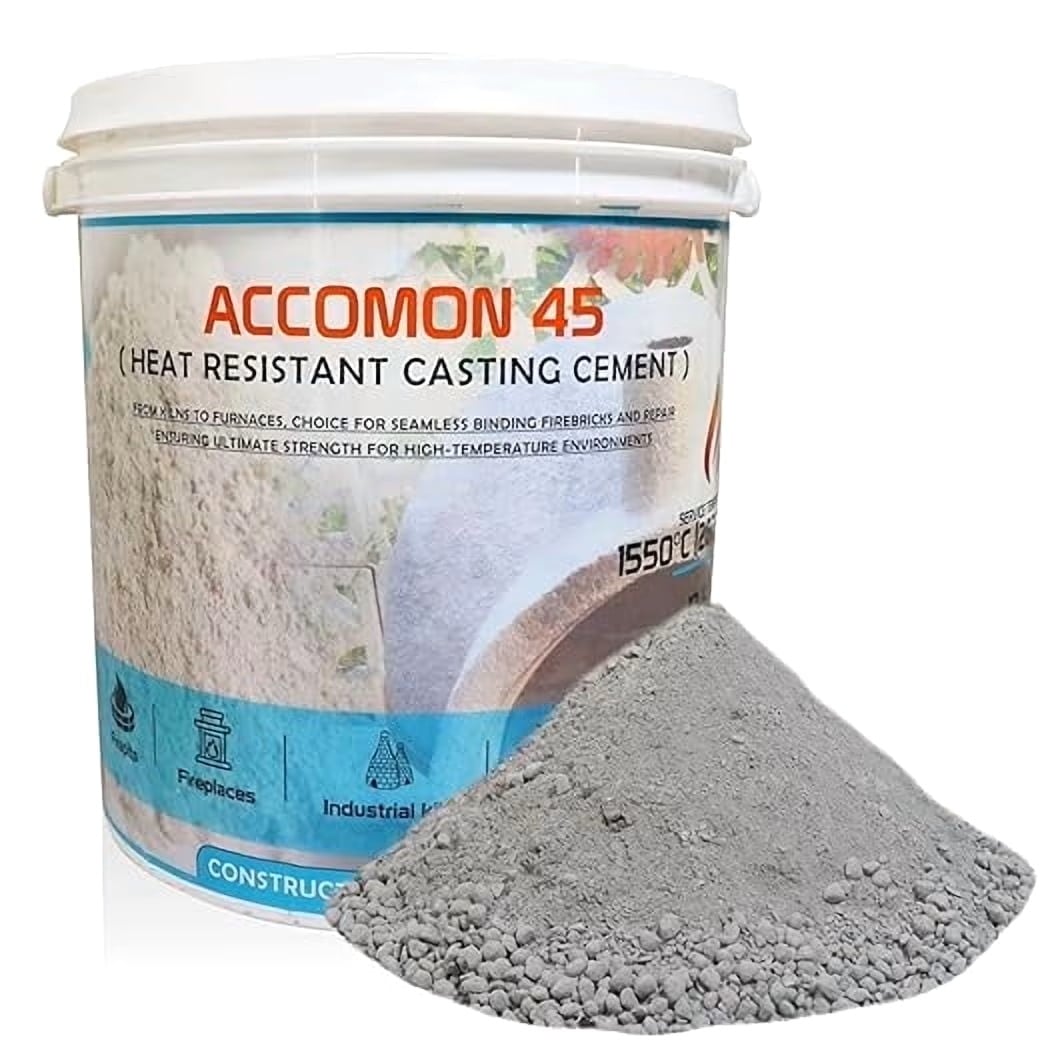
High-temperature refractory castables constitute a type of furnace lining material employed in the construction of high-temperature kiln linings. They exhibit outstanding refractory properties, strength, slag resistance, and seismic resilience. Primarily composed of refractory aggregates, refractory binders, and additives, they offer convenient installation and can be cast on-site according to specific conditions. As a non-shaped refractory material, they can be moulded into various forms to suit the configuration of the kiln, thereby meeting the diverse operational requirements of high-temperature kilns.

01Refractory materials

Refractory materials are broadly categorized into shaped and unshaped types. The development of unshaped refractories has primarily progressed through three stages:

  • The first stage involved conventional refractory castables, primarily formulated using binders such as cement, water glass, and phosphates, combined with standard refractory aggregates and powders;
  • The second stage featured clay-bonded castables and plastic refractories, primarily utilizing aluminate cement and clay as binders;
  • The third stage involves low-cement castables. These utilize composite binders, ultrafine powders, and high-efficiency water-reducing agents, formulated with bauxite, corundum, and high-purity magnesia as raw materials. They exhibit superior rheological properties, high-temperature performance, particularly thermomechanical stability and erosion resistance. This advancement facilitates construction technique innovation, enhancing both workability and quality assurance while delivering excellent performance outcomes.
02Low-Cement Castable

The rational selection of raw material types and their particle size distribution, combined with the use of micro-powders and water-reducing agents to improve rheological properties, reduces the water content of castables. Through appropriate vibration forming processes, curing methods, and suitable firing temperatures, the physical properties of castables are enhanced. The most effective process method for adjusting the rheological properties of low-cement castables is the use of water-reducing agents. This ensures the castable’s ability to flow easily and its ease of pouring while promoting the formation of a dense structure with low porosity and high strength.

Low-cement castables primarily consist of five components: aggregate, fine powder, micro powder, binder, and water-reducing agent. Among these, aggregate and fine powder form the skeletal structure, determining the castable’s type and primary properties. The key lies in enhancing the purity of raw materials; Micropowder improves the matrix composition of the castable, enhancing its physical properties through high-temperature sintering. The binder imparts cementing capability, ensuring sufficient curing strength to meet construction requirements. Furthermore, the optimal combination of micropowder and binder refines the microstructure and improves the rheological properties of the mixture. Among these, water-reducing agents play a pivotal role. They not only regulate the rheological properties of the castable but also exert a decisive influence during the hydration of cement phases. This process forms minerals of varying shapes and sizes, determining the strength of newly formed crystalline aggregates between aggregate particles and the structural mechanical strength of the castable. Given the significant impact of water-reducing agents on the relevant process parameters and performance indicators for preparing low-cement castables, research into their mechanism of action and effects on improving rheological and physical properties of low-cement castables has garnered considerable attention.

03Formulation Techniques for Low-Cement Castables

Low-cement castables feature scientifically graded compositions, utilizing Al₂O₃ (including corundum and calcined bauxite) as aggregate. The matrix consists of finely ground bauxite powder, corundum powder, and magnesia powder, optimized with α-Al₂O₃ and SiO₂ ultrafine powders. Calcium aluminate cement serves as the binder, A suitable amount of water-reducing agent is added to disperse the matrix and improve the flowing properties of the castable mixture. Pre-synthesized magnesia-alumina spinel is directly incorporated, or spinel is formed in situ at high temperatures through the reaction of MgO (magnesia) and Al₂O₃. These techniques optimize the construction and service performance of refractory materials, enhancing their effectiveness.
In low-cement castable systems, water-reducing agents, micropowders, and binders form an interdependent binding system where they interact synergistically. Through hydration reactions, the binder produces cementitious bonding while micropowders fill aggregate voids, reducing mixing water requirements. On one hand, micropowder and binders form colloidal particles in water. Under the action of water-reducing agents, overlapping double electric layers form on particle surfaces, generating electrostatic repulsion between particles. This overcomes interparticle van der Waals forces, reduces interfacial energy, and prevents particle adsorption and flocculation. On the other hand, water-reducing agents adsorb around particles, forming a solvent layer that increases the flowing properties of low-cement castables and improves their performance. Therefore, the function of microfine powder is inextricably linked to that of the water-reducing agent. When appropriate microfine powder and water-reducing agent varieties are selected, and the mixture is scientifically and rationally formulated, the system can fully maximize its effectiveness. Otherwise, issues such as instantaneous setting, reduced ability to flow, or delayed hardening may occur.

04Additives Introduction and Recommended Types

Polycarboxylate superplasticizers can reduce the water content in low-cement castable mixtures while meeting the requirements for flowing properties and physical properties, demonstrating excellent thermal shock resistance.

PCE-RC203 is recommended for use in refractory castables.

Contact Us