Why Does Water-Based Paint Develop Craters After Adding Defoamer?
Paint craters after adding defoamer? Learn how compatibility, dosage, mixing, and surface tension affect water-based coatings… Continue reading

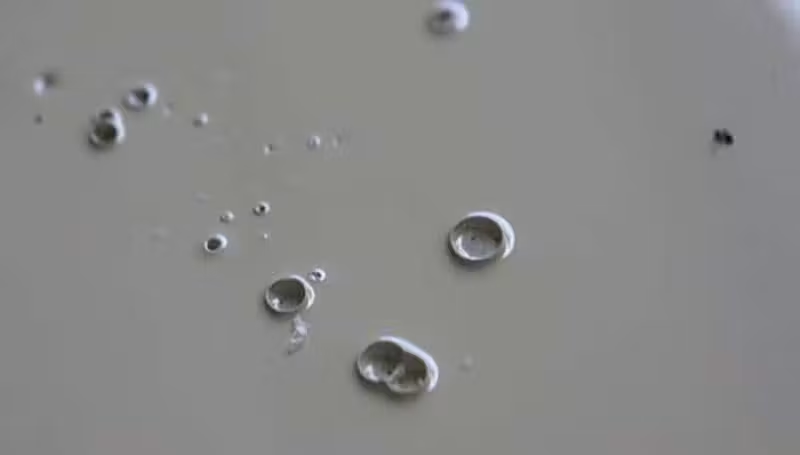
Paint craters after adding defoamer? Learn how compatibility, dosage, mixing, and surface tension affect water-based coatings… Continue reading
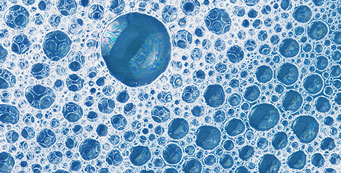
In the production process of coatings, materials such as emulsions, dispersants, thickeners, leveling agents, wetting agents, and emulsifiers are actively used, causing the coatings to foam easily. Moreover, these bubbles have a stable and long-lasting effect. In particular, emulsifiers are added to water-based latex coatings, and the use of these emulsifiers can greatly reduce the … Continue reading

During production or use, foam often acts as a “roadblock” that affects product quality and efficiency. Currently, foam is a common challenge across all industrial products and the food industry. However, there is no need to worry excessively, as foam inhibitors are specifically designed to eliminate foam. Today, we will share the four main types … Continue reading

Defoamers, including silicone defoamers, eliminate foam and are the most widely used additives across various industries. Despite their common use, some customers still encounter misconceptions during the addition process. Today, we will discuss when to add silicone defoamers and what precautions to take before addition! 1. Two conventional methods for adding silicone defoamers 1. Add … Continue reading
The worldwide defoamer market has actually witnessed an amazing surge in demand, driven by progressing commercial requirements and governing shifts. As manufacturers in various fields gradually overcome foam control barriers, from food processing to medicine, all industries gradually rely on anti-foaming agents to maintain operational efficiency. The recent report emphasizes that sales of defoamers can … Continue reading
Comprehensive Analysis of Defoamers for Oil-Based Coatings: Characteristics, Selection, and Application 1. Definition and Core Advantages of Defoamers for Oil-Based Coatings Oil-based coatings (also known as oil-based paints) primarily use drying oils as their film-forming agents and include categories such as clear oils, thick paints, and oil-based mixed paints. During production, the addition of chemical … Continue reading
Chemical stability is a necessary condition for defoamers, so defoamers in foaming systems generally do not fail due to chemical reactions. Most of the reasons for their failure are caused by changes in the dispersion state. Only by eliminating this cause can the effectiveness of the defoamer be fully exerted. 1. The defoamer particles have … Continue reading
Causes of foam formation Water-based paints are not pure liquids; they are colloidal dispersions of particles (pigments, resins) in a carrier (water). One of the key factors in the stability of air bubbles in paints is surfactants, as it is they that hold all the different ingredients together and prevent them from separating or settling. … Continue reading