
Coating Storage Separation — The Role of Thickeners in Anti-Settling
Opening a container of coating that’s been stored for a few months, only to find a layer of liquid on top and hard lumps at the bottom — this is one of the most frustrating quality issues for coating manufacturers. Separation ruins the opening effect, and severe hard settling can even render an entire batch unusable. What causes it? And how do you fix it?
What Are the Types of Coating Separation?
Coating separation isn’t just one problem — there are three common types:
-
Water separation: Clear or light yellow liquid appears on the surface, caused by the shrinkage and detachment of the water-phase thickening network.
-
Emulsion separation: Milky white liquid separates to the top, caused by emulsion particles detaching from the system and floating upward.
-
Settling: Hard sediment forms at the bottom, common in high-density pigment/filler systems.
Why Does Settling Occur?
The root cause is straightforward. Pigment and filler particles sink under gravity, and van der Waals forces between particles cause them to agglomerate and grow larger, accelerating the settling rate. According to Stokes’ Law, settling velocity is proportional to the square of particle size and inversely proportional to system viscosity. In simple terms: the larger the particles and the lower the viscosity, the faster they settle.
How Do Thickeners Prevent Settling?
Thickeners don’t just make the coating thicker. Different types work through different mechanisms:
-
Cellulosic thickeners (e.g., HEC) — Highly efficient at thickening the water phase, increasing low-shear viscosity, and imparting thixotropy to prevent sedimentation during storage. However, used alone, water separation can be significant.
-
Alkali-swellable thickeners (ASE/HASE) — Activated under alkaline conditions, they increase low-shear viscosity and provide good anti-settling and anti-water-separation performance. But they may cause post-thickening when used alone.
-
Associative polyurethane thickeners (HEUR) — Hydrophobic groups adsorb onto emulsion or pigment/filler particle surfaces, forming bridging networks between particles to prevent settling. However, any sediment that forms tends to be hard and difficult to remix.
-
Inorganic thickeners (bentonite, fumed silica) — Form a 3D “card-house” structure in water, creating thixotropic behavior that is highly effective against hard settling. Fumed silica builds a nano-network throughout the system via hydrogen bonds, effectively “holding up” pigments and fillers.
How to Choose? — Blending Is the Answer
No single thickener does it all. The industry consensus is: use blends. Tests show that a combination of a small amount of HEC with alkali-swellable and polyurethane thickeners produces a uniform state with neither sediment nor water separation. Recommended blend: HEC (0.2%-0.5%) + HEUR (0.1%-0.3%) to balance water-phase thickening and particle adsorption.
Summary
Three key takeaways for anti-settling with thickeners:
-
Thicker isn’t better — the key is building a proper low-shear viscosity network.
-
Blends outperform single thickeners — the HEC + ASE + HEUR combination works best.
-
Test, don’t guess — every batch formula must be validated through storage stability testing.
Coatings Tech+
Paint Sagging Despite Normal Viscosity: Causes & Fixes
Paint can still sag even when viscosity meets QC specifications. Learn how rheology, film thickness, temperature, and thickener selection affect sag resistance… Continue reading
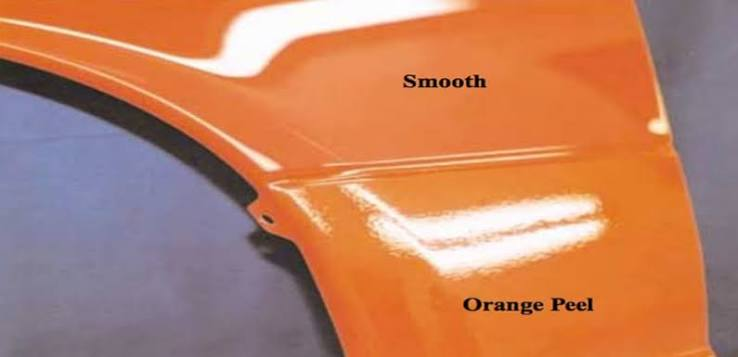
Why Does Orange Peel Occur in Coatings?
Learn why orange peel occurs in coatings and how to prevent it. Discover how viscosity, atomization, surface tension, drying conditions, and coating additives affect leveling and surface appearance… Continue reading
Why Does Exterior Wall Coating Show White Streaks After Rain?
White streaks on exterior wall coating after rain? Rainwater washes out hydrophilic components from the film. This article explains four types of rain marks and provides solutions from emulsion selection, wetting/dispersant control, color paste choice, and topcoat application… Continue reading
Why Does Coating Lose Adhesion?
Learn the common causes of coating adhesion failure and discover practical solutions to improve coating adhesion through proper surface preparation, formulation optimization, and coating additives… Continue reading
How to Improve Storage Stability of Water-Based Coatings?
Learn how to improve the storage stability of water-based coatings by optimizing formulation design, rheology modifiers, dispersants, preservatives, and production processes. Discover practical solutions to reduce sedimentation, viscosity changes, and phase separation… Continue reading
Wetting agent for water based coatings
Learn how wetting agents improve coating performance by enhancing substrate wetting, pigment dispersion, and film leveling. Discover their role in water-based coating formulations and how proper selection helps reduce coating defects… Continue reading
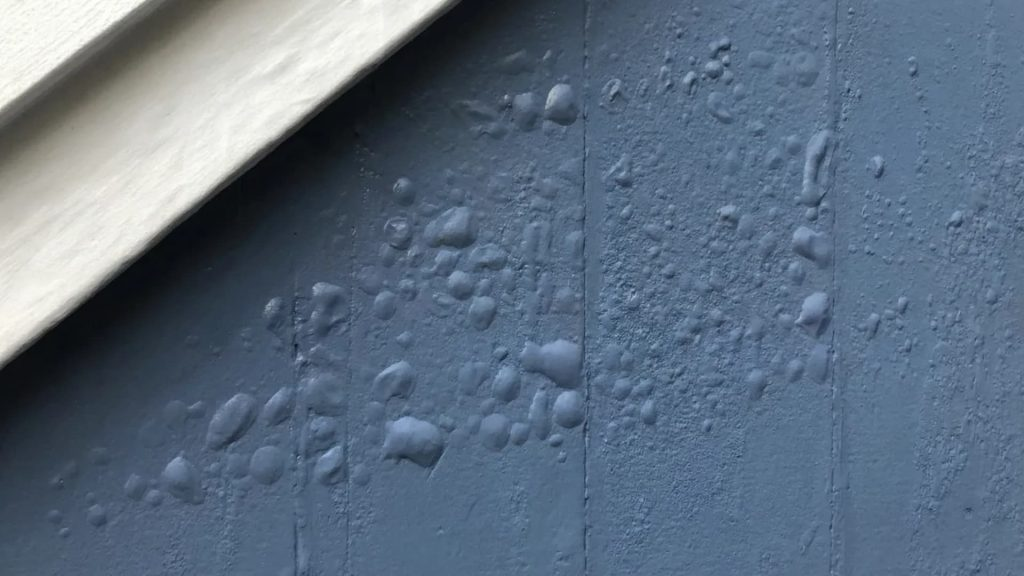
Water-based coatings foam control
Foam formation is a common issue in water-based coatings. This article explains the causes of foam and how to control it using defoamers, formulation design, and production optimization to improve coating quality and stability… Continue reading
