
Paint Sagging Despite Normal Viscosity: Causes & Fixes
A water-based paint passes the viscosity test in the laboratory. The viscosity is within specification, the paint looks normal in the container, and there is no obvious separation.
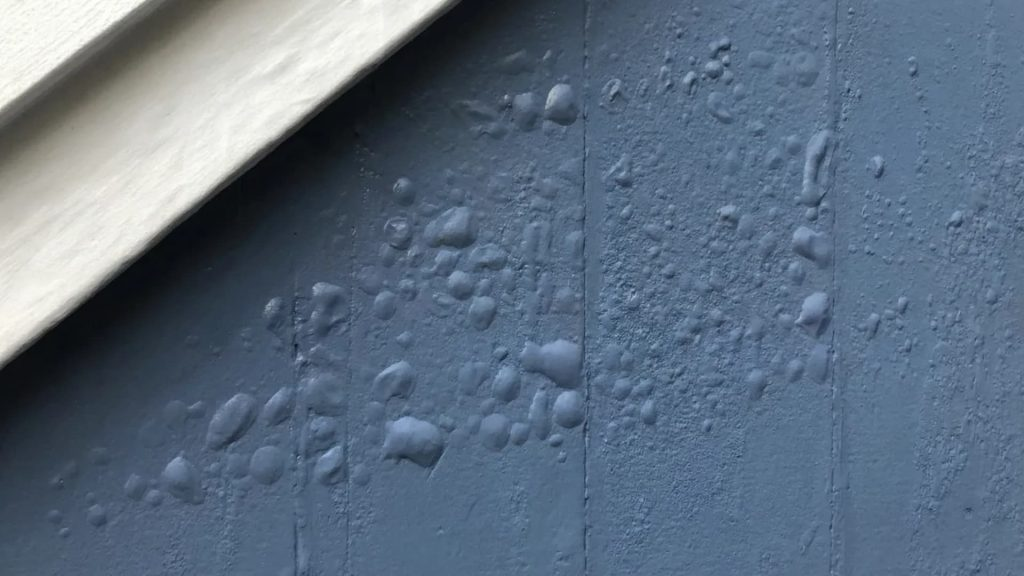
But once it is applied to a vertical wall, the coating begins to move downward and forms visible runs.
Why does this happen?
The main reason is that paint viscosity and sag resistance are related, but they are not the same thing.
A single viscosity value only describes the coating under a specific test condition. During storage, mixing, rolling, brushing, spraying, and leveling, the paint experiences very different shear conditions.
This means a paint can meet its viscosity specification and still have poor sag resistance.

1. One Viscosity Value Does Not Tell the Whole Story
Most water-based coatings show non-Newtonian behavior. Their apparent viscosity changes as the shear conditions change.
During brushing, rolling, or spraying, the coating experiences relatively high shear and should flow easily enough for good application.
Once the coating is on the wall, the shear drops rapidly. At this stage, the paint needs to recover enough structure to resist gravity.
If this recovery is too slow, the wet film begins to move downward before it stabilizes.
Therefore, two paints with similar measured viscosity can behave very differently on a vertical surface.
This is why troubleshooting paint sagging should not rely on one viscosity reading alone.
2. Check the Rheology System
When viscosity passes QC but sagging still occurs, the rheology modifier system should be one of the first formulation factors to check.
Different thickeners can produce very different flow behavior even when the final viscosity values are similar.
One formulation may have sufficient viscosity in the container but recover its structure slowly after application. Another may recover more quickly and remain stable on the wall.
The goal is therefore not simply to make the paint thicker.
A good rheology system needs to balance:
- application ease;
- leveling;
- sag resistance;
- roller spatter;
- storage stability;
- final film appearance.
Increasing thickener too much may reduce sagging but create another problem: poor leveling and visible roller or brush marks.
The formulation should therefore be optimized as a complete rheological system rather than by chasing the highest viscosity number.
3. Check HEC Grade and Dosage
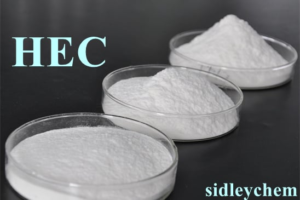 Hydroxyethyl cellulose (HEC) is widely used in water-based paints to control viscosity, suspension, water retention, and application properties.
However, different HEC grades can produce different rheological behavior.
If the existing formulation has insufficient sag resistance, simply increasing the dosage is not always the best solution.
A better comparison is to test:
- the current HEC grade at the current dosage;
- a slightly higher dosage;
- another suitable viscosity grade;
- HEC combined with another coating thickener.
For each sample, compare not only viscosity but also roller application, leveling, sag resistance, and final film appearance.
The best formulation is the one that provides the most balanced application performance—not necessarily the highest measured viscosity.

4. The Wet Film May Be Too Thick
Sometimes the formulation is not the main problem. A thicker wet film has a greater tendency to move downward under gravity. Sagging may therefore become more obvious when:
- too much paint is applied in one coat;
- the roller holds excessive paint;
- spray application produces excessive film build;
- the operator repeatedly passes over the same area before the coating stabilizes.
When comparing formulations in the laboratory, the wet-film thickness should be kept consistent. Otherwise, one sample may appear to have poorer sag resistance simply because more coating was applied.
5. Temperature Can Change Sagging Performance
Application temperature is another factor that is easy to overlook. Many water-based systems become less viscous as temperature increases. As a result, a formulation that performs well under normal laboratory conditions may sag more easily in a hot workshop or during summer application.
When a customer reports that sagging occurs only in hot weather, first check:
- paint temperature;
- substrate temperature;
- storage conditions;
- application environment.
Do not immediately assume that the thickener or HEC quality has changed. The same formulation should be tested at controlled temperatures before making a major adjustment.
6. A Simple Troubleshooting Guide
Instead of immediately adding more thickener, start by identifying when the sagging occurs.
| Observation | First Factor to Check |
|---|---|
| Viscosity is normal but the paint still sags | Rheology profile |
| Sagging increases with a heavier coat | Wet-film thickness |
| Sagging mainly occurs in hot weather | Temperature |
| Factory sample is normal but jobsite paint sags | Added water |
| More thickener stops sagging but worsens leveling | Thickener balance |
| Similar viscosity but different sagging between batches | Rheology system or raw-material interaction |
Then prepare several controlled samples and change only one variable at a time.
For example:
- Sample A: Current formulation
- Sample B: Slightly higher thickener dosage
- Sample C: Adjusted HEC or rheology modifier combination
- Sample D: Current formulation tested at a higher temperature
Compare viscosity, sagging, leveling, roller application, and final film appearance.
This approach makes it much easier to identify the real cause.
Conclusion
If paint sags even though the viscosity meets specification, the solution is not always to add more thickener.
The real cause may be:
- an unsuitable rheological profile;
- slow structure recovery after application;
- excessive wet-film thickness;
- high temperature;
- excessive dilution;
- an unbalanced thickener system.
The most effective approach is to evaluate viscosity, paint rheology, application conditions, and sagging performance together.
For coating formulators, the target should not be the highest possible viscosity. It should be the right balance between application, leveling, sag resistance, and final film appearance.
Coatings Tech+
Why Does Orange Peel Occur in Coatings?
Learn why orange peel occurs in coatings and how to prevent it. Discover how viscosity, atomization, surface tension, drying conditions, and coating additives affect leveling and surface appearance… Continue reading
Why Does Exterior Wall Coating Show White Streaks After Rain?
White streaks on exterior wall coating after rain? Rainwater washes out hydrophilic components from the film. This article explains four types of rain marks and provides solutions from emulsion selection, wetting/dispersant control, color paste choice, and topcoat application… Continue reading

Coating Storage Separation — The Role of Thickeners in Anti-Settling
Coating storage separation is the most common quality headache for manufacturers. Water separation, emulsion separation, and hard settling have different causes and solutions. … Continue reading
Why Does Coating Lose Adhesion?
Learn the common causes of coating adhesion failure and discover practical solutions to improve coating adhesion through proper surface preparation, formulation optimization, and coating additives… Continue reading

How to Improve Storage Stability of Water-Based Coatings?
Learn how to improve the storage stability of water-based coatings by optimizing formulation design, rheology modifiers, dispersants, preservatives, and production processes. Discover practical solutions to reduce sedimentation, viscosity changes, and phase separation… Continue reading
Wetting agent for water based coatings
Learn how wetting agents improve coating performance by enhancing substrate wetting, pigment dispersion, and film leveling. Discover their role in water-based coating formulations and how proper selection helps reduce coating defects… Continue reading
Water-based coatings foam control
Foam formation is a common issue in water-based coatings. This article explains the causes of foam and how to control it using defoamers, formulation design, and production optimization to improve coating quality and stability… Continue reading
