
Innovative ‘self-heating, self-healing’ concrete being tested at MSU
Contact Info
Contact Form
As winter weather arrives in Michigan, researchers in Lansing have their eyes on four concrete slabs that, they hope, will one day make the state’s roads safer during the snowy season — not to mention easier and cheaper to maintain.
These aren’t just any concrete slabs, though. Each was made with a different mixture of a proprietary formula designed to melt ice and snow. Each will be rigged with wires to give Michigan State University team members readings about its durability and performance.
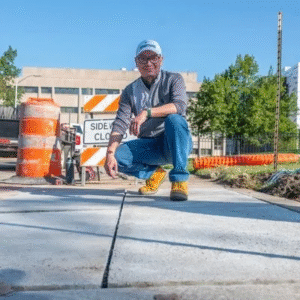 “This concrete is the future, and it could revolutionize the infrastructure for urban communities by reducing maintenance costs and for rural communities that need safer, sustainable solutions,” said Quingxu “Bill” Jin, the MSU assistant professor who developed the new concrete. “We can’t wait to see how the concrete performs on campus this winter.”
Michigan State University assistant professor Quingxu “Bill” Jin poses beside slabs made of a new type of “self-heating, self-healing” bendable concrete he developed.
Jin and his team will monitor what MSU calls “self-heating and self-healing bendable” concrete throughout the winter as the slabs do battle with the snow, sleet and ice, as well as pedestrian foot traffic.
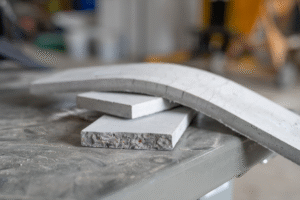
In October, MSU personnel celebrated the launch of the pilot test with a public demonstration where MSU President Kevin Guskiewicz placed a small, square piece of concrete cast with the MSU Spartan helmet logo next to the four test slabs.
“Every journey, no matter how long, must begin with small steps, and it’s no small thing to advance the state of the art in pavement materials engineering when it comes to Michigan’s notoriously punishing climate — especially with ever-escalating costs of repairs and materials,” Guskiewicz said in a press release issued by MSU following the event.
“Today, we showcase our College of Engineering’s research excellence and MSU’s impact in our own backyard and beyond.”
Michigan ranks 31st in the country in terms of road conditions, according to U.S. News & World Report. The state is setting aside about $2 billion each year to fix state and local roads, Gov. Gretchen Whitmer said in October, after signing the state’s Fiscal Year 2026 budget into law.
The state’s cracked and bumpy roadways aren’t just costly for the government, they also cost motorists a little under $3,000 a year due in vehicle depreciation, repair costs, time spent waiting in traffic and other factors, according to a study by TRIP, a Washington, D.C.-based nonprofit focused on transportation issues. The organization found that 40% of the state’s locally and state-maintained roads are in poor or mediocre condition.
Other News
SidleyChem to Showcase Detergent and Personal Care Additives at SEPAWA Congress 2026 in Berlin
Meet SidleyChem at SEPAWA Congress 2026 in Berlin, October 14–16, Booth D571. Explore cellulose ethers and functional additives for detergent and personal care formulations… Continue reading
SidleyChem Connects with Coatings Industry Professionals at Middle East Coatings Show 2026 in Dubai
SidleyChem participated in Middle East Coatings Show 2026 in Dubai, presenting cellulose ethers and functional coating additives at Booth … Continue reading
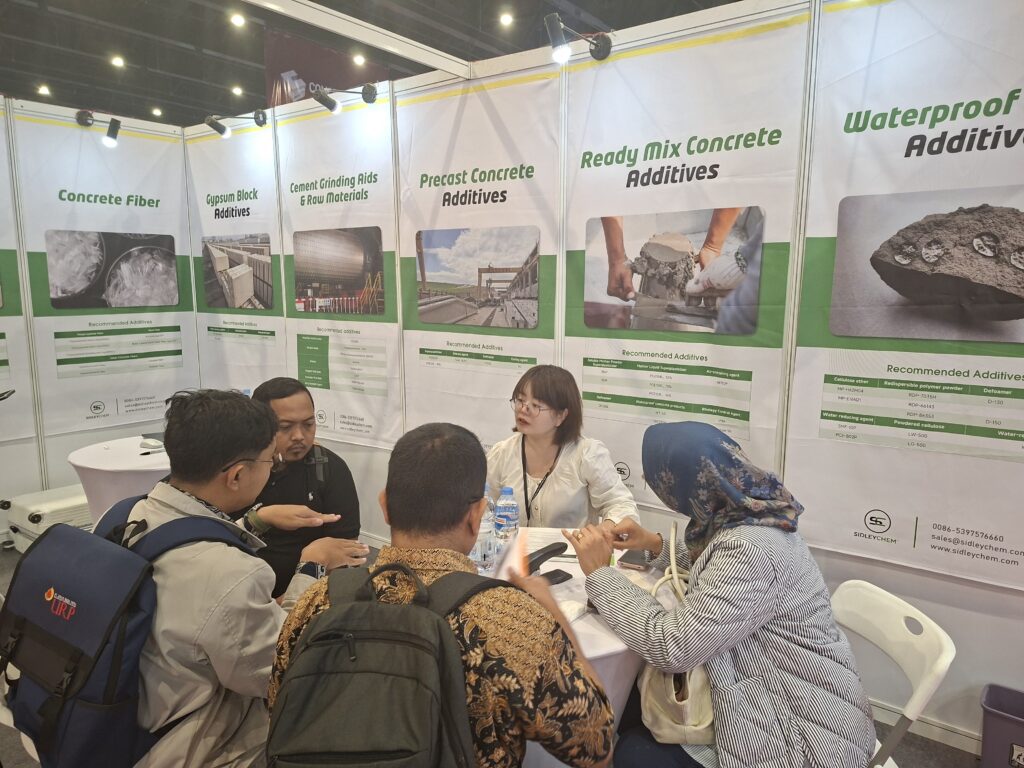
SidleyChem at Concrete Show South East Asia 2026 Jakarta
SidleyChem participated in Concrete Show South East Asia 2026 in Jakarta at Booth 2029, presenting concrete admixtures, dry-mix mortar additives and cellulose ethers… Continue reading
