
Agglomeration Issue of HPMC
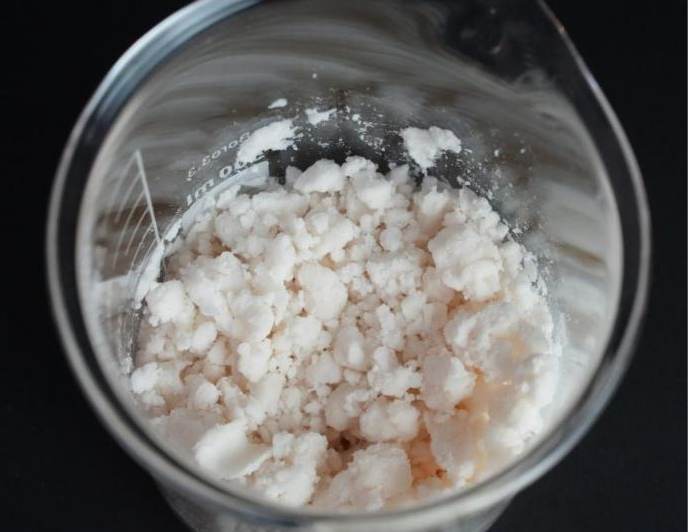
Recently, we received feedback from some customers that when producing water-based cosmetic products or coatings, directly adding hydroxypropyl methylcellulose (HPMC) powder often results in an agglomeration phenomenon and uneven dissolution. This article will start with a mechanism analysis and provide practical solutions to help you optimize your process and ensure product quality.
I. Why Does HPMC agglomerate?
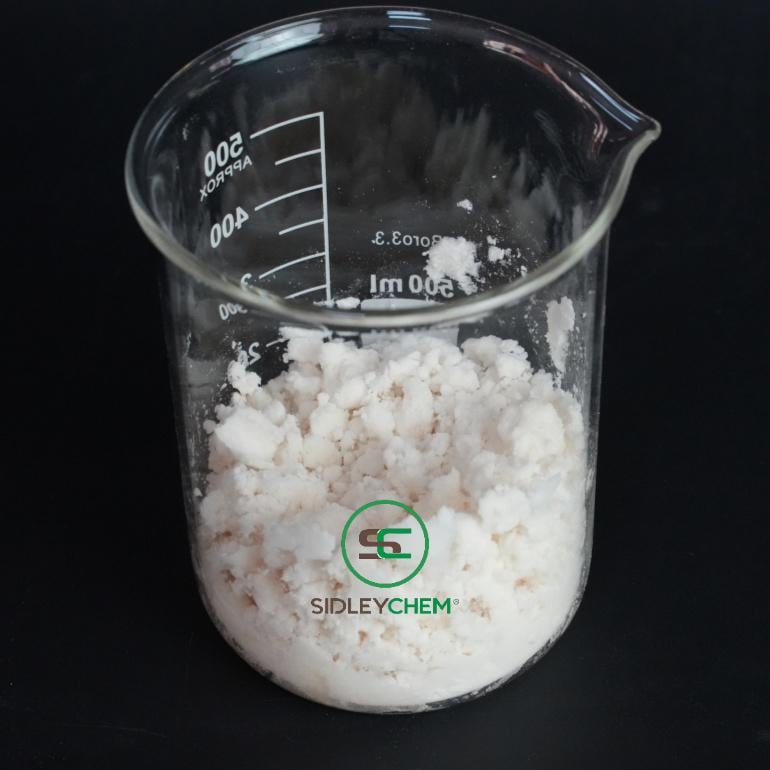
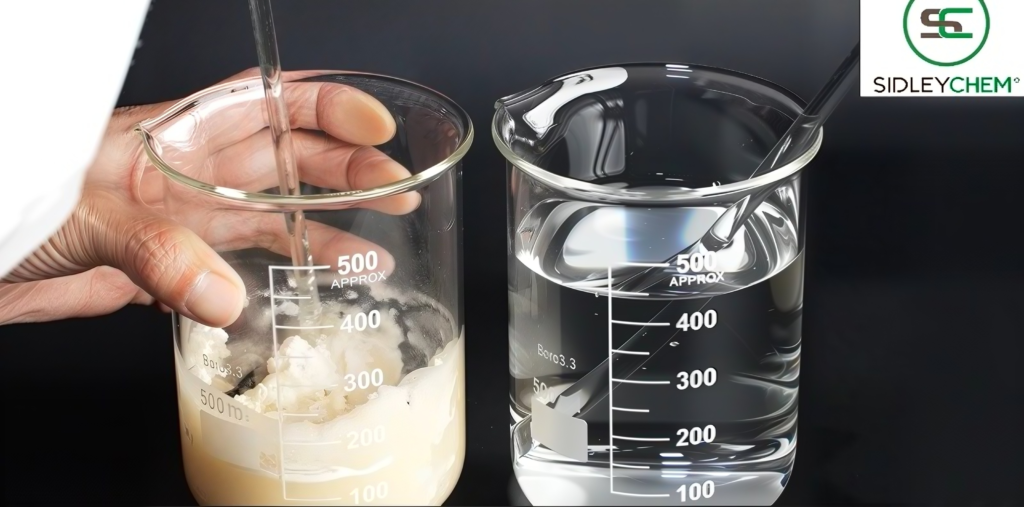
Agglomeration Phenomenon: When HPMC powder is directly and heavily introduced into a pre-mixed material batch, its outer layer instantly contacts a large number of water molecules, rapidly hydrating and swelling to form a dense gel layer. This gel layer encapsulates the inner dry powder, preventing further water penetration. This ultimately results in the formation of viscous gel lumps on the exterior while the interior remains dry powder—the phenomenon of agglomeration.
This not only severely impacts production efficiency but also prevents HPMC from dispersing uniformly and performing its core functions such as thickening and water retention, leading to inconsistent product performance between batches.
II. Solutions:
Solution 1: Adjust Addition Sequence (Recommended)
Steps:
- Add the majority of the total water required for the formulation first.
- While maintaining continuous, thorough mixing, slowly and evenly sprinkle in the HPMC powder.
- Continue mixing until the HPMC powder is completely dispersed in the water, forming a uniform solution with no visible particles.
- Add other ingredients only after complete dispersion is achieved.
Advantages: This core solution fundamentally prevents instantaneous contact between powder and large volumes of water.
It is simple to implement, ensures complete HPMC dissolution, and maximizes efficacy.
Solution 2:
If process constraints prevent altering the existing addition sequence, use this pre-dispersion method.
Steps:
- Reserve a portion of water during ingredient preparation. Mix this reserved water with hydroxypropyl methylcellulose.
- After complete dispersion, add the mixture to the product in liquid form.
Key Considerations:
- Water quantity is critical: The reserved water must be sufficient. Insufficient water will cause the mixture to agglomerate during pre-dispersion.
- Immediate action: If caking unexpectedly occurs during slurry preparation, immediately add a large amount of water and accelerate stirring. Do not wait. Once the agglomerates fully form, they become extremely difficult to dissolve.
III. Key Application Characteristics of HPMC
To apply HPMC flexibly, mastering its core properties is essential:
- Hydroxypropyl methylcellulose functions as a thickener only within pH 6-10 formulations; it is unsuitable for strong acid or alkali systems. Under strong acid (pH < 3) or strong alkali (pH > 10) conditions, its molecular chains degrade easily, causing significant viscosity loss or complete failure.
- HPMC’s onset time is influenced by water temperature and pH: higher temperatures accelerate onset, while lower temperatures slow it down. Acidic pH delays onset, whereas alkaline pH accelerates it.
- HPMC’s thickening effect does not necessarily correlate directly with its inherent viscosity. Consequently, different HPMC grades with identical viscosities and addition levels may exhibit significant variations in thickening performance within actual systems. Selecting a product grade validated through application testing is crucial.
Cellulose Ether Tech+

Sodium CMC Saline Alkali Land Remediation
This article details four core functions of Sodium Carboxymethyl Cellulose (CMC) in saline-alkali land remediation: water retention, soil aggregation, salt chelation, and slow-release nutrient enhancement, with an introduction to SIDLEYCHEM’s green CMC products… Continue reading
CMC Paper Applications
This article details the customized applications of Sodium Carboxymethyl Cellulose (CMC) in printing paper, packaging board, tissue, and specialty paper, covering key parameters like viscosity selection and pH compatibility, with paper grade CMC specifications… Continue reading
Application Guide for Textile Grade CMC
This article details the application advantages of textile grade Sodium Carboxymethyl Cellulose (CMC) in printing pastes, yarn sizing, and dyeing auxiliaries, including rheology, water retention, stability, and eco-friendliness, with technical specifications reference… Continue reading
Cosmetic Raw Materials Classification
This article systematically categorizes 30 common cosmetic raw materials, covering oils, surfactants, active ingredients, and plant extracts, providing basic reference for formulation development and ingredient selection… Continue reading
Personal Care Formulation Process
This article lists key process points for thickeners in personal care formulations, including dissolution, pH control, salt tolerance, and selection, and introduces relevant cellulose ether products from … Continue reading
Surfactants in daily chemicals
This article analyzes the definition and amphiphilic nature of surfactants, details their roles in four major daily chemical scenarios (cleaning, skincare, oral care, cosmetics), and summarizes three core advantages. It concludes by relating to SIDLEYCHEM’s expertise and products in relevant areas such as cellulose ethers and redispersible polymer powder… Continue reading

Sodium CarboxyMethylCellulose(CMC) Applications
This article details the properties of food-grade CMC and its key applications in foods like soy milk, ice cream, noodles, and pastries, covering its thickening, stabilizing, and moisture-retaining functions with practical dosage recommendations for food formulators… Continue reading

Architectural coating system
This article details the three core functions of architectural coatings and standard coating system structures (primer, mid-coat, topcoat), analyzing the role of each layer to provide a clear technical framework for selection, formulation, and application… Continue reading

hand sanitizer formulation
A practical guide on hand sanitizer types and formulation basics. Learn about core ingredients like surfactants, HPMC thickeners, and antibacterial agents for developing effective regular, antibacterial, or waterless hand sanitizers… Continue reading
Detergent formulation ingredients
How to select raw materials for FMCG product development? This article details the functions of ten key ingredients like sulfonic acid, AES, AEO-9, and HPMC, offering crucial advice on compliance, safety, and formulation to streamline your product development… Continue reading
