
Detergent formulation ingredients
For manufacturers of fast-moving consumer goods, the selection of raw materials directly determines the performance, safety, and market competitiveness of the final product. Faced with a vast array of chemicals, how does one make a scientific choice? This article systematically outlines ten key raw materials used in detergents, personal care, and other FMCG products, explains their functions, and provides crucial selection and application guidance to offer clear direction for your formulation development.
I. Functional Analysis of Ten Key Raw Materials

-
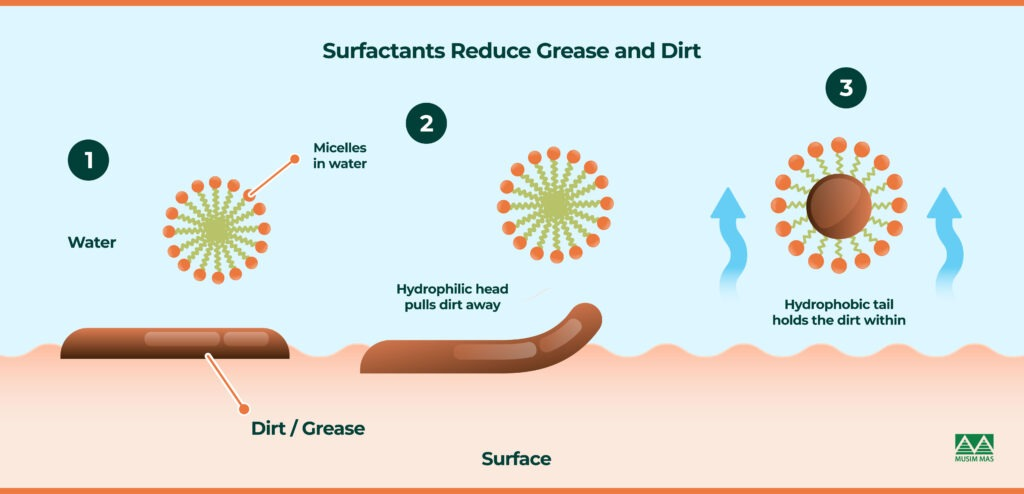
Sulfonic Acid & Derivatives: As anionic surfactants, they possess excellent detergency, wetting, and emulsifying power. They serve as fundamental components in laundry powders, dishwashing detergents, and industrial cleaners.
-
AES (Sodium Laureth Sulfate): A high-performance anionic surfactant known for its strong detergency and foaming power. Widely used in liquid detergents, process control is needed to prevent gel formation.
-
AEO-9 (Alcohol Ethoxylate): A classic non-ionic surfactant renowned for its outstanding emulsifying, dispersing, water-soluble, and cleaning properties. It is a key ingredient in various cleaning agents and textile/printing auxiliaries.
-
6501 (Cocamide DEA): A non-ionic surfactant primarily used as a thickening and foam stabilizer. It significantly enhances the richness and persistence of foam in a system and improves cleaning efficacy.
-
Cocamidopropyl Betaine (e.g., BS-12): An amphoteric surfactant valued for its mildness, excellent cleaning, antistatic properties, and hardness tolerance. It is an ideal choice for formulating premium shampoos and body washes.
6.Flake Caustic Soda (Sodium Hydroxide): An essential basic chemical raw material. In the FMCG sector, it is commonly used to adjust pH and is a necessary component in many cleaning agent formulations.
 7.Industrial Salt (Sodium Chloride): In some low-cost formulations, it can function as an inorganic salt thickener, effectively increasing the apparent viscosity of liquid products.
8.FMCG Fragrances: Scents such as lemon or floral are used to impart pleasant odors, enhancing the sensory experience. Selection must align with market preferences and regulatory requirements.

9.Functional Additives: This category includes solubilizers (ensuring ingredient compatibility), preservatives (ensuring shelf-life safety), and colorants (adjusting product appearance). They are key to perfecting formulation performance and compliance.
10.HPMC (Hydroxypropyl Methylcellulose): An efficient rheology modifier and stabilizer. It significantly thickens and prevents formulation separation or thinning. In shampoos and body washes, it provides a smooth, delicate texture and ensures long-term storage stability.
II. Key Recommendations for Selection and Application
-
Compliance First: All raw materials must comply with national regulations and standards and those of the target market. This is the prerequisite for safe product launch.
-
Safety and Market Orientation: Pay attention to the toxicological data and ecological requirements of ingredients. Given that some consumers may have sensitivities to fragrances or preservatives, “additive-free” or “minimalist” formulations represent an important market segment.
-
Start Simple and Scale Up: For formulation beginners, it is advisable to start with a combination of 2-3 core surfactants, gradually gaining experience before expanding to functional additives for performance optimization.
Cellulose Ether Tech+

Key Properties and Selection Guide for Sodium Carboxymethyl Cellulose (CMC) in Toothpaste Industry
This article details key properties of Sodium Carboxymethyl Cellulose (CMC) in toothpaste: effects of viscosity, degree of substitution, substitution uniformity, and salt resistance on paste thickening, ribbon formation, and stability, with selection guidelines for toothpaste-grade … Continue reading

Sodium CMC Saline Alkali Land Remediation
This article details four core functions of Sodium Carboxymethyl Cellulose (CMC) in saline-alkali land remediation: water retention, soil aggregation, salt chelation, and slow-release nutrient enhancement, with an introduction to SIDLEYCHEM’s green CMC products… Continue reading

CMC Paper Applications
This article details the customized applications of Sodium Carboxymethyl Cellulose (CMC) in printing paper, packaging board, tissue, and specialty paper, covering key parameters like viscosity selection and pH compatibility, with paper grade CMC specifications… Continue reading
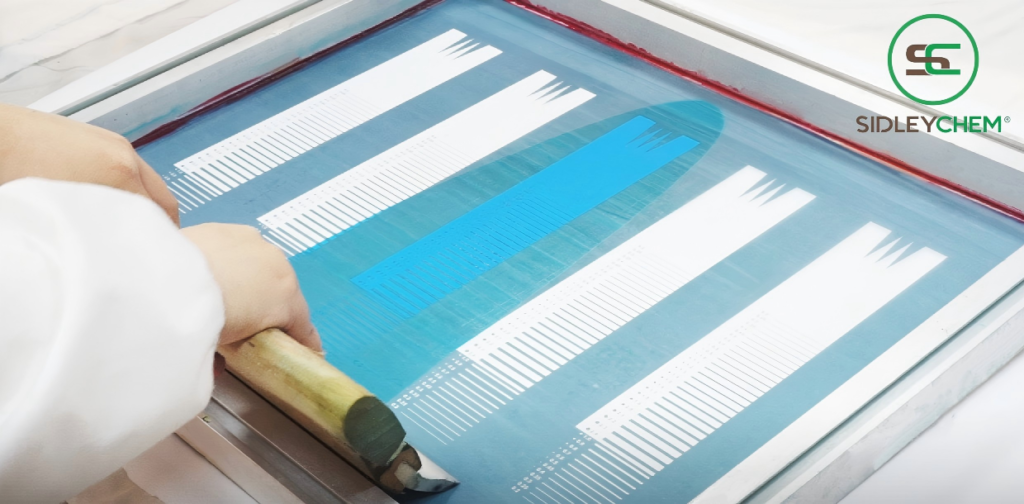
Application Guide for Textile Grade CMC
This article details the application advantages of textile grade Sodium Carboxymethyl Cellulose (CMC) in printing pastes, yarn sizing, and dyeing auxiliaries, including rheology, water retention, stability, and eco-friendliness, with technical specifications reference… Continue reading
Cosmetic Raw Materials Classification
This article systematically categorizes 30 common cosmetic raw materials, covering oils, surfactants, active ingredients, and plant extracts, providing basic reference for formulation development and ingredient selection… Continue reading
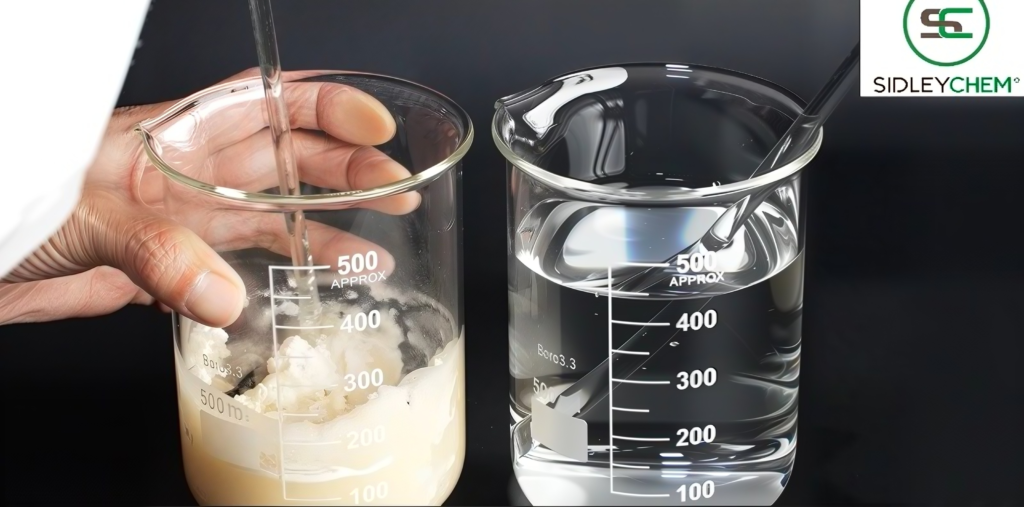
Personal Care Formulation Process
This article lists key process points for thickeners in personal care formulations, including dissolution, pH control, salt tolerance, and selection, and introduces relevant cellulose ether products from … Continue reading
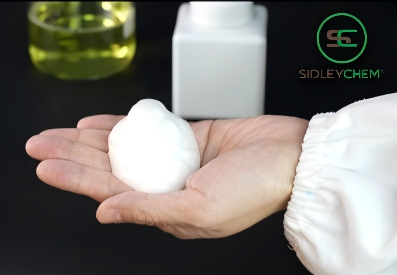
Surfactants in daily chemicals
This article analyzes the definition and amphiphilic nature of surfactants, details their roles in four major daily chemical scenarios (cleaning, skincare, oral care, cosmetics), and summarizes three core advantages. It concludes by relating to SIDLEYCHEM’s expertise and products in relevant areas such as cellulose ethers and redispersible polymer powder… Continue reading

Sodium CarboxyMethylCellulose(CMC) Applications
This article details the properties of food-grade CMC and its key applications in foods like soy milk, ice cream, noodles, and pastries, covering its thickening, stabilizing, and moisture-retaining functions with practical dosage recommendations for food formulators… Continue reading

Architectural coating system
This article details the three core functions of architectural coatings and standard coating system structures (primer, mid-coat, topcoat), analyzing the role of each layer to provide a clear technical framework for selection, formulation, and application… Continue reading

hand sanitizer formulation
A practical guide on hand sanitizer types and formulation basics. Learn about core ingredients like surfactants, HPMC thickeners, and antibacterial agents for developing effective regular, antibacterial, or waterless hand sanitizers… Continue reading
