
Surfactants in daily chemicals
Surfactants are indispensable functional ingredients. This article briefly introduces their basic concepts and focuses on their specific applications and core advantages in daily chemical products.
1. Basic Concepts of Surfactants
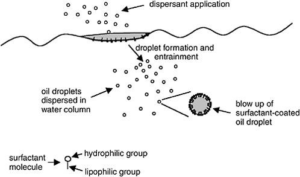 Surfactants, or surface-active agents, are special compounds composed of hydrophilic (water-loving) and hydrophobic (water-repelling) groups.
Their molecules exhibit unique properties at interfaces (e.g., liquid surface, gas-liquid, liquid-liquid), enabling them to alter interfacial tension, improve wettability, and enhance dispersion. They are widely used to improve chemical reactions, provide lubrication, generate foam, and more.

2. Surfactant Applications in Daily Chemical Products
2.1 Detergents and Cleaners
This is the most extensive application area for surfactants. Their primary function is to break the bond between dirt/grease and surfaces, dispersing them into water for removal. They also reduce water’s surface tension, improving the penetration and mixing efficiency of detergents.
2.2 Skin Care Products
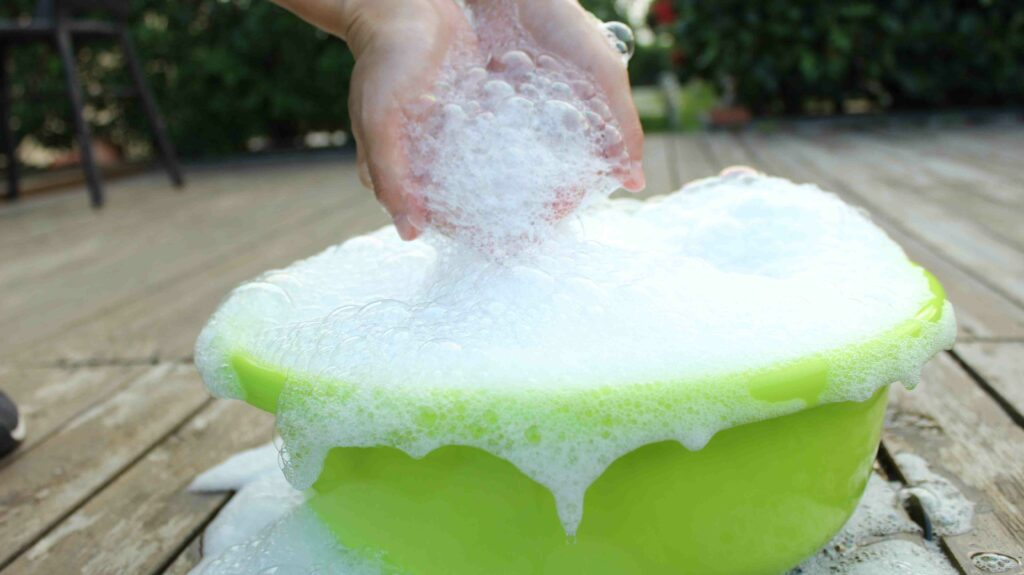
In soaps, body washes, and facial cleansers, surfactants primarily provide cleaning and wetting effects. They must balance cleansing power with mildness to avoid excessive damage to the skin’s natural protective barrier.
2.3 Oral Care Products
In toothpaste and mouthwash, surfactants (e.g., Sodium Lauryl Sulfate) generate rich foam, helping to disperse abrasives and flavors, thereby enhancing the user experience and cleaning effectiveness.
2.4 Cosmetics
In lotions and creams, surfactants often serve as emulsifiers, ensuring the stable mixture of water-based and oil-based components to form a uniform and consistent product texture.
3. Summary of Core Advantages of Surfactants
-
Reduces Interfacial Tension, Enhances Dispersion: Their amphiphilic nature allows them to significantly lower surface tension and efficiently disperse oils or solid particles in aqueous systems.
-
Forms Micelles: At specific concentrations, they can self-assemble into micellar structures, which is fundamental to functions like solubilization and cleaning, and is also applied in advanced fields like drug delivery.
-
Provides Lubrication: They possess good lubricating properties and can be used in specific formulations requiring friction reduction.
4.Conclusion
 The unique amphiphilic molecular structure of surfactants makes them fundamental to achieving various functions in daily chemical products. Their core principles of “interface control” and “rheology modification” deeply align with the performance chemical sectors SIDLEYCHEM focuses on.
For instance, in the field of construction chemicals, our Cellulose Ethers (e.g., HPMC) act as water retention agents and thickeners. Their mechanism shares similarities with surfactants, as both significantly alter a system’s rheology and stability through intermolecular forces. In coating and adhesive formulations, surfactants synergize with products like our Redispersible Polymer Powder to collectively optimize workability, adhesive strength, and final performance.
SIDLEYCHEM is committed to providing innovative functional chemical solutions across industries. We possess a deep understanding of the mechanisms of various additives, including surfactants, and can offer professional product selection and application support tailored to your specific formulation needs.
Related Products
Our Videos
Cellulose Ether Tech+
Why Microcrystalline Cellulose Is Widely Used in Tablet Manufacturing?
Learn why Microcrystalline Cellulose (MCC) is widely used in tablet manufacturing and how its compressibility and binding properties support direct compression… Continue reading

How Does Cellulose Ether Improve Makeup Longevity?
Makeup not lasting long enough? Cellulose ether is a natural-derived film-forming solution. How to choose between EC, HEC, and HPMC? This article breaks down their applications in lip gloss, foundation, and setting spray… Continue reading
How CMC Makes Ice Cream Creamier with Fewer Ice Crystals?
This article explains four key roles of Sodium Carboxymethyl Cellulose (CMC) in ice cream: preventing ice crystal growth, increasing viscosity, improving mouthfeel, and preventing fat separation, with SIDLEYCHEM food grade CMC solutions… Continue reading

How Polyanionic Cellulose (PAC) Improves Water-Based Drilling Fluids
Learn how Polyanionic Cellulose (PAC) improves water-based drilling fluids by controlling fluid loss, enhancing borehole stability, and optimizing drilling performance in oil and gas operations… Continue reading

Sodium Carboxymethyl Cellulose in Toothpaste
Discover why Sodium Carboxymethyl Cellulose (CMC) is widely used in toothpaste. Learn how CMC improves consistency, stability, spreadability, and overall oral care product performance… Continue reading
HEC in hand soap
Hydroxyethyl Cellulose (HEC) improves foam stability in hand soap by increasing viscosity, stabilizing foam structure, and enhancing texture, delivering a richer and longer-lasting washing experience… Continue reading
HEC for liquid detergent
Hydroxyethyl Cellulose (HEC) is widely used in liquid detergents due to its excellent thickening performance, surfactant compatibility, and stable rheology, improving product stability and user experience… Continue reading

Choosing the Right Cellulose Ether for Detergent Manufacturing
This guide provides a complete framework for selecting cellulose ethers in detergent manufacturing: comparing HEC vs. CMC performance, selection factors, and combination strategies, with SIDLEYCHEM customized product solutions… Continue reading

Oilfield Grade CMC Application
This article details the multifunctional applications of oilfield grade CMC in drilling, cementing, and fracturing fluids, including fluid loss reduction, viscosity enhancement, proppant transport, and guar gum replacement, with LVT/HVT and ultra-high viscosity specifications… Continue reading

PAC Drilling Fluid Application
This article details oilfield grade PAC applications in drilling fluid solids control, performance regulation, and system stabilization, with PAC-LV/HV specifications… Continue reading
