
Why Does Water-Based Paint Develop Craters After Adding Defoamer?
A water-based paint has too much foam, so more coating defoamer is added.
The foam disappears—but after application, small circular depressions or crater-like defects appear in the film.
Does this mean the defoamer is ineffective?
Not necessarily.
A defoamer must be incompatible enough to break foam, but compatible enough to disperse properly in the coating. If this balance is wrong, the foam problem may improve while a new surface defect appears.
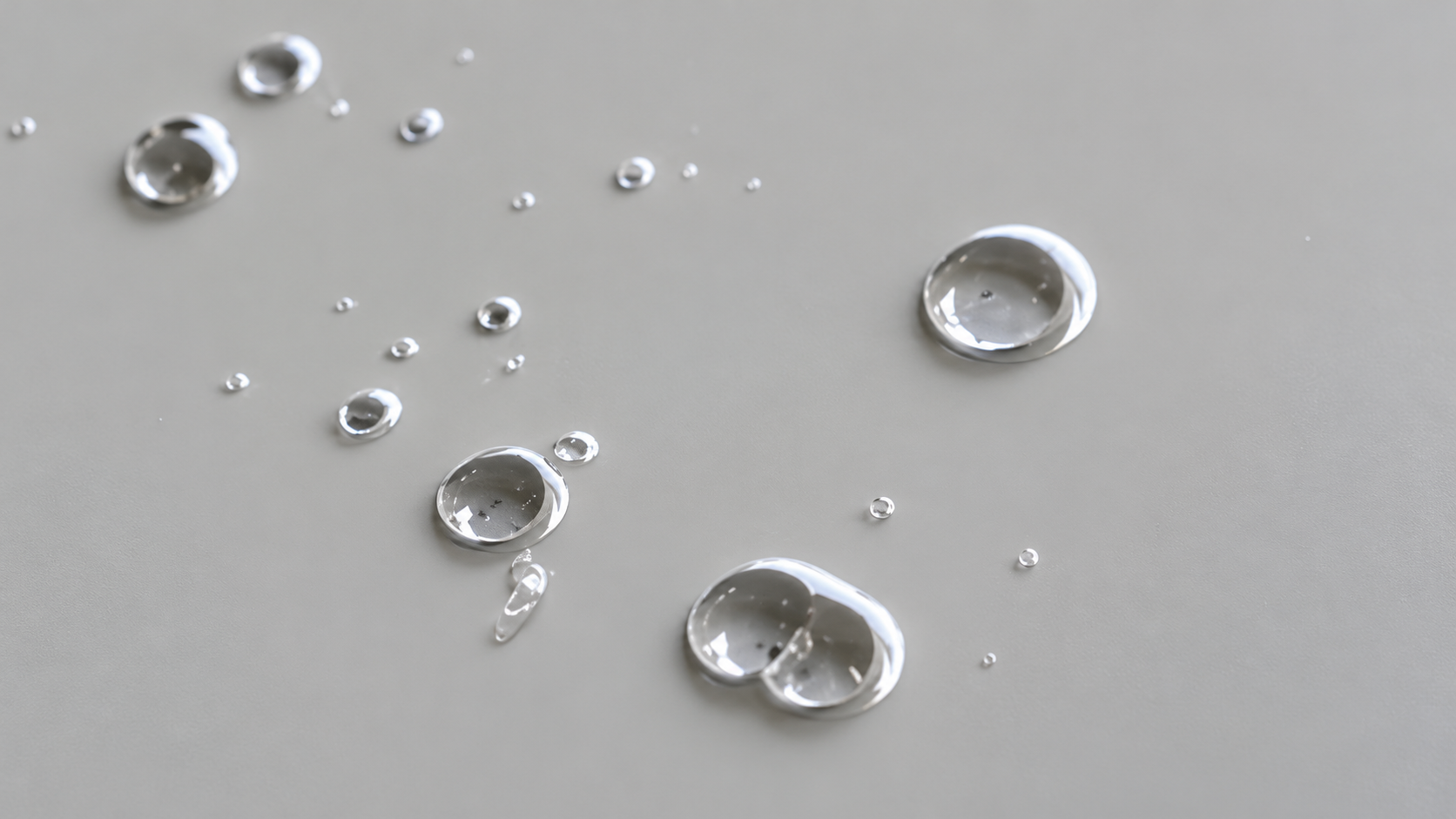
1. First Check Whether It Is Really a Crater
Craters are not the same as pinholes. Pinholes are often associated with air bubbles that remain in the coating and burst too late.
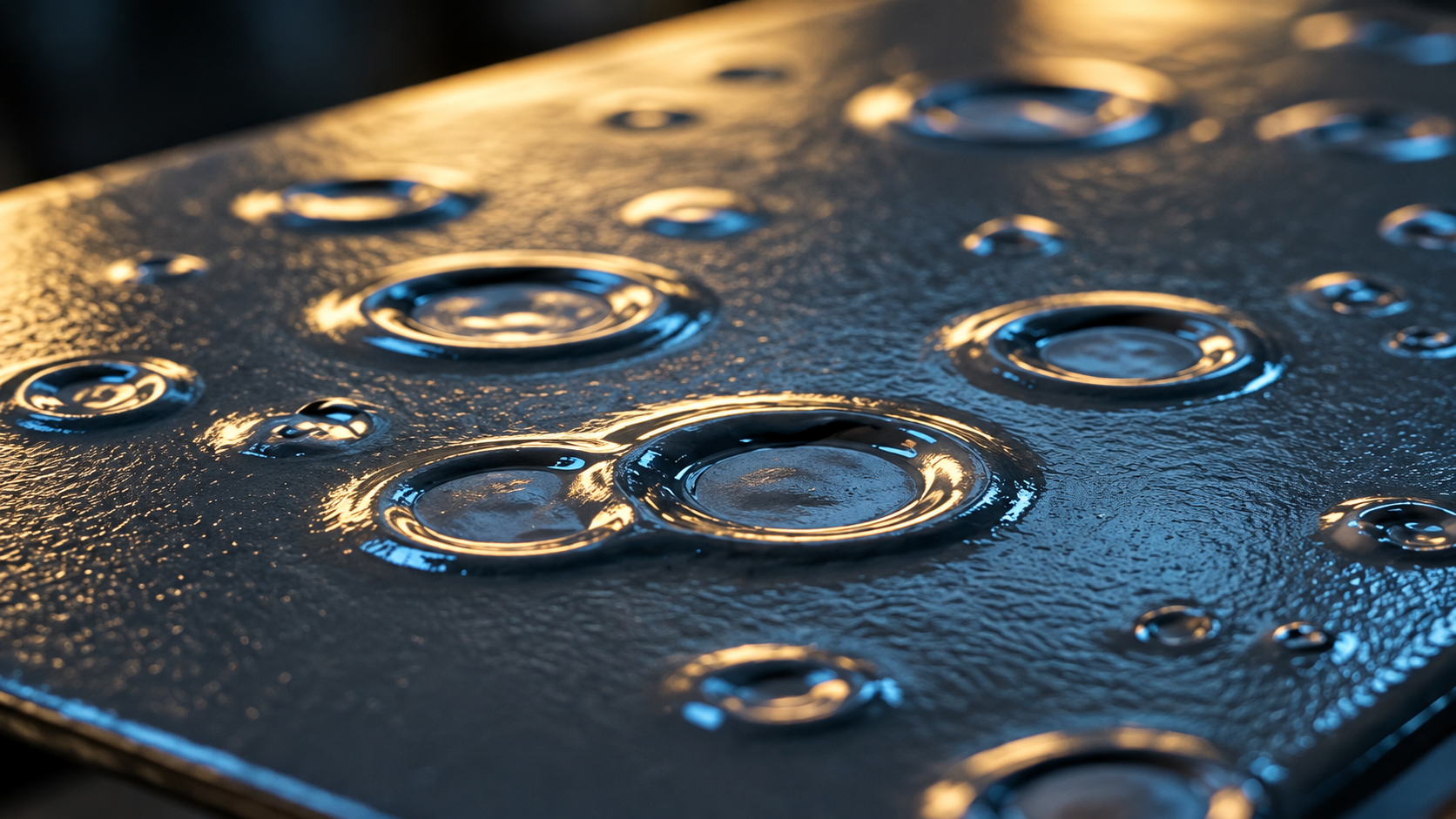
Craters usually appear as circular depressions where the wet coating pulls away from a local area.
They can be related to surface tension gradients, poor wetting, contamination, or poorly dispersed additives. The American Coatings Association also identifies surface-tension differences and contaminants as common causes of coating craters.
2. Too Much Defoamer Can Cause Problems
Adding more defoamer does not always mean better foam control.
If the dosage becomes too high, incompatible defoamer droplets may remain in the coating and disturb film formation.
Typical signs include:
- foam is reduced but craters appear;
- oily spots appear on the wet film;
- gloss becomes uneven;
- defects increase as defoamer dosage increases.
In this situation, prepare a dosage ladder instead of continuing to increase the additive.
For example:
- Current dosage
- Slightly lower dosage
- Slightly higher dosage
Keep the rest of the formulation unchanged.
3. Defoamer Type May Not Match the Formulation
Different water-based paints may require different defoamer chemistries.
SidleyChem’s coating defoamer range includes mineral-oil and silicone-modified polyether systems designed for different compatibility and foam-control requirements. A defoamer that works well in one acrylic emulsion may behave differently in another system containing different:
-emulsifiers-dispersants-thickeners-pigments-fillers.

4. Check When the Defoamer Is Added
The addition stage can also affect performance. Part of the defoamer may be added during pigment dispersion, while another portion can be added during the let-down stage. If all of the defoamer is exposed to very high shear for too long, its effectiveness may change.
addition stage;mixing speed;mixing time;defoamer dosage.
If the formula is unchanged but the defect suddenly appears after changing the production process, check mixing before changing the additive.
5. Check Wetting and Contamination
Not every crater is caused by the defoamer itself.
Oil, silicone contamination, dirty equipment, substrate contamination, or poor wetting agent balance may also cause the coating to pull away locally.
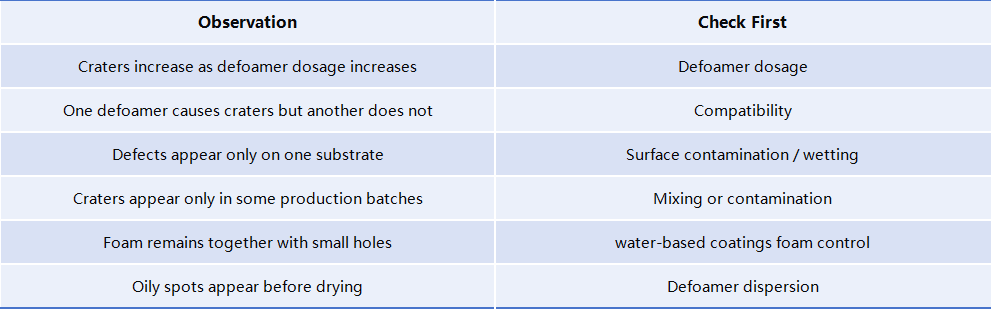
A simple comparison can help.
6. How to Solve the Problem
If the defoamer is confirmed as the main cause:
- reduce the dosage gradually;
- compare another defoamer chemistry;
- adjust the addition stage;
- avoid excessive high-shear treatment;
- check compatibility with dispersants and thickeners;
- evaluate both foam reduction and final film appearance.
Do not select a defoamer only by observing foam in the mixing tank.
The final evaluation should include:
- foam level;
- microfoam;
- craters;
- leveling;
- gloss;
- film appearance.
Conclusion
When paint craters appear after adding defoamer, the solution is not always to add more or less product immediately.
The real cause may be:
- excessive dosage;
- poor defoamer compatibility;
- incorrect addition stage;
- surface contamination;
- poor wetting;
- uneven additive dispersion.
A suitable defoamer should reduce foam without creating new surface defects.
For water-based coating formulators, foam control and film appearance should always be evaluated together.
Coatings Tech+
Paint Viscosity Drops After Tinting: Causes & Fixes
Paint viscosity drops after tinting? Learn how colorant, HEC, pH, and thickeners affect viscosity in water-based paint… Continue reading
Paint Sagging Despite Normal Viscosity: Causes & Fixes
Paint can still sag even when viscosity meets QC specifications. Learn how rheology, film thickness, temperature, and thickener selection affect sag resistance… Continue reading
Why Does Orange Peel Occur in Coatings?
Learn why orange peel occurs in coatings and how to prevent it. Discover how viscosity, atomization, surface tension, drying conditions, and coating additives affect leveling and surface appearance… Continue reading
Why Does Exterior Wall Coating Show White Streaks After Rain?
White streaks on exterior wall coating after rain? Rainwater washes out hydrophilic components from the film. This article explains four types of rain marks and provides solutions from emulsion selection, wetting/dispersant control, color paste choice, and topcoat application… Continue reading
Coating Storage Separation — The Role of Thickeners in Anti-Settling
Coating storage separation is the most common quality headache for manufacturers. Water separation, emulsion separation, and hard settling have different causes and solutions. … Continue reading
Why Does Coating Lose Adhesion?
Learn the common causes of coating adhesion failure and discover practical solutions to improve coating adhesion through proper surface preparation, formulation optimization, and coating additives… Continue reading
How to Improve Storage Stability of Water-Based Coatings?
Learn how to improve the storage stability of water-based coatings by optimizing formulation design, rheology modifiers, dispersants, preservatives, and production processes. Discover practical solutions to reduce sedimentation, viscosity changes, and phase separation… Continue reading
Wetting agent for water based coatings
Learn how wetting agents improve coating performance by enhancing substrate wetting, pigment dispersion, and film leveling. Discover their role in water-based coating formulations and how proper selection helps reduce coating defects… Continue reading
Water-based coatings foam control
Foam formation is a common issue in water-based coatings. This article explains the causes of foam and how to control it using defoamers, formulation design, and production optimization to improve coating quality and stability… Continue reading
